India lifted 496 million out of poverty in 12 years: World Bank
Synopsis
Nearly 50 crore Indians crossed out of poverty in just 12 years, with extreme poverty collapsing from 27.1% to 2.6%, per World Bank data. Rural India gained fastest and electricity reached 99 in 100 people — yet three in ten still lacked basic sanitation in 2022.
Key Takeaways
An estimated 496 million Indians moved out of poverty between 2011 and 2023 , per the World Bank’s October 2026 brief.
Population below the $4.20-a-day line fell from 57.7% to 16.1% .
Extreme poverty at $3 a day dropped from 27.1% to 2.6% .
Multidimensional poverty fell from 53.8% (2005-06) to 16.4% (2019-21) on the OPHI measure; the World Bank put it at 15.5% in 2022-23.
99 in 100 Indians had electricity by 2022 , but nearly three in ten lacked basic sanitation and 6.4% lacked safe drinking water.
An estimated 496 million people (about 49.6 crore) in India moved out of poverty between 2011 and 2023, according to an article on Zimbabwe’s Zim Now digital media platform that draws on the World Bank’s October 2026 Poverty and Equity Brief. Over those 12 years, the share of Indians living below the lower-middle-income poverty line fell from nearly six in every ten to fewer than two in ten.
The World Bank brief, as cited in the report, recognises India as having recorded one of the fastest declines in poverty anywhere in the world over the past decade.
Key Numbers from the World Bank Brief
The proportion of India’s population below the lower-middle-income poverty line of $4.20 a day dropped from 57.7 per cent in 2011 to 16.1 per cent in 2023. Over the same period, extreme poverty, measured at $3 a day, declined from 27.1 per cent to just 2.6 per cent.
Both thresholds are calculated using 2021 purchasing power parity (PPP), a method that adjusts for differences in what money can buy across countries. This allows India’s figures to be compared with those of other economies on a like-for-like basis.
Beyond Income: Multidimensional Poverty
The report stressed that poverty is not simply a matter of income. It also reflects whether a family has access to education, electricity, clean water, sanitation and other essentials of a dignified life.
On that front, the Oxford Poverty and Human Development Initiative’s measure of multidimensional poverty in India fell from 53.8 per cent in 2005-06 to 16.4 per cent in 2019-21. Using its own methodology, the World Bank recorded multidimensional poverty at 15.5 per cent in 2022-23.
Notably, the report observed that while these measures cover different periods and use different methodologies, they point towards a substantial improvement in people’s living conditions.
Electricity and the Rural-Urban Gap
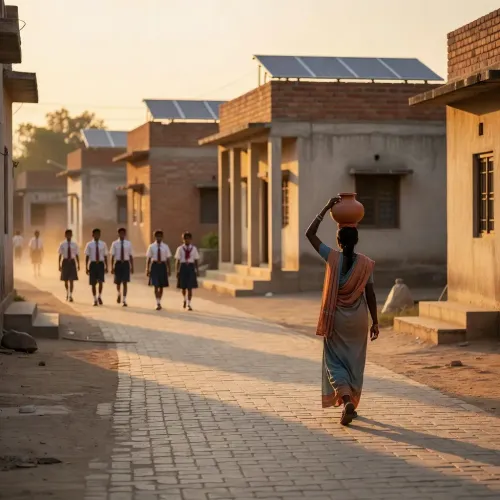
By 2022, 99 out of every 100 Indians had access to electricity. For households, that means children can study after sunset, food can be refrigerated, and small enterprises can extend their working hours.
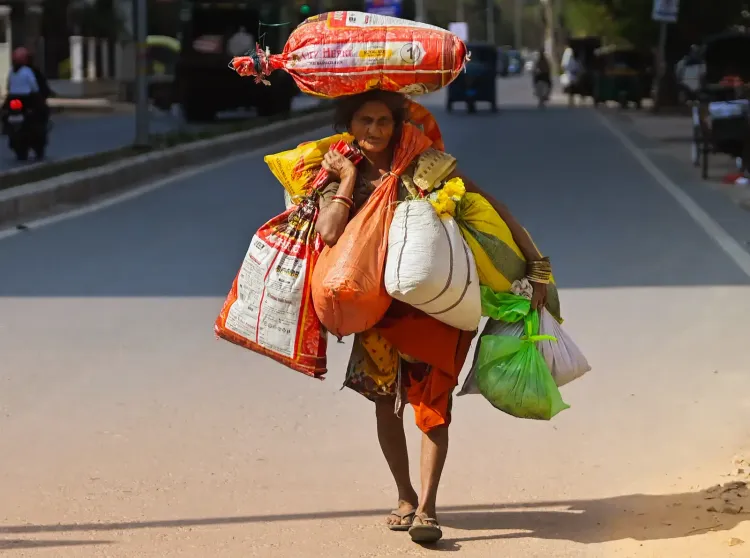
Both rural and urban households saw substantial gains in welfare, according to the report. Faster progress in rural India helped narrow the gap between the two, underlining how economic growth can translate into tangible improvements in the daily lives of ordinary citizens.
Gaps That Remain
The report also flagged persistent shortfalls in basic services. In 2022, nearly three in ten Indians still lacked sanitation meeting limited-service standards, while 6.4 per cent lacked drinking water meeting such standards.
This comes as international attention increasingly turns to India’s poverty trajectory as a reference point for other developing economies. The remaining gaps in sanitation and water access are likely to define the next phase of India’s anti-poverty effort, as the focus shifts from income thresholds to the quality of everyday services.
Point of View
But the more telling detail is that rural India closed the gap faster than urban India — a reversal of the usual development story. Yet the fact that this validation is circulating via a Zimbabwean outlet citing World Bank data highlights how thin India’s own official consumption and poverty statistics have been for much of the decade. The sanitation and water shortfalls also show that crossing a dollar-a-day line is not the same as a dignified life. The next benchmark should be measured in toilets and taps, not just PPP thresholds.
NationPress
29 Nov 2026
Frequently Asked Questions
How many people in India moved out of poverty between 2011 and 2023?
An estimated 496 million people in India moved out of poverty between 2011 and 2023, according to a report citing the World Bank’s October 2026 Poverty and Equity Brief. That is roughly 49.6 crore people over 12 years.
What is India’s extreme poverty rate according to the World Bank?
India’s extreme poverty rate, measured at $3 a day, fell to 2.6 per cent in 2023 from 27.1 per cent in 2011. The figure uses 2021 purchasing power parity.
What poverty line does the World Bank use for lower-middle-income countries?
The World Bank uses a lower-middle-income poverty line of $4.20 a day at 2021 purchasing power parity. India’s population below this line fell from 57.7 per cent to 16.1 per cent between 2011 and 2023.
How has multidimensional poverty changed in India?
Multidimensional poverty in India declined from 53.8 per cent in 2005-06 to 16.4 per cent in 2019-21, according to the Oxford Poverty and Human Development Initiative. The World Bank’s own measure put it at 15.5 per cent in 2022-23.
What challenges remain in India’s fight against poverty?
Access to sanitation and drinking water remain key gaps. In 2022, nearly three in ten Indians lacked sanitation meeting limited-service standards, and 6.4 per cent lacked drinking water meeting such standards.