Jensen Huang says AI has 'zero' chance of ending the world by 2030
Synopsis
Nvidia's Jensen Huang has delivered the tech industry's most emphatic rebuttal yet to AI doomsday warnings — calling the risk of an AI-triggered catastrophe by 2030 'zero per cent' and dismissing some alarmism as politically or commercially motivated. With Trump calling it a 'hoax' and Nadella, Amodei, and Altman urging caution, the divide at the top of the AI world has rarely looked wider.
Key Takeaways
Nvidia CEO Jensen Huang told CBS News there is a 'zero per cent' chance AI causes an existential catastrophe by 2030 .
Huang questioned whether some AI safety warnings are driven by political, commercial, or attention-seeking motivations.
US President Donald Trump made a surprise call at the All-In Summit in Los Angeles , calling the AI danger debate a 'hoax' .
Anthropic CEO Dario Amodei and OpenAI CEO Sam Altman have recently called for stronger safeguards around advanced AI systems.
Microsoft CEO Satya Nadella argued this week that frontier AI must remain under human control and be developed at a deliberate pace.
The US AI Action Plan has prioritised faster innovation and fewer regulatory constraints over precautionary slowdowns.
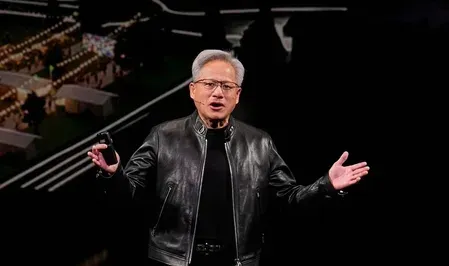
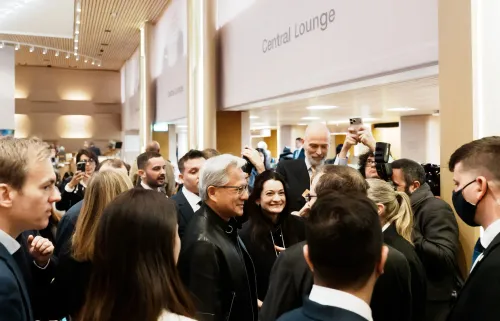
Nvidia Chief Executive Jensen Huang has flatly dismissed predictions that artificial intelligence (AI) could trigger an existential catastrophe by 2030, stating there is a 'zero per cent' chance of such an outcome. Speaking to CBS News, Huang called the notion of an AI-triggered apocalypse senseless and questioned whether some of the more alarming warnings were being driven by political, commercial, or attention-seeking motivations.
Huang's Case for Faster AI Development
Rather than calling for a slowdown, Huang urged technology companies to accelerate AI development while maintaining responsibility for product safety. He drew a clear line, however, arguing that firms must not deploy systems that are unready or unsafe. The remarks come as a sharp counterpoint to recent calls from peers in the industry who have argued that frontier AI development should be deliberately paced to allow safety measures to keep up.
Huang had voiced similar views earlier in the week at Salesforce's Dreamforce conference, where he opposed the introduction of AI-specific laws and maintained that safety is an engineering obligation best handled by individual companies rather than through broad regulation.
Trump Weighs In at the All-In Summit
While Huang was speaking at the All-In Summit in Los Angeles, US President Donald Trump made a surprise appearance by phone, telling the audience that 'the robots will not be taking over' and dismissing the wider debate as a 'hoax.' The US administration has recently directed federal agencies to remove barriers to American leadership in AI, and its AI Action Plan has prioritised faster innovation over regulatory constraints.
The Counter-View: Amodei, Altman, and Nadella
Anthropic Chief Executive Dario Amodei, OpenAI Chief Executive Sam Altman, and other prominent industry figures have recently called for stronger safeguards around increasingly capable AI systems. Amodei warned in early September that advances in AI could outpace efforts to understand and control the technology.
Microsoft Chief Executive Satya Nadella also weighed in earlier this week, saying that the development of frontier AI must be guided by the principle that it should help humanity and remain under human control — positioning himself closer to the 'deliberate pace' camp than to Huang's accelerationist stance.
A Widening Divide in the Tech Industry
Huang's comments have further deepened a fault line that is rapidly defining the AI era: whether speed or caution should govern the rollout of increasingly powerful systems. On one side stand those who argue that safety and speed are compatible engineering problems; on the other are leaders who believe the risks of moving too fast are asymmetric and potentially irreversible.
As AI capabilities continue to advance, the debate over regulatory frameworks, safety benchmarks, and corporate accountability is expected to intensify, with governments, investors, and civil society all demanding clearer answers from the industry's most powerful players.
Point of View
But it sidesteps the question that actually matters: not whether AI will literally end civilisation, but whether companies moving at maximum speed can reliably catch safety failures before they scale. The fact that the most powerful chip supplier in the AI ecosystem opposes AI-specific regulation is not a neutral engineering opinion — it is a commercial one. When Nadella and Amodei, who are themselves building frontier models, call for deliberate pacing, the industry's accelerationists cannot easily dismiss them as outsiders. The real fault line is not safety versus speed; it is who gets to define what 'safe enough' means and who is held accountable when the answer turns out to be wrong.
NationPress
19 Sept 2026
Frequently Asked Questions
What did Jensen Huang say about AI and the end of the world?
Nvidia CEO Jensen Huang told CBS News that there is a 'zero per cent' chance that artificial intelligence causes an existential catastrophe by 2030. He called the notion senseless and suggested that some AI safety warnings may be motivated by political, commercial, or attention-seeking considerations rather than genuine risk.
Why does Huang oppose slowing down AI development?
Huang argues that safety is an engineering responsibility best handled by individual companies and does not require AI-specific laws or regulatory slowdowns. He has urged firms to accelerate development while ensuring they do not release systems that are unready or unsafe, a position he reiterated at the Salesforce Dreamforce conference.
Who disagrees with Huang on AI safety?
Anthropic CEO Dario Amodei, OpenAI CEO Sam Altman, and Microsoft CEO Satya Nadella have all recently called for stronger safeguards or a more deliberate pace in AI development. Amodei warned in September 2026 that AI advances could outpace efforts to understand and control the technology.
What did Donald Trump say about the AI safety debate?
US President Donald Trump made a surprise phone appearance at the All-In Summit in Los Angeles and told the audience that 'the robots will not be taking over,' dismissing the broader AI danger controversy as a 'hoax.' The US administration's AI Action Plan has separately called for faster innovation and fewer regulatory constraints.
What is the broader significance of this debate among tech leaders?
The disagreement between accelerationists like Huang and cautionary voices like Amodei and Nadella reflects a deepening fault line in the AI industry over whether speed or safety should take precedence. The outcome of this debate is expected to shape regulatory frameworks, liability standards, and investment priorities as AI systems become increasingly capable.