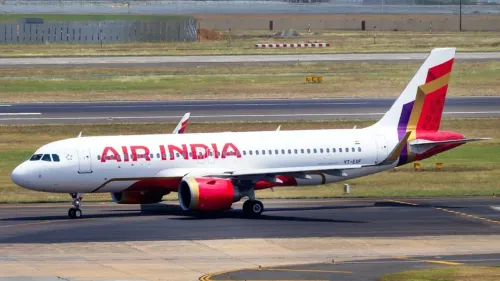
Air India launches mandatory drug screening for all group pilots after Phuket incident
Synopsis
Air India has launched a group-wide mandatory drug and medication screening for all its pilots — going beyond DGCA requirements — after it emerged that the pilot of a Phuket-Delhi flight experiencing a sudden altitude loss was on sleep medication. The voluntary step is rare for an Indian carrier and puts pressure on the regulator to act industry-wide.
Key Takeaways
Air India launched mandatory screening for all group pilots for prohibited substances and medications from 13 August .
The move was triggered after the pilot of an Air India Phuket-Delhi flight was found to be on sleep medication during a sudden altitude loss last week.
Testing will be conducted at the Gurugram Academy , Flight Briefing Centres , Air India offices, and pilots' operating bases.
The airline already complies with DGCA regulations but has chosen to go beyond existing requirements.
Pilots have been directed to contact their chief pilot or base manager for clarifications on the programme.
Air India has launched a mandatory screening programme for all pilots across its group, testing for substances and medications prohibited under aviation regulations, sources confirmed on Thursday, 13 August. The move, which goes beyond existing regulatory requirements, follows an incident last week in which the pilot in command of an Air India flight from Phuket to Delhi was found to have been taking medication for sleep difficulty when the aircraft experienced a sudden loss of altitude.
What the Screening Programme Covers
According to a communication addressed to pilots, the testing programme commenced on 13 August and covers all group pilots without exception. The screening will be conducted at multiple locations — alongside training sessions at the Gurugram Academy, after flights at Flight Briefing Centres and Air India offices, and at designated locations across pilots' operating bases. Participation is mandatory.
What Air India Said
In its communication to pilots, the Tata Group-owned carrier stated that it already complies fully with all requirements prescribed by the Directorate General of Civil Aviation (DGCA), which it noted are broadly aligned with practices in major aviation markets including Europe and the United States. However, the airline said it had chosen to go further. 'Accordingly, we have decided to undertake a full screening of all Group pilots for any substances or medications that are not permitted under prevailing regulations,' the communication read.
The airline also acknowledged that many pilots had proactively reached out to express support for stronger safety measures. 'Many of you have recently reached out to share the same sentiment,' the airline noted in the letter.
The Phuket Flight Incident
The trigger for the initiative was a flight operating from Phuket to New Delhi that experienced a sudden loss of altitude last week. It subsequently emerged that the pilot in command had been taking medication for sleep difficulty — a disclosure that raised questions about compliance with existing fitness-to-fly standards and prompted the airline to act swiftly. The DGCA is the nodal regulator for pilot medical fitness in India, and its rules restrict the use of certain medications during active flying duty.
Significance and Industry Context
This is a notable instance of an Indian carrier voluntarily exceeding regulatory minimums on pilot health compliance. Air India described the initiative as reflecting its 'commitment to maintaining the highest standards of safety and professionalism while providing reassurance to passengers, stakeholders and the wider community.' Pilots with queries have been directed to contact their chief pilot or base manager. This comes amid broader scrutiny of aviation safety standards in India, where the DGCA has faced periodic criticism over enforcement gaps. A self-initiated, carrier-wide screening of this scale is rare in the domestic industry.
What Happens Next
The screening is ongoing and will be integrated into routine operational touchpoints rather than conducted as a one-time exercise. Industry observers will watch whether the DGCA uses this episode to tighten mandatory standards across all Indian carriers, or whether Air India's voluntary step remains an outlier.
Point of View
But it also exposes a regulatory gap: if a carrier must voluntarily exceed DGCA standards to catch a pilot on prohibited sleep medication, the baseline rules are not doing enough. The Phuket incident is not an isolated lapse — it is a stress test that the regulator failed. The DGCA now faces an implicit challenge: either upgrade mandatory screening norms industry-wide, or watch a single airline's voluntary initiative become the de facto standard while others operate under weaker rules. India's aviation sector, growing at one of the fastest rates globally, cannot afford a patchwork approach to pilot fitness compliance.
NationPress
27 Sept 2026
Frequently Asked Questions
Why has Air India started mandatory drug screening for pilots?
Air India launched the screening after it emerged that the pilot in command of a Phuket-to-Delhi flight, which experienced a sudden loss of altitude last week, was taking medication for sleep difficulty. The airline decided to go beyond existing DGCA requirements and screen all group pilots for prohibited substances and medications.
When did Air India's pilot screening programme begin?
The mandatory screening programme began on 13 August 2025, as stated in a communication sent to all group pilots. It is ongoing and will be conducted at multiple locations including the Gurugram Academy and Flight Briefing Centres.
Does Air India's screening go beyond what DGCA requires?
Yes. Air India stated that it already complies with all DGCA-prescribed requirements, which are broadly aligned with European and US aviation standards. The new screening is a voluntary step that exceeds existing regulatory obligations.
Where will the pilot drug tests be conducted?
Testing will take place alongside training sessions at the Gurugram Academy, after flights at Flight Briefing Centres and Air India offices, and at designated locations across pilots' operating bases across the country.
What happened on the Air India Phuket-Delhi flight?
An Air India flight operating from Phuket to Delhi experienced a sudden loss of altitude last week. It subsequently came to light that the pilot in command was on medication for sleep difficulty at the time, prompting the airline to initiate the group-wide screening programme.