Anand Mahindra backs Ocean Cleanup founder Boyan Slat
Synopsis
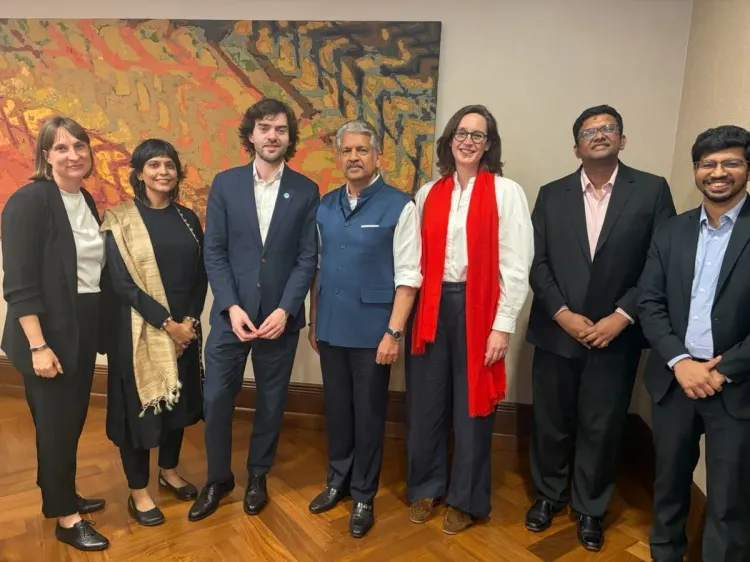
Mahindra Group chairman Anand Mahindra met Ocean Cleanup founder Boyan Slat and pledged corporate support for the non-profit's river-interceptor programme, praising BMC's move to deploy units at nine Mumbai locations.
Key Takeaways
Anand Mahindra met Boyan Slat , founder of The Ocean Cleanup , and publicly committed Mahindra Rise to exploring a contribution to the mission.
Boyan Slat founded The Ocean Cleanup at 18 and is now 32 , with the organisation working on both river interception and legacy ocean cleanup.
The Brihanmumbai Municipal Corporation (BMC) has been praised for facilitating interceptor deployments at nine locations in Mumbai .
India's Plastic Waste Management Rules, 2016 place obligations on urban local bodies for plastic collection and recycling — BMC's move aligns with that framework.
Mahindra framed interception and recycling as an 'invaluable contribution' until upstream prevention becomes a systemic reality in India.
Mahindra joked he hoped to be invited when Slat wins the Nobel Prize — signalling the seriousness with which he views the mission's potential.
A 16-year-old's audacious dream to rid the world's oceans of plastic has caught the attention of one of India's most powerful industrialists — and may now draw corporate muscle from the Mahindra Group. Mahindra Group chairman Anand Mahindra revealed on Saturday, 21 November 2026, that he had met Boyan Slat, founder of The Ocean Cleanup, and came away deeply impressed — pledging that Mahindra would explore how it could contribute to the mission.
Who is Boyan Slat — and what has he built?
Boyan Slat, now 32, is a Dutch entrepreneur who first conceived his plan to clean up the world's oceans at age 16 and formally founded The Ocean Cleanup at 18. The non-profit operates on two simultaneous fronts: deploying river interceptors to catch plastic waste before it reaches the sea, and running systems to remove the vast legacy accumulation of plastic already floating in ocean gyres. Mahindra described Slat's passion and determination as 'undiminished' at 32, and praised the team he has assembled around him.
Mahindra noted that his inbox had been 'flooded' with a video more than a year ago urging him to support Slat's mission — making Friday's meeting a long time coming. 'Boyan began pursuing this audacious dream at just 16 and founded The Ocean Cleanup at 18,' Mahindra wrote, adding — only half in jest — that he hoped to be invited when Slat wins the Nobel Prize.
Nine Mumbai sites and the BMC's swift move
Mumbai is already in the frame. Mahindra specifically complimented Ashwini Bhide and the Brihanmumbai Municipal Corporation (BMC) for moving swiftly to facilitate the deployment of interceptors at nine locations across the city. He called it 'an exemplary response' — high praise from a business leader who rarely hands out institutional compliments lightly.
India's rivers are among the largest contributors of plastic to the global ocean, a problem acknowledged under the country's Plastic Waste Management Rules, 2016, which established extended producer responsibility and obligations for urban local bodies to collect and recycle plastic. The BMC's engagement with The Ocean Cleanup's interceptor technology represents exactly the kind of municipal-tech integration those rules envisioned — but rarely delivered at speed.
Mahindra Group's next move — and the bigger picture
Mahindra was clear that the ultimate goal must be prevention: stopping waste from entering Indian rivers in the first place. But he acknowledged the uncomfortable reality that until systemic change arrives, interception and recycling are 'an invaluable contribution.' Mahindra Rise, the group's sustainability and social-impact platform, will now explore formal participation in The Ocean Cleanup's work.
Indian business figures have increasingly aligned with international clean-tech initiatives targeting river and marine plastic, recognising both the reputational value and the genuine environmental urgency. A Mahindra partnership — given the group's manufacturing scale and logistics reach — could meaningfully accelerate recycling throughput if it moves from exploration to execution.
What to watch: whether the nine Mumbai interceptor sites move from facilitation to full operation, and whether Mahindra Group formalises a funding or recycling-chain role. The world will be watching — and so, apparently, will a Nobel Prize committee, if Slat has his way.
Point of View
Other Indian cities with heavy river-plastic loads could follow, creating a scalable market for interceptor deployment and downstream recycling logistics that a group with Mahindra's supply-chain reach is well-placed to monetise.
NationPress
21 Nov 2026
Frequently Asked Questions
What is The Ocean Cleanup and what does it do?
The Ocean Cleanup is a non-profit founded by Dutch entrepreneur Boyan Slat that develops technology to intercept plastic in rivers before it reaches the ocean and to remove plastic already accumulated in ocean gyres.
How many interceptors is Mumbai deploying?
The Brihanmumbai Municipal Corporation (BMC) is facilitating the deployment of Ocean Cleanup interceptors at nine locations across Mumbai, as praised by Anand Mahindra in his post.
What is Mahindra Group's role in The Ocean Cleanup?
Mahindra Rise , the group's sustainability platform, has committed to exploring how it can contribute to The Ocean Cleanup's mission, though no formal partnership or financial commitment has been announced yet.
Who is Boyan Slat and how old is he?
Boyan Slat is a Dutch entrepreneur who first conceived his ocean-cleanup idea at age 16 , founded The Ocean Cleanup at 18 , and is now 32 .
What are India's rules on plastic waste management?
India's Plastic Waste Management Rules, 2016 established extended producer responsibility and required urban local bodies to set up systems for plastic collection and recycling — the framework under which municipal interceptor projects operate.