Manorama River cleanup: UP youngsters turn 'no complaints' into action
Synopsis
A group of young volunteers in Basti, UP, armed with only nets and spades, removed up to 60 kg of garbage daily to restore the Manorama River — and PM Modi made their story the centrepiece of his 134th Mann Ki Baat. It is a rare instance of a national platform amplifying hyperlocal environmental action, and signals the kind of citizen-first narrative the government wants associated with Swachh Bharat going forward.
Key Takeaways
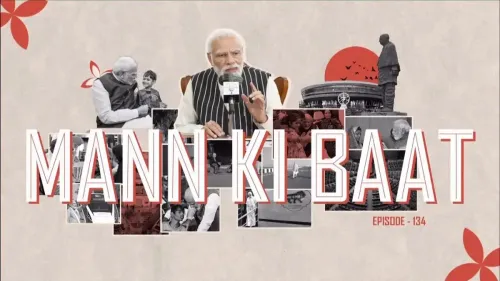
PM Modi highlighted the Manorama River cleanup on 31 May during the 134th episode of Mann Ki Baat .
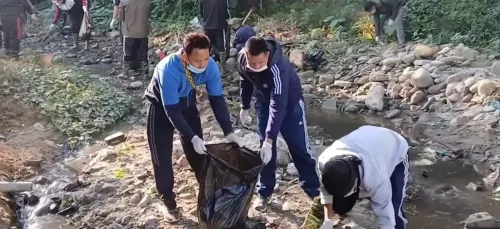
Akash Gupta of Basti, Uttar Pradesh led a group of youngsters who removed plastic waste and water hyacinth from the river by hand.
The team removed up to 50–60 kilograms of garbage from the river in a single day at peak effort.
The initiative inspired surrounding communities and raised local awareness about cleanliness.
Retired teacher Balkrishna Aiya from Maddi-Tolap, Goa was also cited for laying water pipelines that resolved a chronic water access problem.
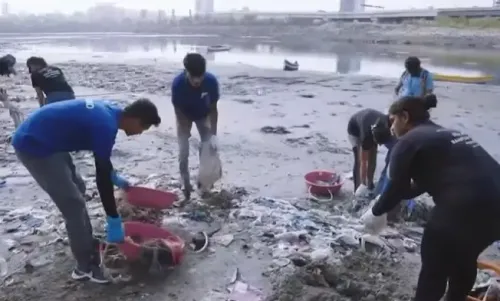
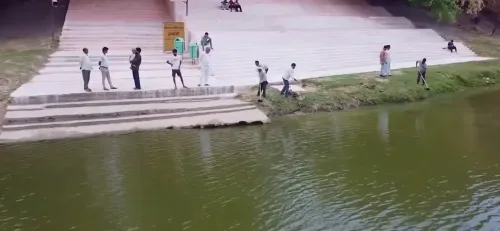
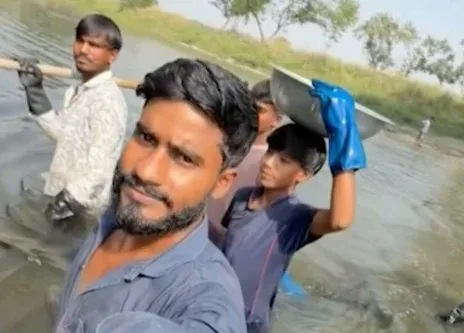
Prime Minister Narendra Modi on Sunday, 31 May spotlighted a citizen-driven effort to revive the Manorama River in Basti district, Uttar Pradesh, during the 134th episode of his monthly radio programme 'Mann Ki Baat'. A group of young volunteers, led by Akash Gupta, transformed a polluted stretch of the river through sustained grassroots action — removing plastic waste and water hyacinth with nothing more than nets, spades, and baskets.
From despair to direct action
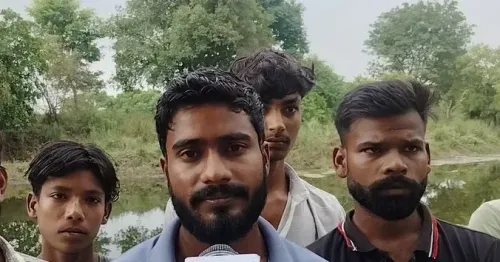
Modi recounted how Akash Gupta, a resident of Basti, was distressed to see the Manorama River — once clean and vibrant in his childhood — choked with plastic and refuse. Rather than lodging complaints, Gupta adopted a personal mantra: 'No complaints, a fresh start.' He mobilised his friends and the team began wading into the river regularly, hauling out garbage by hand.
'All they had was a net, a spade, a basket, and their greatest strength: the determination to make a difference,' PM Modi said. 'These young people would wade into the river, remove water hyacinth, and bring out plastic and garbage.'
Scale of the cleanup
The volunteers reportedly removed as much as 50–60 kilograms of garbage from the river in a single day. Over time, their consistent effort visibly restored the cleanliness of that section of the Manorama River. The initiative also drew attention from surrounding communities, raising broader awareness about environmental cleanliness in the area.
A parallel story from Goa
Modi also highlighted the work of Balkrishna Aiya, a retired teacher from the Maddi-Tolap area of Goa, who played a pivotal role in laying water pipelines for households that had long struggled with water scarcity. 'The zeal for social work is as strong, even today,' Modi said, adding that the pipeline project brought daily relief to families who had previously faced a constant struggle to access water.
The broader message
Both stories were cited by the Prime Minister as examples of citizen-led problem-solving — individuals choosing action over grievance. This comes amid ongoing national campaigns around river conservation and the Swachh Bharat Mission, where community participation is considered central to outcomes. Notably, river pollution remains a persistent challenge across several Indian states, and ground-level volunteer efforts like the one in Basti are increasingly recognised as complementary to government-led programmes.
As such initiatives gain visibility through platforms like Mann Ki Baat, observers expect similar community-driven models to emerge in other districts facing comparable environmental pressures.
Point of View
And the Manorama River story fits that template precisely. What makes it notable is the specificity — named individuals, a named river, a named district — which lends it more credibility than generic Swachh Bharat messaging. The harder question is whether such spotlighting translates into replicable policy support or remains inspirational anecdote. River pollution in UP is systemic, and 60 kg of garbage removed by volunteers, however admirable, sits against a backdrop of industrial effluent and municipal failure that no net and spade can address alone.
NationPress
15 Oct 2026
Frequently Asked Questions
What is the Manorama River cleanup story mentioned in Mann Ki Baat?
It is the story of Akash Gupta and a group of young volunteers from Basti, Uttar Pradesh , who manually cleaned a polluted stretch of the Manorama River by removing plastic, garbage, and water hyacinth. PM Modi shared the story during the 134th episode of Mann Ki Baat on 31 May .
How much garbage did the Basti volunteers remove from the Manorama River?
The volunteers reportedly removed up to 50–60 kilograms of garbage from the river in a single day, using basic tools such as nets, spades, and baskets.
Who is Akash Gupta from Basti?
Akash Gupta is a young resident of Basti district, Uttar Pradesh , who initiated the grassroots cleanup of the Manorama River . Distressed by the river's deterioration, he adopted the mantra 'No complaints, a fresh start' and rallied friends to take direct action.
Who is Balkrishna Aiya and why did PM Modi mention him?
Balkrishna Aiya is a retired teacher from the Maddi-Tolap area of Goa who helped lay water pipelines to resolve a long-standing water scarcity problem for local households. PM Modi cited him alongside the Basti story as another example of citizen-led problem-solving.
What is Mann Ki Baat and how often does PM Modi address it?
Mann Ki Baat is Prime Minister Narendra Modi's monthly radio programme broadcast on All India Radio, in which he shares stories of citizen achievement and national interest. The episode on 31 May was its 134th edition .