Anand Mahindra flags Maharashtra water crisis, backs conservation work

Synopsis
Mahindra Group chairman Anand Mahindra flagged Maharashtra's structural water-security gap on 6 July 2026, noting that despite heavy monsoon rainfall, the state's inability to conserve surplus water leaves communities fragile — and spotlighted grassroots conservation work as his Monday motivation.
Key Takeaways
Anand Mahindra posted on 6 July 2026 highlighting Maharashtra's failure to conserve excess monsoon rainfall despite heavy rains.
He described the state's water security as 'fragile' due to inadequate conservation infrastructure.
Maharashtra's Jalyukt Shivar Abhiyan , launched in 2015 , targeted watershed development but implementation gaps persist.
National schemes including the Jal Jeevan Mission and Atal Bhujal Yojana (from 2019 ) have sought to address groundwater recharge across water-stressed districts.
Farmers and rural households in rain-fed districts remain most vulnerable to the boom-bust water cycle.
Several Indian states are recording rising extreme rainfall events alongside groundwater depletion, making decentralised storage a national priority.
Mahindra Group chairman Anand Mahindra on Monday, 6 July 2026, drew attention to Maharashtra's recurring water-security challenge, noting that while the state is currently battling excessive monsoon rainfall, the ability to conserve that surplus has remained elusive — leaving communities vulnerable once the rains recede.
In his post on X, Mahindra wrote: 'Maharashtra is today struggling with excessive rain. But conserving much of that excess rainfall has been elusive. Making our water security fragile.' He cited the work of @AvishyantPandya as his #MondayMotivation, describing the individual as someone who has 'focussed tirelessly' on that security challenge.
Context
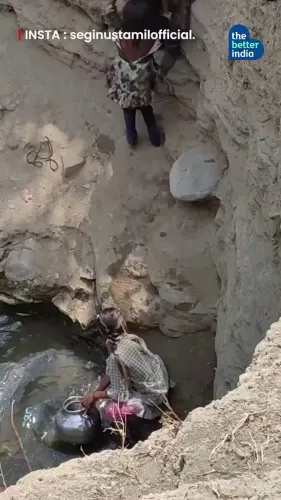
Maharashtra sits at the intersection of two recurring climate extremes: intense monsoon flooding in coastal and Konkan regions, and persistent drought in the Vidarbha and Marathwada belts. The paradox — too much water in one season, too little in the next — is driven largely by inadequate storage and recharge infrastructure. Groundwater tables across several districts have been declining even as annual rainfall totals remain broadly adequate, pointing to a structural conservation gap rather than a simple supply deficit.
Mahindra's framing of 'fragile water security' reflects a concern shared by agronomists and urban planners alike: that without decentralised harvesting and watershed restoration, each monsoon's surplus is lost to runoff rather than banked for the lean months.
Policy backdrop
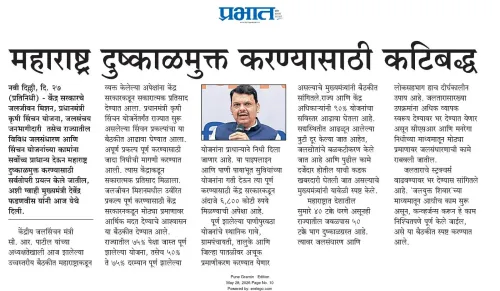
The Maharashtra government launched the Jalyukt Shivar Abhiyan in 2015 to promote rainwater harvesting and watershed development across drought-prone districts, making it one of the state's most ambitious rural water programmes. The scheme targeted the deepening and widening of streams, construction of cement and earthen stop dams, and the removal of silt from water bodies.
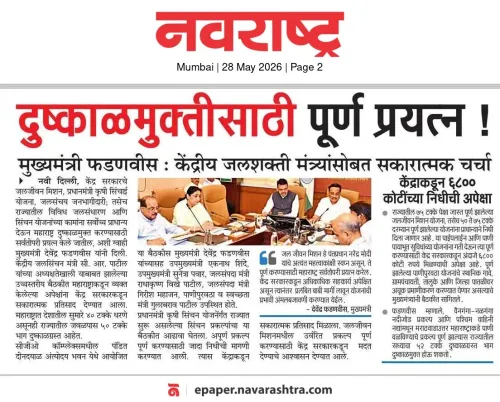
At the national level, the Jal Jeevan Mission and the Atal Bhujal Yojana, both operationalised from 2019, have sought to link central funding with state-level conservation works — the latter specifically targeting groundwater recharge in water-stressed blocks across seven states, including parts of Maharashtra. Despite these programmes, independent assessments have consistently flagged implementation gaps and the need for sustained community participation.
Stakeholders and impact
The communities most exposed to Maharashtra's water insecurity are farmers in rain-fed districts and rural households dependent on wells and seasonal streams. Erratic monsoon distribution means that even a high-rainfall year can leave interior villages water-stressed within weeks of the season's end if surface storage is insufficient.
Several Indian states have recorded a rising frequency of extreme rainfall events alongside accelerating groundwater depletion — a pattern that has pushed watershed conservation from a rural-development footnote to a mainstream climate-adaptation priority. Mahindra's public endorsement of individual-level conservation work underscores growing civil-society and corporate interest in filling the gap between policy ambition and on-ground outcomes.
What's next
Attention will now turn to whether Maharashtra's current monsoon season prompts supplementary budget allocations for watershed and storage projects, and whether rainwater harvesting mandates — already applicable to large buildings in many urban local bodies — are extended or enforced more rigorously. State-level updates on decentralised water storage ahead of the next pre-monsoon cycle will be closely watched by both policymakers and conservation practitioners.
Mahindra's post, amplified to his tens of millions of followers, is likely to renew public debate on translating India's annual monsoon bounty into year-round water resilience — a challenge that is as much institutional as it is hydrological.
Point of View
He implicitly critiques the gap between well-funded state and central programmes and on-ground outcomes. The endorsement from one of India's most-followed industrialists could nudge corporate and philanthropic capital toward watershed initiatives at a moment when government schemes alone have proven insufficient. It also signals that water security is moving up the agenda of India's business leadership, not just its policy community.
NationPress
7 Jul 2026
Frequently Asked Questions
Why is Maharashtra facing water scarcity despite heavy monsoon rains?
Maharashtra receives significant monsoon rainfall but lacks sufficient decentralised storage and recharge infrastructure to conserve the surplus, meaning most runoff is lost before it can be used during dry months. This structural gap creates water insecurity even in high-rainfall years.
What is the Jalyukt Shivar Abhiyan?
Jalyukt Shivar Abhiyan is a Maharashtra government scheme launched in 2015 to promote rainwater harvesting and watershed development across drought-prone districts, focusing on deepening streams, building stop dams, and desilting water bodies.
What did Anand Mahindra say about Maharashtra's water crisis?
On 6 July 2026 , Mahindra posted on X that Maharashtra is struggling with excessive rain but that conserving the surplus has been elusive, making water security fragile. He cited a conservation activist as his Monday motivation.
What national schemes address water conservation in India?
The Jal Jeevan Mission and Atal Bhujal Yojana , both launched from 2019 , are key central programmes linking funding to state-level water conservation and groundwater recharge works, including in parts of Maharashtra.
Who are most affected by Maharashtra's water insecurity?
Farmers in rain-fed districts and rural households dependent on wells and seasonal streams are most exposed, as inadequate storage means water stress can return within weeks of the monsoon ending even after a high-rainfall season.