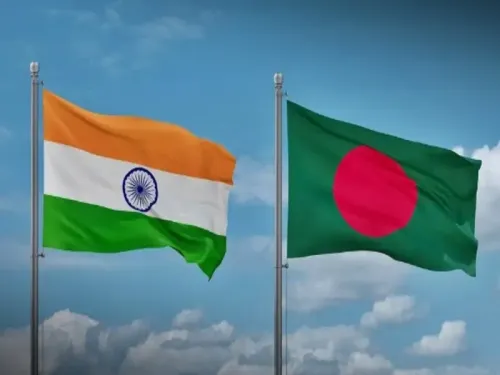
Pax Silica invite puts Bangladesh at US-China tech crossroads

Synopsis
Bangladesh finds itself at the centre of the US-China technology rivalry — invited into Washington's Pax Silica semiconductor and AI alliance while simultaneously joining Beijing's WAICO as an observer. With semiconductor exports of just $8 million against a $1 billion 2030 target, Dhaka's leverage is limited, and the choice it makes — or avoids — will signal how smaller emerging economies navigate a fracturing global tech order.
Key Takeaways
Bangladesh has received an invitation to join the US -led Pax Silica initiative, focused on AI, semiconductors, and critical mineral supply chains.
Simultaneously, Bangladesh announced observer status in the China -backed World Artificial Intelligence Cooperation Organization (WAICO) .
Pax Silica , launched in December 2025 , includes the US , UK , Japan , Singapore , and India .
Bangladesh's semiconductor exports stand at just $8 million , far short of its own $1 billion target for 2030 .
Structural barriers — unreliable power, weak R&D, and regulatory gaps — could limit the country's ability to fully benefit from either partnership.
China is Bangladesh's largest import source and a major infrastructure investor, complicating any decisive alignment with the US-led bloc.
Bangladesh is navigating a pivotal strategic choice after receiving an invitation to join the United States-led Pax Silica initiative — a technology and economic security alliance — while simultaneously securing observer status in the China-backed World Artificial Intelligence Cooperation Organization (WAICO). The dual overture places Dhaka squarely between two competing global technology ecosystems, underscoring the country's rising significance in the geopolitics of artificial intelligence and supply chains, according to an analysis by The Diplomat.
What Pax Silica Is and Who It Includes
Launched in the United States in December 2025, Pax Silica is a multilateral framework designed to build secure supply chains spanning critical minerals, semiconductors, AI infrastructure, advanced manufacturing, and digital platforms. Its stated goal is to reduce dependence on vulnerable technology corridors and expand a network of trusted partnerships.
Current members include the United States, the United Kingdom, Japan, Singapore, and India. US Envoy Sergio Gor recently indicated that Bangladesh could become a formal partner in the grouping — a signal that Washington sees strategic value in Dhaka's geographic position and its potential as an emerging technology economy.
The WAICO Factor and Bangladesh's Balancing Act
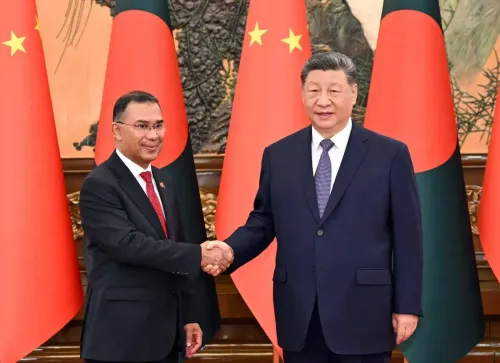
Bangladesh's announcement of observer status in the China-backed WAICO came almost simultaneously with the Pax Silica overture, sharpening the dilemma. China remains Bangladesh's largest source of imports and a significant investor in domestic infrastructure, making a clean pivot toward either bloc both economically and diplomatically complex.
Analysts note that closer alignment with the US-led initiative could carry implicit expectations regarding technology standards, supply chain configurations, and vendor choices — constraints that could conflict with existing Chinese economic ties. Critics argue that joining either bloc risks eroding Bangladesh's strategic autonomy at a moment when it can least afford to foreclose options.
Opportunity Against a Backdrop of Structural Gaps
For Bangladesh, Pax Silica represents a potential pathway to diversify an economy still heavily concentrated in garment exports. Participation could unlock access to semiconductor supply chains, AI infrastructure investment, and advanced manufacturing ecosystems that remain largely out of reach today.
However, the gap between aspiration and capacity is stark. According to the analysis, Bangladesh's semiconductor exports stand at a modest $8 million — a fraction of the country's own $1 billion target for 2030. The report noted that Bangladesh's 'current capabilities remain far below the level required to bargain as an equal partner.'
Infrastructure and Capability Constraints
Beyond the diplomatic tightrope, structural limitations could blunt any partnership's benefits. Challenges cited in the analysis include unreliable power supply, insufficient research and development capacity, weak industrial ecosystems, and regulatory constraints. These gaps could limit Bangladesh's ability to absorb and commercialise the technology flows that Pax Silica membership might theoretically unlock.
This comes amid a broader regional competition for technology partnership alignment, with several South and Southeast Asian economies facing similar binary pressures from Washington and Beijing. Notably, Bangladesh's choice will be watched closely by neighbours and partners as a signal of where smaller middle-income economies choose to anchor in an increasingly fragmented global technology order.
What Happens Next
No formal decision on Pax Silica membership has been announced by Dhaka. The government will need to weigh the economic opportunity against strategic exposure, infrastructure readiness, and the diplomatic costs of any perceived tilt. Whether Bangladesh can credibly pursue a 'strategic hedge' — maintaining ties with both ecosystems — remains the central unanswered question.
Point of View
Dhaka lacks the leverage to extract concessions from either bloc on its own terms. The deeper risk is not which side Bangladesh picks, but that it joins one expecting transformative inflows without the infrastructure to absorb them. South Asia's experience with ambitious technology partnerships suggests that headline announcements routinely outpace ground-level execution by years.
NationPress
13 Sept 2026
Frequently Asked Questions
What is Pax Silica and why has Bangladesh been invited?
Pax Silica is a US-led technology and economic security alliance launched in December 2025, focused on building secure supply chains in AI, semiconductors, critical minerals, and advanced manufacturing. Bangladesh has been invited as a potential partner, with US Envoy Sergio Gor recently signalling Washington's interest in Dhaka's participation, reflecting the country's growing strategic relevance in the global technology landscape.
What is WAICO and what is Bangladesh's role in it?
The World Artificial Intelligence Cooperation Organization (WAICO) is a China-backed multilateral body focused on AI cooperation. Bangladesh has joined as an observer, a status that grants it a seat at discussions without full membership obligations — a posture that reflects Dhaka's attempt to maintain ties with Beijing while exploring Western tech alliances.
Why does Bangladesh's Pax Silica decision matter strategically?
Joining Pax Silica could bring Bangladesh into a trusted semiconductor and AI supply chain network alongside the US, UK, Japan, Singapore, and India, but it may also carry expectations on technology standards and vendor choices that conflict with existing Chinese economic relationships. China is Bangladesh's largest import source and a major infrastructure investor, making full alignment with either bloc diplomatically costly.
What are the biggest obstacles for Bangladesh in capitalising on Pax Silica?
Bangladesh's semiconductor exports currently stand at just $8 million — far short of its own $1 billion target for 2030. Structural challenges including unreliable power supply, weak research capacity, underdeveloped industrial ecosystems, and regulatory constraints could limit the country's ability to extract meaningful economic benefit from the partnership, even if it secures formal membership.
Can Bangladesh maintain ties with both the US and China technology ecosystems?
Analysts are divided on whether a 'strategic hedge' is sustainable. While Bangladesh has signalled interest in both Pax Silica and WAICO, closer integration with the US-led initiative is likely to invite scrutiny over supply chain choices and technology vendors. Whether Dhaka can credibly straddle both ecosystems without triggering pressure from either side remains an open question.