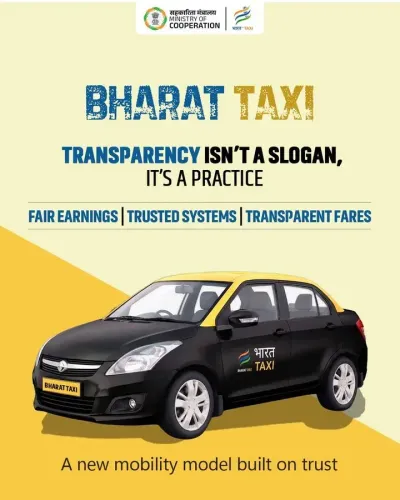
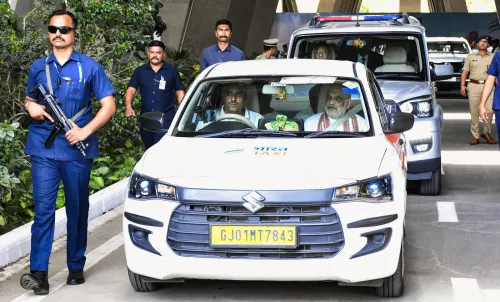
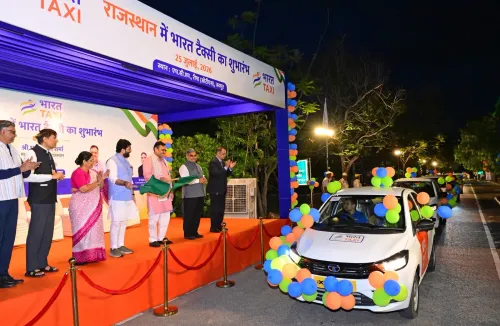
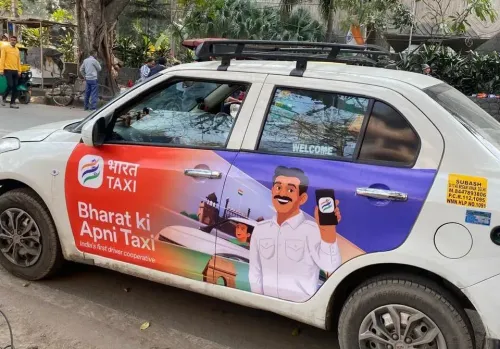
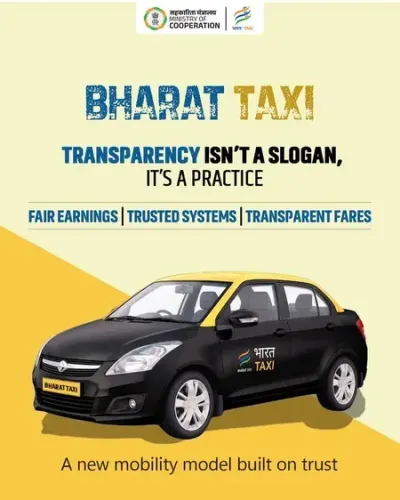
Bharat Taxi crosses 8 lakh drivers, 41 lakh users; eyes nationwide reach by 2029
Synopsis
India's first cooperative-owned cab platform has quietly signed up 8 lakh drivers and 41 lakh riders — without charging a single rupee in commission. Backed by NABARD, Amul, and IFFCO, Bharat Taxi is building a driver-owned alternative to Ola and Uber, with a 2029 deadline to go national. The real question: can cooperative governance scale at commercial speed?
Key Takeaways
Bharat Taxi has registered nearly 8 lakh drivers and around 41 lakh customers as of 25 July .
The platform operates on a zero-commission model — drivers retain full fare earnings and can become member-owners by purchasing cooperative shares.
Currently live in 8 cities including Delhi-NCR, Mumbai, and Pune; expansion to 7 more cities including Kolkata and Bhopal is planned.
Founded by 8 national cooperatives including NABARD , IFFCO , Amul , and NAFED under the Multi-State Cooperative Societies Act, 2002.
Women-focused programmes 'Sarathi Didi' and 'Bike Didi' aim to boost women's participation in the transport sector.
Drivers are facilitated to register on the e-Shram portal for social security access; nationwide rollout targeted by 2029 .
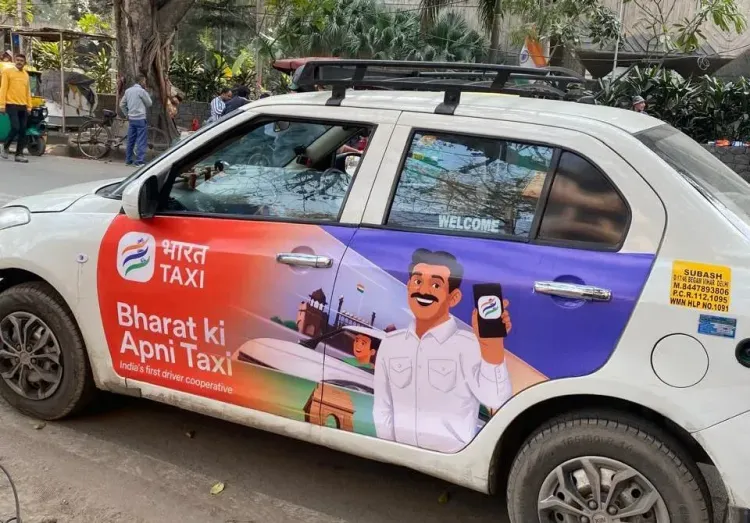
Bharat Taxi, India's first cooperative-led ride-hailing platform, has onboarded nearly 8 lakh drivers and approximately 41 lakh customers as of 25 July since its launch, and is targeting a full nationwide rollout by 2029, according to an official fact-sheet released on Monday, 17 August. The platform, structured as a multi-state cooperative, is positioning itself as a driver-owned alternative to commercial aggregators such as Ola and Uber.
Cooperative Foundations and Ownership Model
Established under the Multi-State Cooperative Societies Act, 2002, Bharat Taxi was co-founded by eight national cooperative institutions, including NABARD, IFFCO, Amul, NAFED, and the National Cooperative Development Corporation (NCDC). Drivers — referred to on the platform as Sarathis — can purchase shares in the cooperative and hold reserved seats on its board, giving them a direct stake in governance. The platform operates on a zero-commission model, meaning Sarathis retain their full fare earnings rather than paying a percentage cut to the platform.
Where It Operates Now
Bharat Taxi is currently live in Delhi-NCR, Gujarat, Mumbai, Lucknow, Chandigarh, Jaipur, Kanpur, and Pune. The next phase of its phased national rollout is expected to cover Ranchi, Patna, Guwahati, Bhopal, Kolkata, Indore, and Nagpur in the coming months.
Services, Pricing and Women-Focused Initiatives
The platform offers a broad range of ride categories — bike taxis, autos, economy cabs, premium sedans, SUVs, rentals, outstation travel, and scheduled rides. It follows a transparent, no-surge-pricing model with no additional platform charges. Notably, Bharat Taxi has introduced two women-focused programmes: 'Sarathi Didi', which allows women passengers to choose women drivers, and 'Bike Didi', aimed at increasing women's participation in the transport workforce.
Digital Integration and Institutional Partnerships
Bharat Taxi has integrated its services with government digital infrastructure — including DigiLocker, UMANG, and API Setu — through the National e-Governance Division under the Digital India programme. The platform has also entered into partnerships with the Delhi Traffic Police, Delhi Metro Rail Corporation (DMRC), State Bank of India (SBI), Paytm, and IFFCO Tokio Insurance to bolster service delivery, digital payments, and insurance coverage.
Social Security and Driver Welfare
Drivers on the platform are facilitated to register on the e-Shram portal, enabling access to social security benefits. Additional accident and health insurance support is available through partner institutions. The platform is backed by the Ministry of Cooperation's broader push to promote cooperative-based business models, combining digital mobility services with democratic ownership and economic participation.
With its phased city expansion underway, Bharat Taxi's ability to scale while preserving its zero-commission cooperative structure will be closely watched as it approaches its 2029 national coverage target.
Point of View
Not just a marketing milestone. But the cooperative model's real stress test begins at scale: governance by member-owners works in theory, yet India's cooperative sector has a long history of democratic structures being captured by entrenched interests. The Ministry of Cooperation's backing gives it political tailwind, but also raises the question of whether this is a genuine market disruptor or a policy vehicle that will struggle to compete once Ola and Uber respond. The 2029 national target is ambitious; the execution gap between city launches and sustainable operations in Tier-2 markets will define whether this is a revolution or a well-intentioned pilot.
NationPress
17 Aug 2026
Frequently Asked Questions
What is Bharat Taxi and how is it different from Ola or Uber?
Bharat Taxi is India's first cooperative-led ride-hailing platform, founded by eight national cooperative institutions including NABARD, Amul, and IFFCO. Unlike Ola or Uber, it operates on a zero-commission model where drivers retain their full fare earnings and can become member-owners of the cooperative by purchasing shares.
How many drivers and customers has Bharat Taxi signed up?
Bharat Taxi had registered nearly 8 lakh drivers and approximately 41 lakh customers as of 25 July, according to an official fact-sheet released on 17 August 2025.
In which cities is Bharat Taxi currently available?
Bharat Taxi is currently operational in Delhi-NCR, Gujarat, Mumbai, Lucknow, Chandigarh, Jaipur, Kanpur, and Pune. It plans to expand to Ranchi, Patna, Guwahati, Bhopal, Kolkata, Indore, and Nagpur in the coming months.
What is the 'Sarathi Didi' initiative under Bharat Taxi?
'Sarathi Didi' is a women-focused mobility initiative that allows women passengers to opt for women drivers. A companion programme, 'Bike Didi', is aimed at increasing women's participation in the transport sector as bike taxi drivers.
When does Bharat Taxi plan to expand across India?
Bharat Taxi is targeting a nationwide expansion by 2029 through a phased city-by-city rollout. The next batch of cities — including Kolkata, Bhopal, and Guwahati — is expected to be added in the coming months.