Brent crude surges past $96 on Houthi attacks on Saudi oil tankers

Synopsis
Iran-backed Houthi militants struck two Saudi oil tankers in the Red Sea for the first time, sending Brent crude above $96 — a 30% monthly surge — and putting the $100-a-barrel mark back in analysts' crosshairs. For India, a major crude importer, the timing could not be worse.
Key Takeaways
Brent crude rose 2.5 per cent to above $96 a barrel on 23 July following Houthi attacks on Saudi oil tankers in the Red Sea .
WTI climbed over 2 per cent to near $88 a barrel .
Houthi militants claimed missile and drone strikes on tankers Encelia and Layla , marking the first direct attacks on oil tankers in the Red Sea.
Brent crude has now surged nearly 30 per cent this month, with analysts warning of a return to $100 a barrel .
For India , prices above $95 a barrel risk fuelling inflation and widening the current account deficit.
Brent crude surged more than 2.5 per cent to trade above $96 a barrel on Thursday, 23 July, after Iran-backed Houthi militants claimed responsibility for missile and drone strikes on two Saudi Arabian oil tankers in the Red Sea, stoking fears of a significant disruption to global crude supplies.
What Happened in the Red Sea
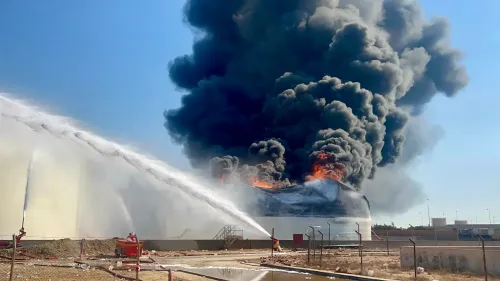
The Houthis said they targeted Saudi oil tankers Encelia and Layla using missiles and drones, alleging the vessels had violated a blockade imposed by the group. Separately, the UK Maritime Trade Operations (UKMTO) reported that a commercial vessel was struck by a projectile off Saudi Arabia's Red Sea coast near Al Shuqaiq, triggering a fire onboard. The agency did not identify the ship involved.
The strikes are being described as the first direct attacks on oil tankers operating in the Red Sea — a significant escalation in the ongoing West Asia conflict.
Market Reaction and Price Surge
International benchmark Brent crude rose $2.42, or 2.5 per cent, to trade above $96 a barrel, building on a six-week high reached in the previous session. US West Texas Intermediate (WTI) also climbed over 2 per cent, gaining $1.84 to hover near $88 a barrel. The latest surge has extended a rally that has already pushed Brent crude nearly 30 per cent higher this month.
Why the Red Sea Route Matters
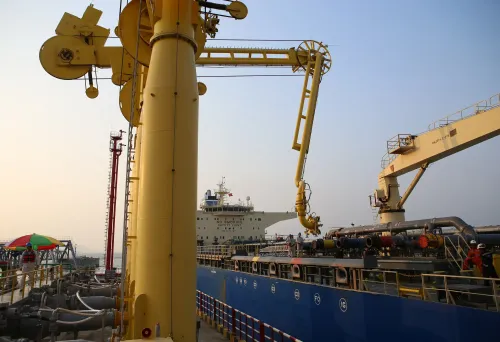
The Red Sea has grown into a critical export corridor for Saudi Arabia, enabling crude shipments to bypass the Strait of Hormuz — one of the world's most heavily trafficked oil transit chokepoints. Any sustained disruption to this route could force rerouting, inflating shipping costs and tightening global supply timelines.
Impact on India and Broader Markets
Analysts have warned that oil prices could revisit the $100-per-barrel mark if geopolitical tensions continue to escalate and supply disruptions deepen. For India, which is heavily dependent on imported crude, prices above $95 a barrel represent a key macroeconomic risk — with the potential to stoke inflation, widen the current account deficit, and pressure the rupee. According to analysts, sustained elevated prices could negatively impact broader market sentiment domestically.
With no diplomatic resolution in sight and Houthi attacks showing no signs of abating, oil markets are likely to remain on edge in the sessions ahead.
Point of View
It is a structural repricing of geopolitical risk. What mainstream coverage underplays is the asymmetry here — the Houthis have little to lose economically from escalation, while India, which imports over 85% of its crude, absorbs every dollar of the rally through its current account. If Brent holds above $95, the Reserve Bank of India's inflation calculus changes materially, and the fiscal math on fuel subsidies gets uncomfortable fast.
NationPress
21 Oct 2026
Frequently Asked Questions
Why did crude oil prices rise above $96 on 23 July?
Crude oil prices surged after Iran-backed Houthi militants claimed responsibility for missile and drone attacks on two Saudi oil tankers — Encelia and Layla — in the Red Sea, raising fears of supply disruptions. Brent crude rose 2.5 per cent to above $96 a barrel, extending a rally of nearly 30 per cent this month.
What were the Houthi attacks on Saudi oil tankers?
The Houthis said they struck Saudi oil tankers Encelia and Layla using missiles and drones, alleging the vessels had breached a blockade imposed by the group. These are reportedly the first direct attacks on oil tankers operating in the Red Sea, marking a significant escalation in the West Asia conflict.
How does the Red Sea conflict affect global oil supplies?
The Red Sea is a key export route for Saudi Arabia, allowing crude shipments to bypass the Strait of Hormuz. Attacks on tankers in this corridor raise the risk of supply disruptions, higher shipping costs, and rerouting delays — all of which tighten global oil availability and push prices higher.
Could oil prices reach $100 a barrel?
Analysts have warned that Brent crude could return to the $100-per-barrel mark if geopolitical tensions in West Asia continue to escalate and supply disruptions intensify. Brent has already surged nearly 30 per cent this month.
How do rising crude oil prices affect India?
India is heavily dependent on imported crude oil, making elevated prices a significant macroeconomic risk. Prices above $95 a barrel could stoke domestic inflation, widen the current account deficit, and pressure the rupee, according to analysts.