BSNL revenue jumps ₹4,000 crore in 2 years, EBITDA soars to ₹7,000 crore
Synopsis
BSNL has swung from near-irrelevance — with EBITDA of just ₹50 crore — to a ₹7,000 crore EBITDA in two years, while deploying indigenous 4G on 1 lakh towers. The state telecom giant is now one of only five countries globally to build such technology in-house, reframing what was once a cautionary tale of PSU decline into a rare turnaround story.
Key Takeaways
BSNL revenue grew from ₹21,000 crore to ₹25,000 crore over the past two years, according to the Ministry of Communications .
EBITDA surged from ₹50 crore to approximately ₹7,000 crore in the same period.
Indigenous 4G technology deployed across 1 lakh towers in a single year; India is now the fifth country globally with deep indigenous 4G capability.
Nearly 50,000 batteries replaced across 50,000 towers ; tower uptime target raised from 75% to 95% in states like Andhra Pradesh .
Re 1 SIM cards being distributed via India Post offices to rebuild the subscriber base.
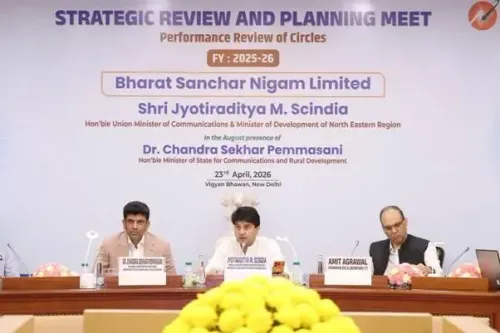
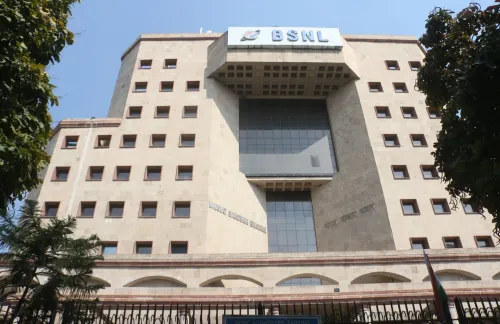
Bharat Sanchar Nigam Limited (BSNL) has posted a significant financial and operational turnaround, with its annual revenue climbing from ₹21,000 crore to ₹25,000 crore over the past two years, the Ministry of Communications announced on Monday, 25 May. The state-owned telecom operator's EBITDA surged from a near-negligible ₹50 crore to approximately ₹7,000 crore in the same period — a turnaround that officials describe as structural rather than cyclical.
Key Developments in BSNL's Revival
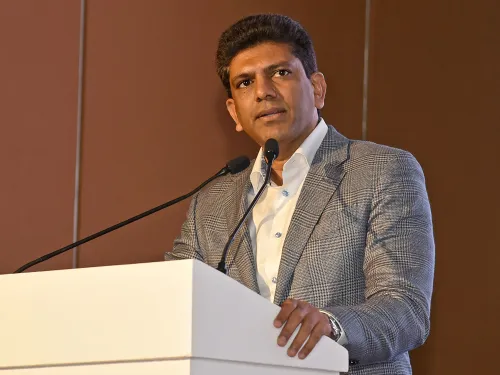
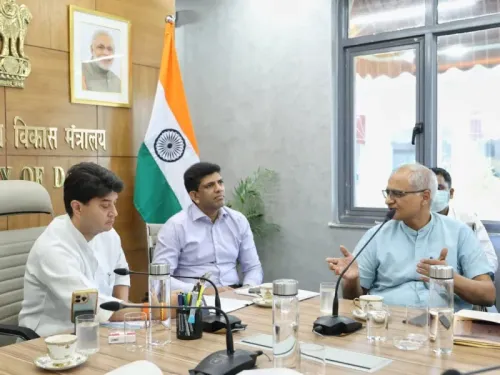
Union Minister of State for Communications and Rural Development Dr. Chandra Sekhar Pemmasani attributed the recovery to a disciplined, private-sector-style overhaul of the company's operations. Long-standing problems — including a poor work culture, ageing infrastructure, and underperforming tower networks — were addressed through targeted interventions and strict monitoring frameworks.
"We approached the revival with systematic rigour and private-sector discipline. The results are now visible through stronger finances, indigenous technology and connectivity reaching India's remotest corners," Pemmasani said.
Infrastructure Overhaul and Tower Upgrades
A major focus of the turnaround was network reliability. In states such as Andhra Pradesh, tower uptime had fallen to nearly 75 per cent; BSNL set a target of 95 per cent uptime and pursued it through large-scale hardware replacement. The company replaced nearly 50,000 batteries across 50,000 towers, upgraded power plants, and swapped out ageing cables to lift network quality to competitive levels.
Indigenous 4G: India Joins a Rare Club
Perhaps the most strategically significant milestone is BSNL's deployment of homegrown 4G technology. The company launched indigenous 4G on 1 lakh towers within a single year — a feat Pemmasani described as bringing the technology "to near-global standards." According to the minister, India is now only the fifth country in the world to develop such deep indigenous 4G capability, placing it alongside a small group of nations with end-to-end domestic telecom stack development.
This comes amid a broader push by the Centre to reduce dependence on foreign telecom equipment vendors — a priority sharpened by security concerns and the global supply-chain disruptions of recent years.
Rebuilding Customer Trust
On the commercial front, BSNL has kept its tariffs significantly lower than those of private telecom operators. To rebuild its subscriber base, the company has begun distributing Re 1 SIM cards through India Post offices, lowering the barrier for consumers to trial its network. The initiative targets price-sensitive users in semi-urban and rural markets — segments where BSNL's coverage footprint remains an advantage over private players.
What Comes Next
The turnaround positions BSNL as a credible alternative in India's telecom market, particularly for rural and government connectivity mandates. Whether the financial recovery can be sustained as the company scales its 4G rollout — and eventually migrates toward 5G — will be the defining test of the revival's durability. Industry observers will watch subscriber additions and ARPU trends in coming quarters as the clearest indicators of whether commercial momentum matches the infrastructure gains.
Point of View
000 crore is striking, but the harder question is whether it reflects genuine operational efficiency or the temporary tailwind of a government-backed revival package that shielded the PSU from market pressures. The indigenous 4G milestone is strategically real — but commercial viability depends on subscriber growth, not tower count. With Jio and Airtel entrenched, BSNL's Re 1 SIM gambit is an admission that it cannot compete on brand; it must compete on price. The durability of this turnaround hinges on whether BSNL can convert infrastructure investment into ARPU — something no government press release can guarantee.
NationPress
26 Sept 2026
Frequently Asked Questions
How much has BSNL's revenue grown in the last two years?
BSNL's revenue has grown from ₹21,000 crore to ₹25,000 crore over the past two years, a rise of ₹4,000 crore, according to the Ministry of Communications. Over the same period, its EBITDA jumped from ₹50 crore to nearly ₹7,000 crore.
What is BSNL's indigenous 4G technology and why does it matter?
BSNL has deployed homegrown 4G technology — developed without reliance on foreign vendors — across 1 lakh towers in a single year. India is now one of only five countries in the world to have developed such deep indigenous 4G capability, making it strategically significant for national telecom security.
How did BSNL improve its network quality?
BSNL replaced nearly 50,000 batteries across 50,000 towers, upgraded power plants, and replaced ageing cables. In states like Andhra Pradesh, where tower uptime had dropped to 75 per cent, the company set a target of 95 per cent uptime.
What is the Re 1 SIM card initiative?
BSNL has begun distributing SIM cards priced at Re 1 through India Post offices to lower the barrier for new subscribers to try its network. The scheme targets price-sensitive consumers in rural and semi-urban areas where BSNL has a coverage advantage over private operators.
Who is overseeing BSNL's revival?
Union Minister of State for Communications and Rural Development Dr. Chandra Sekhar Pemmasani has been the government's primary spokesperson on the turnaround, crediting a private-sector-style discipline and systematic monitoring as the drivers of BSNL's recovery.