Government Approves Enhanced UDAN Scheme to Develop 100 Airports with ₹28,840 Crore Investment
Synopsis
Discover the transformative impact of the newly approved Modified UDAN Scheme, which allocates ₹28,840 crore to enhance regional air connectivity across India, targeting 100 airports and improving travel for citizens, especially in underserved areas.
Key Takeaways
Investment of ₹28,840 crore for the Modified UDAN Scheme.
Development of 100 airports over the next decade.
Enhancement of regional air connectivity for underserved areas.
Support for affordable air travel and healthcare access.
Promotion of the indigenous aerospace sector under Atmanirbhar Bharat.
New Delhi, March 25 (NationPress) The Cabinet, under the leadership of Prime Minister Narendra Modi, has officially sanctioned the Modified UDAN Scheme for a decade, featuring a substantial financial investment of Rs 28,840 crore from the Central Government's budgetary provisions.
This revised initiative is set to be active from the fiscal years 2026-27 to 2035-36.
The approval aims to significantly enhance regional air connectivity for areas that are currently underserved or unserved; this will stimulate economic growth, trade, and tourism in tier 2 and 3 cities, provide affordable air travel options for the general populace, and improve access to emergency services and healthcare in remote and hilly regions.
Furthermore, the scheme will increase the viability and sustainability of regional airports and airline operators, promote the indigenous aerospace sector in line with the Atmanirbhar Bharat initiative, and support the vision of a ‘Viksit Bharat 2047’.
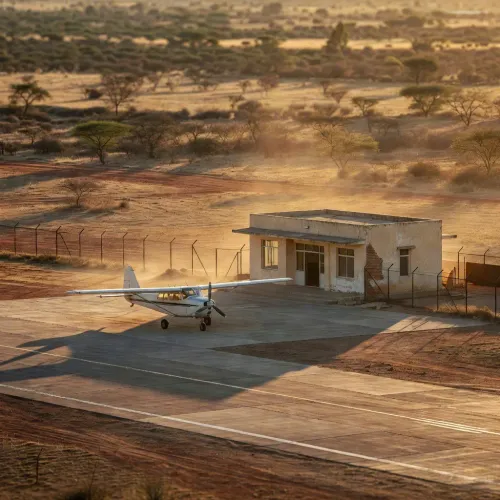
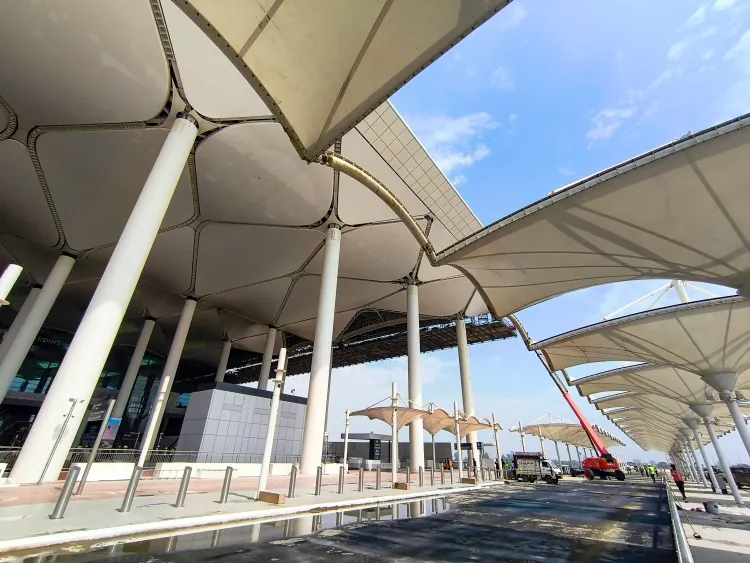
The Modified UDAN Scheme outlines plans to develop 100 airports from existing unserved airstrips, aligning with the Viksit Bharat 2047 goal of expanding infrastructure and transforming India into a globally competitive aviation hub, with an estimated budget of Rs 12,159 crore over the next eight years.
Considering the high ongoing operation and maintenance costs, as well as the limited revenue for Regional Connectivity Scheme (RCS)-exclusive aerodromes, the initiative proposes to offer operational and maintenance support for three years, limited to Rs. 3.06 crore per year for each airport and Rs. 0.90 crore per year for each heliport or water aerodrome, totaling approximately Rs. 2,577 crore for around 441 aerodromes.
Additionally, to tackle connectivity issues in hilly, remote, island, and aspirational regions, the plan includes the construction of 200 modern helipads, each costing Rs 15 crore, which will require a total funding of Rs 3,661 crore over the next eight years (adjusted for inflation), prioritizing districts in need to enhance last-mile connectivity and emergency response.
Under the Regional Connectivity Scheme, airline operators are entitled to financial assistance through Viability Gap Funding (VGF) for managing awarded routes.
Recognizing the importance of extended market development, the Cabinet has proposed VGF support for airline operators amounting to Rs 10,043 crore over a ten-year period.
To mitigate the shortage of small fixed-wing aircraft and helicopters, the scheme also plans to acquire two HAL Dhruv helicopters for Pawan Hans and two HAL Dornier aircraft for Alliance Air.
The original UDAN Scheme was initiated in October 2016 to make air travel more affordable and to reinforce connectivity to tier 2 and 3 cities.
Since its introduction, 663 routes have been operationalized across 95 airports, heliports, and water aerodromes (as of February 28, 2026), with over 3.41 lakh flights conducted, transporting 162.47 lakh passengers.
Point of View
Aligning with the vision of a developed India by 2047.
NationPress
23 Sept 2026
Frequently Asked Questions
What is the Modified UDAN Scheme?
The Modified UDAN Scheme is an initiative approved by the Indian Cabinet to enhance regional air connectivity, with a budget of ₹28,840 crore, aimed at developing 100 airports over the next decade.
How will the scheme benefit underserved areas?
The scheme will boost economic growth, facilitate affordable air travel, and improve healthcare access in underserved and remote regions.
What financial support will airline operators receive?
Airline operators will receive Viability Gap Funding (VGF) of ₹10,043 crore over ten years to support their operations on awarded routes.
What is the total investment for developing new airports?
The scheme plans to invest ₹12,159 crore for the development of 100 new airports from existing unserved airstrips.
When was the original UDAN Scheme launched?
The original UDAN Scheme was launched in October 2016 with the goal of making air travel affordable and accessible.