Centre approves ₹1,141 crore Postal Operations scheme till 2031
Synopsis
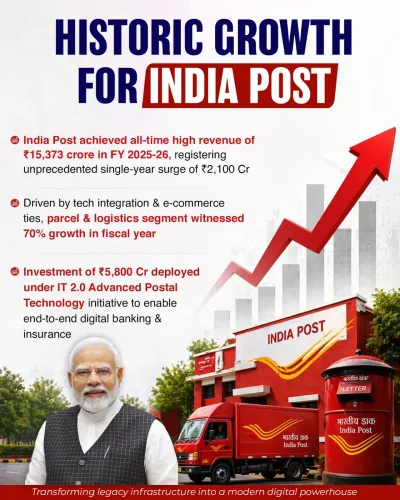
The Centre has locked in ₹1,141 crore for Postal Operations through 2030-31, with more than half going to mail network modernisation. The five-year plan also funds parcels, rural post offices and philately as India Post tries to stay relevant in an e-commerce-heavy delivery market.
Key Takeaways
The Centre on 25 November approved continuation of the Postal Operations scheme with a ₹1,141 crore outlay for FY 2026-27 to FY 2030-31 .
The programme has six sub-schemes , led by Mail Network Optimization at ₹575 crore and Parcel Network Optimization at ₹278 crore .
Rural Business and Access to Postal Network is allocated ₹120 crore ; marketing ₹100 crore ; philately ₹60 crore ; international mails ₹8 crore .
India Post has 1.65 lakh post offices, including 1,49,655 in rural areas.
Implementation spans the full 16th Finance Commission cycle and is framed as a continuity measure, not a new standalone mission.
The Centre on Wednesday approved the continuation of the Postal Operations scheme for the 16th Finance Commission cycle, from FY 2026-27 to FY 2030-31, with a proposed outlay of ₹1,141 crore. Cleared in New Delhi on 25 November, the five-year programme is meant to strengthen postal infrastructure, raise operational efficiency and support rising demand from logistics, e-commerce and digital service delivery across the country.
According to a Cabinet statement, the scheme would support modernisation of postal infrastructure, strengthen last-mile delivery, improve logistics efficiency, promote financial inclusion and enhance customer-centric service delivery. It will be implemented over five years and is organised into six sub-schemes.
Key developments
The largest slice is Mail Network Optimization, with an outlay of ₹575 crore. It envisages modernisation of mail operations through centralised delivery systems, mechanisation, advanced IT solutions under Advanced Postal Technology (APT 2.0), GIS-based services and upgraded infrastructure. The component also covers delivery post offices, mail handling systems, Mail Motor Service (MMS) workshops, the Road Transport Network and modern smart 24x7 letter boxes, with the stated aim of improving efficiency, transparency, service quality and logistical reliability.
The Parcel Network Optimization sub-scheme, allocated ₹278 crore, includes construction of Parcel Hubs and expansion of Parcel Packaging Units (PPUs) aligned with a redesigned sorting framework. The intent, as set out in the Cabinet note, is to streamline parcel movement, reduce handling points, ease capacity constraints and improve transit times as e-commerce consignments grow alongside traditional mail.
The six sub-schemes and their outlays
Rural Business and Access to Postal Network has been given ₹120 crore. It focuses on infrastructure upgrades, standardised branding and better resource utilisation to recast post offices, particularly in rural areas, as citizen-centric service hubs. The component is also meant to strengthen financial inclusion, digital connectivity and local economic development while improving last-mile access in underserved regions.
Infrastructure Upgrade and Augmentation of Infrastructure for International Mails has a comparatively small ₹8 crore envelope. It aims to upgrade Foreign Post Offices (FPOs) and Sub Foreign Post Offices (SFPOs) so that processing of international consignments can be expedited. Marketing Functions including Quality of Service is budgeted at ₹100 crore for promotion, branding, outreach and customer engagement through television, digital, radio, print and outdoor campaigns. Philately Operations, with ₹60 crore, proposes exhibitions, seminars, quizzes, school philatelic clubs and innovative stamp designs, including scented, holographic and 3D stamps.
Why the India Post network still matters
India Post remains one of the world's largest postal networks, with 1.65 lakh post offices, including 1,49,655 offices in rural areas. The department continues to serve as a platform for mail, parcels, banking, insurance and other citizen-centric services, especially in remote regions where coverage by other logistics players is thinner.
This comes amid a structural shift in the postal business: letter volumes have long been under pressure even as parcels, banking and government-to-citizen services have grown in importance. Notably, more than half of the fresh outlay is concentrated in mail network optimisation, while parcels receive roughly a quarter. The rural access component is smaller still, despite nearly 1.50 lakh of the 1.65 lakh offices sitting in the countryside.
Impact and what comes next
The scheme is designed to run through the full 16th Finance Commission period ending FY 2030-31. Those affected include rural households that rely on post offices for last-mile delivery and financial products, e-commerce shippers seeking more reliable parcel transit, and senders using FPOs and SFPOs for international mail.
Execution will be judged on whether APT 2.0, GIS tools and new Parcel Hubs translate into fewer handling points and shorter transit times. The Cabinet has framed the outlay as a continuity measure rather than a new standalone mission, meaning existing postal operations will be recast under the six heads. As India Post competes in a market shaped by e-commerce and digital payments, the ₹1,141 crore envelope will be tested on last-mile reliability, rural service quality and parcel capacity before 2031.
Point of View
141 crore over five years is a modest envelope for a network of 1.65 lakh offices. The skew toward mail optimisation at ₹575 crore versus parcels at ₹278 crore sits uneasily with the e-commerce surge the Cabinet itself cites as a driver. International mail gets just ₹8 crore, and rural access — where 1,49,655 offices sit — gets ₹120 crore. Without disclosed volume, SLA or last-mile KPIs, this risks becoming another infrastructure top-up rather than a logistics turnaround.
NationPress
25 Nov 2026
Frequently Asked Questions
What is the Postal Operations scheme approved by the Centre?
It is a five-year continuation of India Post's Postal Operations programme for the 16th Finance Commission cycle, from FY 2026-27 to FY 2030-31, with a proposed outlay of ₹1,141 crore. The Cabinet says it will modernise infrastructure, strengthen last-mile delivery and support logistics, e-commerce and digital services.
How is the ₹1,141 crore outlay divided?
The largest head is Mail Network Optimization at ₹575 crore, followed by Parcel Network Optimization at ₹278 crore. Rural Business and Access to Postal Network gets ₹120 crore, marketing ₹100 crore, philately ₹60 crore, and international mail infrastructure ₹8 crore.
When will the Postal Operations scheme run?
The scheme is intended to run for five years from FY 2026-27 to FY 2030-31, covering the full 16th Finance Commission cycle. It is framed as a continuation of existing postal operations under six sub-schemes.
Why does the scheme matter for rural India?
India Post has 1.65 lakh post offices, of which 1,49,655 are in rural areas, making it a primary last-mile channel for mail, parcels, banking and citizen services. The ₹120 crore Rural Business component is meant to upgrade those offices into citizen-centric hubs and improve access in underserved regions.
What will change in parcel and mail handling?
Mail operations are to be modernised through APT 2.0, GIS tools, mechanisation and upgraded MMS and road networks, while parcels get new Parcel Hubs and expanded Parcel Packaging Units. The stated aim is fewer handling points, better capacity and shorter transit times.