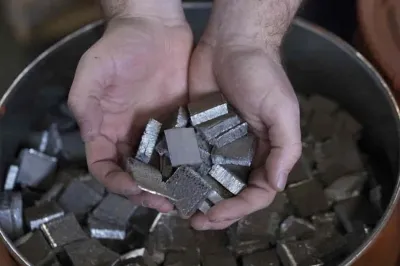
India gets 20 global bids for rare earth magnet manufacturing under ₹7,280 crore scheme

Synopsis
India's rare earth magnet ambitions just got a credibility boost: 20 global bids have arrived for the ₹7,280 crore REPM scheme, which aims to build a full NdPr-oxide-to-finished-magnet supply chain domestically. With EVs, wind turbines, and defence systems all dependent on these magnets, the stakes — and the geopolitical subtext — could not be higher.
Key Takeaways
The Ministry of Heavy Industries received 20 bids through a global tender on 13 August 2026 for the REPM manufacturing scheme .
The scheme carries a financial outlay of ₹7,280 crore , approved by the Union Cabinet on 26 November 2025 .
Total targeted capacity is 6,000 MTPA , to be distributed among 5 beneficiaries at up to 1,200 MTPA each.
The scheme runs for 7 years from award date — 2 years for setup and 5 years for incentive disbursement on sales.
Rare earth magnets are critical for EVs , wind turbines , defence systems , and high-end electronics .
The initiative supports India's Net Zero 2070 target by reducing import dependence in green-energy components.
The Ministry of Heavy Industries (MHI) on 13 August 2026 announced it received 20 bids through a global competitive tender for selecting manufacturers to establish integrated Sintered Rare Earth Permanent Magnet (REPM) manufacturing facilities in India. The response marks a significant early milestone for the government's first-of-its-kind scheme to build a domestic rare earth magnet supply chain from scratch.
What the Scheme Covers
The REPM scheme, backed by a financial outlay of ₹7,280 crore approved by the Union Cabinet on 26 November 2025, targets a total installed capacity of 6,000 Metric Tons Per Annum (MTPA) of integrated rare earth permanent magnet manufacturing. Capacity will be allocated to five beneficiaries, each receiving up to 1,200 MTPA, through the global bidding process.
The scheme envisions building a complete value chain — from NdPr oxide to finished magnets — entirely within India, aiming to sharply reduce import dependence in a sector that currently relies heavily on overseas suppliers, particularly China.
Timeline and Bidding Process
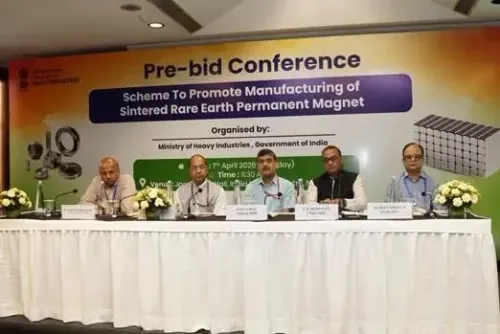
The Request for Proposal (RFP) was floated on the CPP portal on 20 March 2026. A pre-bid conference followed on 7 April 2026. The deadline for bid submission was 12 August 2026, and technical bids were opened on 13 August 2026 in the presence of the bidders.
According to the ministry, the total duration of the scheme will be 7 years from the date of award — comprising a 2-year gestation period for facility setup and 5 years of incentive disbursement tied to actual sales of REPM.
Why Rare Earth Magnets Matter
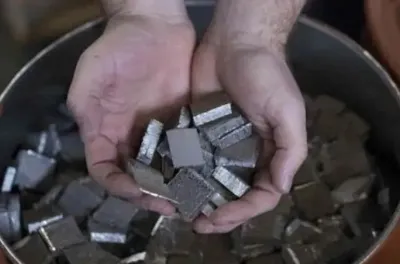
Rare Earth Permanent Magnets are among the most powerful magnets commercially available and are critical inputs for electric vehicles (EVs), wind turbines, high-end electronics, and aerospace and defence systems. As India accelerates its clean energy transition and defence indigenisation, securing a domestic REPM supply chain has become a strategic priority.
The ministry noted that indigenous REPM production will also support India's Net Zero 2070 climate commitment by enabling local manufacturing of green-energy components without dependence on imported magnets.
Strategic and Industrial Significance
This comes amid a global scramble for rare earth supply chains, with the United States, European Union, and Japan all pursuing similar domestic manufacturing initiatives. India's move to attract 20 global bids signals credible international interest in the country as a rare earth processing and manufacturing hub.
Notably, the scheme is structured around incentive disbursement linked to verified sales — a design feature that attempts to avoid the capacity-creation-without-output pitfall seen in some earlier industrial programmes. The next step will be the evaluation of technical bids and selection of the five beneficiaries, with the clock on the 7-year scheme window starting from the date of award.
Point of View
Meaning beneficiaries will still depend on imported NdPr oxide for years before a true end-to-end chain emerges. The scheme's incentive-on-sales structure is smarter than capacity-linked models, but it will only work if verification is rigorous and disbursements are not delayed by bureaucratic bottlenecks. The geopolitical urgency is real: China controls over 85% of global rare earth processing, and any supply disruption would cripple India's EV and defence ambitions simultaneously.
NationPress
13 Aug 2026
Frequently Asked Questions
What is the REPM scheme announced by the Ministry of Heavy Industries?
The REPM scheme is a government initiative to establish integrated Sintered Rare Earth Permanent Magnet manufacturing facilities in India, with a financial outlay of ₹7,280 crore approved by the Union Cabinet on 26 November 2025. It targets a total capacity of 6,000 MTPA distributed among five selected manufacturers.
How many bids did India receive for the rare earth magnet scheme?
The Ministry of Heavy Industries received 20 bids through a global competitive tender. Technical bids were opened on 13 August 2026 in the presence of the bidders, following a submission deadline of 12 August 2026.
Why are rare earth permanent magnets strategically important for India?
Rare Earth Permanent Magnets are essential components in electric vehicles, wind turbines, aerospace systems, and defence equipment. Domestic production would reduce India's dependence on imports — predominantly from China — and support the country's Net Zero 2070 climate commitment.
How long will the REPM scheme run and how are incentives structured?
The scheme runs for 7 years from the date of award. This includes a 2-year gestation period for setting up manufacturing facilities, followed by 5 years of incentive disbursement linked to actual sales of rare earth permanent magnets — not merely capacity creation.
Who will benefit from the REPM scheme and how much capacity will each get?
Five manufacturers will be selected as beneficiaries through the global bidding process. Each will be allocated up to 1,200 MTPA of integrated REPM manufacturing capacity, together adding up to the scheme's 6,000 MTPA national target.