China's 'predatory' practices threaten Europe's industrial base, report warns
Synopsis
A new Brussels Signal report pulls no punches: China is not a trade partner but a 'predatory superpower' dismantling Europe's industrial base through state subsidies, currency manipulation and rare-earth monopolies. With German giants slashing jobs and EU carmakers closing assembly lines, France and Germany are demanding anti-dumping probes — while the report argues Brussels itself lacks the leverage to fight back, and that India may be the most viable alternative anchor.
Key Takeaways
A Brussels Signal report labels China a 'predatory superpower' using state subsidies, currency manipulation and raw material monopolies to undermine European manufacturing .
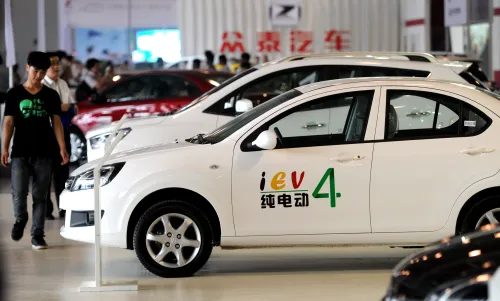
French and German leaders are calling for sector-wide anti-dumping investigations into Chinese electric vehicles , chemicals , and machine tools .
German industrial giants are cutting tens of thousands of jobs ; European automakers are shutting domestic assembly lines, according to the report.
The proposed EU rapid-response mechanism is described as 'inherently flawed' because it relies on the European Commission, which critics hold responsible for the dependency.
Britain is cited as a model for supply chain diversification, with India identified as a natural alternative partner for both the UK and broader Europe.
China's 'systemic and persistent market-distorting practices' are threatening the very survival of Europe's industrial base, according to a new report by Brussels Signal, published on 10 October 2026. The report characterises China not as a benevolent trading partner but as a 'predatory superpower' deploying massive state subsidies, currency manipulation, and raw material monopolies to hollow out European manufacturing.
Key Allegations Against China
The Brussels Signal report argues that Beijing's toolkit goes well beyond conventional trade competition. It reportedly leverages state subsidies, currency manipulation, and raw material monopolies — particularly in rare earths and semiconductor-grade gases — to undercut European producers. French and German leaders are now calling for 'sector-wide anti-dumping investigations' targeting Chinese electric vehicles, chemicals, and machine tools, and are demanding new powers to reduce Europe's critical dependence on Chinese supply chains.
The Industrial Fallout Unfolding Across Europe
German industrial giants are reportedly cutting tens of thousands of jobs, while European auto manufacturers are shutting down domestic assembly lines. The report notes that critical supply chains have been, in its words, 'completely outsourced to an authoritarian rival' — leaving the continent structurally exposed. This is not a new warning; European policymakers have raised dependency concerns for years, but the scale of job losses and plant closures now gives the debate fresh urgency.
Why the EU's Proposed Response May Fall Short
The report is sharply critical of the proposed EU 'rapid-response' mechanism, arguing it is 'inherently flawed' because it relies on the European Commission — the very institution it holds responsible for allowing this dependency to deepen. 'Even if Brussels manages to push the button, Beijing holds the real levers of power,' the report contends. From rare earths to critical industrial inputs, China controls materials that European factories cannot easily source elsewhere. Any aggressive tariff war, the report warns, risks hitting European consumers and remaining factories far harder than it would affect Beijing.
Britain's Diversification and India's Role
According to a separate article cited in Eurasia News, Britain has taken the lead among European nations in breaking free from Chinese dependency, actively diversifying trade and investment ties — with India identified as a natural anchor partner. The report suggests the UK's China playbook offers a template the rest of Europe would do well to follow. Europe's exposure to China, it notes, runs far deeper than Britain's, particularly in electronics, solar components, pharmaceuticals, and rare earths. This comes amid a broader global re-evaluation of supply chain resilience following the disruptions of the post-pandemic years and escalating US-China trade tensions.
The Strategic Autonomy Question
Policymakers across the continent consistently flag that such deep dependence undermines European strategic autonomy — the bloc's ability to act independently on economic and security decisions. The report's framing of China as a 'predatory superpower' rather than a rival trading partner marks a notable hardening of tone in Western European policy discourse. Whether Brussels can translate that rhetoric into effective, coordinated industrial policy remains the central unanswered question.
Point of View
But the structural problem it describes is real and years in the making — European policymakers enabled this dependency through decades of cheap-input economics. The proposed EU rapid-response mechanism is a political signal, not a solution: Brussels cannot easily decouple from an economy that supplies its solar panels, EV batteries and pharmaceutical ingredients simultaneously. The pivot toward India as an alternative supply chain anchor is strategically sensible but operationally nascent — India's manufacturing capacity, logistics infrastructure and regulatory environment are not yet calibrated to absorb European demand at scale. The harder question the report does not fully answer is whether Europe has the political will to absorb the short-term consumer price pain that any serious decoupling from China would entail.
NationPress
10 Oct 2026
Frequently Asked Questions
What does the Brussels Signal report say about China's trade practices?
The report describes China as a 'predatory superpower' that uses massive state subsidies, currency manipulation, and raw material monopolies to destroy European manufacturing competitiveness. It argues these are 'systemic and persistent market-distorting practices' rather than normal trade competition.
Which European countries are responding to China's trade practices?
French and German leaders are reportedly calling for sector-wide anti-dumping investigations targeting Chinese electric vehicles, chemicals, and machine tools. They are also demanding new powers to reduce Europe's critical dependence on Chinese supply chains.
Why is the EU's proposed rapid-response mechanism considered flawed?
The report argues the mechanism is inherently flawed because it relies on the European Commission, which critics hold responsible for allowing the dependency on China to develop in the first place. It also notes that China controls critical raw material inputs — from rare earths to semiconductor-grade gases — giving Beijing the real leverage in any tariff confrontation.
What role does India play in reducing Europe's dependence on China?
According to a Eurasia News article cited in the report, Britain has begun diversifying away from China with India as a key partner, and the report suggests this offers a template for broader Europe. India is described as a 'natural partner' to build an alternative supply chain around, particularly given Europe's deep exposure in electronics, solar components, pharmaceuticals, and rare earths.
What is the economic impact on Europe of China's market practices?
German industrial giants are reportedly cutting tens of thousands of jobs, European auto manufacturers are shutting domestic assembly lines, and critical supply chains have been outsourced to China. Any aggressive tariff response risks hitting European consumers and factories harder than Beijing, the report warns.