Capacity building must go collective to meet new-age challenges: Dr Jitendra Singh
Synopsis
Dr Jitendra Singh used a New Delhi roundtable to make the case that India's capacity-building model is structurally outdated — individual skill training is no longer enough. With the iGOT platform already crossing 40 lakh users, the minister is pushing for a whole-of-society, cross-sector learning framework, signalling a potential policy shift in how the Centre approaches administrative reform.
Key Takeaways
Union Minister Dr Jitendra Singh addressed a roundtable on capacity building in New Delhi on 26 August .
He called for capacity building to evolve from an individual, skill-based model into a collective, whole-of-society framework.
The iGOT platform has surpassed 40 lakh registered individuals , serving as a continuous learning hub for government officials.
Dr Singh cited India's opening of space and nuclear energy sectors to private participation as a template for cross-sector collaboration.
He stressed the need for pragmatism in governance , urging officials to move beyond rigid rule-book adherence.
The National Centre for Good Governance and the Indian Institute of Public Administration were highlighted as key institutions in the capacity-building ecosystem.
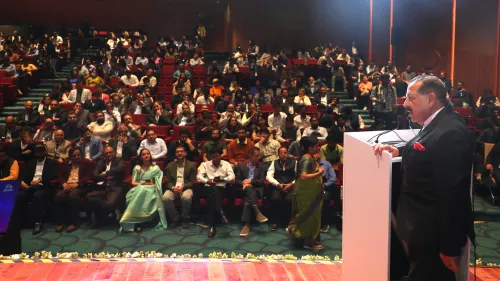
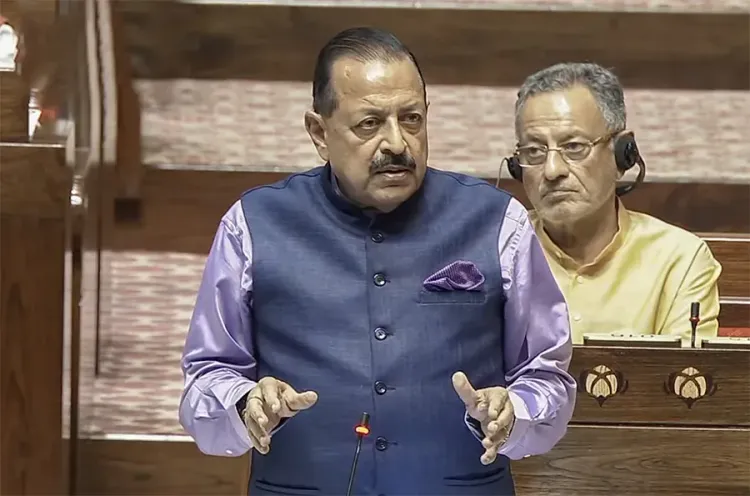
Union Minister Dr Jitendra Singh on Wednesday, 26 August called for a fundamental shift in how India approaches capacity building, arguing that the traditional individual, skill-based model must give way to a collective, whole-of-society framework capable of responding to rapid technological and global change. He made the remarks while addressing a roundtable on capacity building in New Delhi.
The Core Argument
Dr Singh said the pace of technological and societal evolution has accelerated to a point where continuous learning is no longer optional — it is indispensable. 'What one learns today may already become outdated by tomorrow,' he noted, adding that individuals and institutions alike must cultivate the capacity to remain perpetual learners and adapt in real time.
He stressed that institutions can no longer operate in silos. Effective governance, he argued, requires integrated functioning and active coordination across organisational boundaries so that policies translate into implementation rather than remaining on paper.
Whole-of-Society Approach
The minister was emphatic that the government alone cannot shoulder every responsibility. He called for greater participation from non-government stakeholders and pointed to India's recent experience of opening strategic sectors — including space and nuclear energy — to private players as a model for cross-sector collaboration. The goal, he said, is an ecosystem in which diverse stakeholders contribute toward a common national objective.
Dr Singh also underlined the importance of pragmatism in governance. Officials, he said, must move beyond rigid adherence to the rule book and develop a mindset that enables them to act effectively within their responsibilities while exercising sound judgement.
Digital Learning Infrastructure
Highlighting the growing role of continuous learning platforms, Dr Singh pointed to the iGOT platform, which now counts more than 40 lakh registered individuals and serves as a live learning hub for government officials across the country. He also referenced the National Centre for Good Governance and the Indian Institute of Public Administration as anchor institutions within a broader capacity-building ecosystem.
What This Signals
The roundtable comes at a time when the Centre has been pushing for administrative reform and greater private-sector involvement in areas long considered exclusively governmental. Dr Singh's remarks suggest that future capacity-building policy may increasingly prioritise systemic, institution-wide learning frameworks over individual training programmes. How quickly this shift can be operationalised across India's vast bureaucratic machinery remains the central question going forward.
Point of View
But the gap between aspiration and execution in Indian public administration is well-documented. The iGOT platform's 40 lakh registrations are a meaningful data point, yet registration figures say little about learning outcomes or behavioural change on the ground. The real test of this shift will be whether institutional coordination mechanisms — not just digital platforms — are built with accountability teeth. Opening space and nuclear to private players is a useful analogy, but those sectors had clear regulatory frameworks; a whole-of-society learning ecosystem will need equally clear governance architecture to avoid becoming another well-intentioned initiative that stalls at the pilot stage.
NationPress
26 Aug 2026
Frequently Asked Questions
What did Dr Jitendra Singh say about capacity building?
Dr Jitendra Singh said capacity building must shift from an individual, skill-based approach to a collective, whole-of-society model. He argued that the rapid pace of technological change makes continuous, institution-wide learning indispensable for effective governance.
What is the iGOT platform and how large is it?
The iGOT (Integrated Government Online Training) platform is a continuous learning hub for government officials in India. As of the roundtable on 26 August, it had more than 40 lakh registered individuals.
Why did the minister reference space and nuclear energy sectors?
Dr Singh cited India's decision to open space and nuclear energy to private participation as a model for cross-sector collaboration. He used these examples to argue that the country must learn to work across sectors, with diverse stakeholders contributing toward shared national objectives.
Which institutions did Dr Singh highlight in the capacity-building ecosystem?
The minister pointed to the National Centre for Good Governance and the Indian Institute of Public Administration as anchor institutions working in governance and capacity building, alongside the iGOT digital learning platform.
What mindset change did the minister call for among government officials?
Dr Singh called for greater pragmatism among officials, urging them to move beyond rigid adherence to the rule book. He said effective governance requires a change in mindset that allows officials to exercise sound judgement while fulfilling their responsibilities.