Did the Government Eliminate 2,000 Outdated Regulations to Foster Tech-Driven Governance?

Synopsis
In a bold move towards modern governance, the Indian government has abolished 2,000 outdated regulations over the past decade. This initiative reflects a commitment to trust-based governance and the integration of technology, as emphasized by Union Minister Dr. Jitendra Singh at the AI Impact Summit 2026.
Key Takeaways
2,000 obsolete regulations removed in a decade.
Shift towards trust-based governance .
Integration of AI into public systems is essential.
Continuous learning promoted by the Capacity Building Commission .
AI and human integrity must coexist in governance.
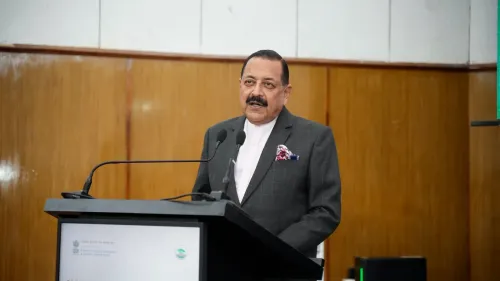
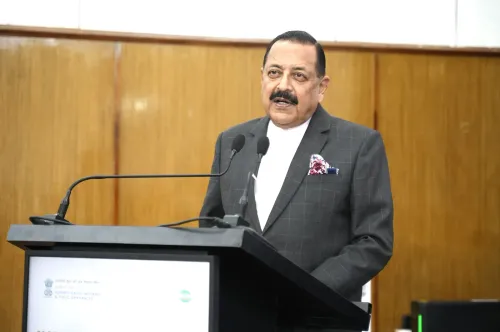
New Delhi, Feb 20 (NationPress) The government has taken a significant step by abolishing nearly 2,000 obsolete regulations over the past decade, as stated by Union Minister of State Dr. Jitendra Singh on Friday. He emphasized that many of these rules were outdated, originating from a different time that could not foresee today's rapid technological evolution.
During his keynote speech at the ‘AI Impact Summit 2026’, he remarked that the simplification of procedural requirements, including the removal of unnecessary attestations and redundant practices, signifies a transition towards trust-based governance.
The summit, themed “AI for Viksit Bharat: The Capacity Building Imperative,” convened policymakers, administrators, and subject matter experts to discuss the intersection of governance, capacity building, and Artificial Intelligence.
“While AI has the potential to transform every aspect of life, it cannot replace integrity. Artificial Intelligence can optimize systems, enhance efficiency, and broaden accessibility, but it cannot substitute human integrity,” he conveyed to the audience.
Dr. Singh highlighted that AI is now an essential element across various sectors and must be effectively integrated into public systems.
One of the most promising aspects of India's transformation journey is the proactive political leadership that is open to adopting forward-thinking and future-ready concepts.
Reflecting on how discussions around AI-driven governance were unimaginable in official dialogues fifteen years ago, the minister credited Prime Minister Narendra Modi’s reform-centric approach for fostering an environment conducive to innovation and governance reforms.
He further explained that the Capacity Building Commission was established to ensure that learning becomes an ongoing institutional practice. Referring to the notion of Digital Public Goods (DPG), Dr. Singh noted that while the term may be modern, its essence is grounded in the principles of public welfare and citizen-focused governance.
He also provided an example from the healthcare sector, where AI-powered telemedicine services complement the role of physical doctors.
While AI improves efficiency and access, the involvement of a human doctor reassures patients and fosters trust. Such models are particularly well-suited to India’s diverse social and linguistic landscape, where technology must align with local contexts.
Point of View
The government's decision to remove outdated regulations marks a significant turning point in governance. By embracing technology and focusing on trust, India is poised to enhance efficiency and accessibility. However, it remains essential to ensure that human integrity is preserved in this digital transformation.
NationPress
30 Sept 2026
Frequently Asked Questions
What prompted the government to remove these outdated rules?
The government recognized that many of these regulations were no longer relevant and originated from an era that could not anticipate the advancements in technology.
How does AI play a role in governance?
AI has the potential to streamline processes, enhance operational efficiency, and improve public service delivery, but it cannot replace the need for human integrity.
What is the Capacity Building Commission?
The Capacity Building Commission was established to promote continuous learning and institutionalize good governance practices.
How does the government ensure public good in its initiatives?
The government focuses on concepts like Digital Public Goods (DPG) to reinforce the principles of public welfare and citizen-centric governance.
What is the significance of AI-assisted telemedicine?
AI-assisted telemedicine enhances healthcare access while maintaining the critical human element through physical doctors, fostering trust among patients.