CSIR-NAL unveils 3 indigenous gas turbine engines for UAVs, drones and missiles
Synopsis
India's CSIR-NAL has unveiled three homegrown gas turbine engines — the NJ-05, NJ-50, and NJ-100 — covering thrust ranges from 5 kg to 100 kg, targeting UAVs, drone interceptors, and missile systems. It is one of the most concrete deliverables yet from India's push to build an indigenous defence propulsion ecosystem, and signals that domestic aerospace start-ups may soon have a viable engine supply chain to build around.
Key Takeaways
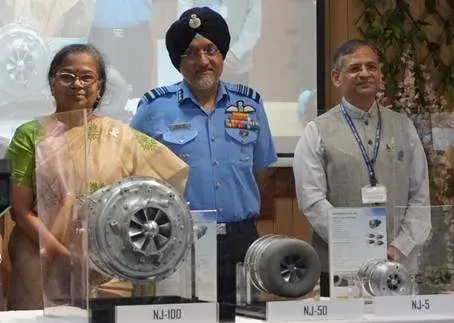
CSIR-NAL unveiled three indigenous gas turbine engines — NJ-05 , NJ-50 , and NJ-100 — on 25 August in New Delhi .
Thrust capacities are 5 kg , 50 kg , and 100 kg , targeting UAVs , drone interceptors, and compact missile systems.
The engines feature advances in high-RPM turbomachinery and high-temperature combustion technologies.
Air Marshal Tejinder Singh (CISC) was the chief guest; CSIR DG N Kalaiselvi commended the development as a key aerospace self-reliance milestone.
CSIR-NAL Director Abhay A Pashilkar said Indian industry has the capacity to manufacture the engines at scale for the domestic defence sector.
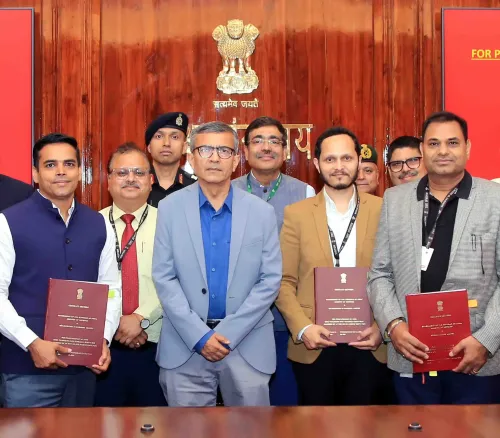
CSIR-National Aerospace Laboratories (CSIR-NAL) on Tuesday, 25 August unveiled three indigenously developed micro and small gas turbine engines designed for use in unmanned aerial vehicles (UAVs), drone interceptors, and compact missile systems. The announcement, made at the SSB Auditorium at CSIR headquarters in New Delhi, marks a significant step in India's push for self-reliance in critical aerospace propulsion technology.
The Three Engines: Capabilities and Applications
The engines — designated NJ-05, NJ-50, and NJ-100 — carry thrust capacities of 5 kg, 50 kg, and 100 kg, respectively. According to the Ministry of Science and Technology, the trio is aimed at addressing critical propulsion gaps in India's indigenous defence technology programmes, spanning lightweight surveillance drones to more demanding missile and interceptor platforms.
The CSIR-NAL scientific team, led by R Prathapanayaka, presented technical details on the development process, highlighting advances in high-RPM turbomachinery and high-temperature combustion technologies that made the indigenous systems possible.
What Officials Said
Air Marshal Tejinder Singh, Chief of Integrated Defence Staff to the Chairman Chiefs of Staff Committee (CISC) and chief guest at the event, underlined the strategic importance of building advanced gas turbine engine capabilities within the country. He said indigenous propulsion technologies would strengthen national security and enhance the technological self-reliance of India's Armed Forces.
CSIR Director General and Department of Scientific and Industrial Research Secretary N Kalaiselvi commended the project team, describing the indigenous development of specialised aerospace subsystems as 'an important milestone in advancing self-reliance in aerospace engineering.'
CSIR-NAL Director Abhay A Pashilkar said the laboratory was evolving into a multi-stage integrator for India's growing drone ecosystem, adding that Indian industry — including the country's expanding aerospace start-up sector — has the potential to manufacture these engines at scale to meet domestic defence requirements.
Strategic and Industrial Significance
The development of the NJ series is expected to catalyse a domestic ecosystem for the design, development, and manufacture of miniaturised gas turbine propulsion systems. This comes amid a broader government push to reduce dependence on imported defence components and accelerate the 'Aatmanirbhar Bharat' agenda in aerospace.
Notably, India's UAV and drone sector has seen rapid expansion in recent years, with both military and civilian applications driving demand. Domestically produced propulsion systems could reduce lead times, lower costs, and insulate supply chains from geopolitical disruptions — a concern that has grown sharper following global conflicts that exposed vulnerabilities in drone supply chains worldwide.
What Comes Next
According to the ministry statement, the NJ-05, NJ-50, and NJ-100 engines are expected to 'contribute significantly to India's growing UAV, drone and defence aerospace ecosystem' when combined with emerging domestic manufacturing capabilities. Industry observers will be watching whether established aerospace firms and start-ups move quickly to license or co-develop production lines around the new propulsion platforms.
Point of View
The window to get this right is narrowing fast.
NationPress
25 Aug 2026
Frequently Asked Questions
What are the NJ-05, NJ-50 and NJ-100 engines developed by CSIR-NAL?
The NJ-05, NJ-50, and NJ-100 are indigenous micro and small gas turbine engines developed by CSIR-National Aerospace Laboratories, with thrust capacities of 5 kg, 50 kg, and 100 kg respectively. They are designed for use in UAVs, drone interceptors, and compact missile systems to meet India's domestic defence propulsion needs.
When and where were the CSIR-NAL gas turbine engines unveiled?
The engines were unveiled on 25 August at the SSB Auditorium at CSIR headquarters in New Delhi. Air Marshal Tejinder Singh, CISC, was the chief guest at the event.
Why are these indigenous engines significant for India's defence sector?
They address a critical gap in India's domestic propulsion supply chain for UAVs and missile systems, reducing dependence on imported components. Officials say the engines could help build a self-reliant ecosystem for miniaturised gas turbine design and manufacture, aligned with the broader Aatmanirbhar Bharat defence agenda.
Who led the technical development of the CSIR-NAL engines?
The scientific team at CSIR-NAL was led by R Prathapanayaka. The team presented advances in high-RPM turbomachinery and high-temperature combustion technologies that enabled the indigenous propulsion systems.
Can Indian industry manufacture these engines at scale?
CSIR-NAL Director Abhay A Pashilkar said Indian industry, including the country's growing aerospace start-up ecosystem, has the potential to manufacture the engines at scale. However, no specific production timelines or manufacturing partnerships were announced at the unveiling event.