Connaught Place traders: Protests cut sales by half, make salaries hard to pay
Synopsis
Traders at Connaught Place — one of India's busiest commercial hubs — say a single protest can wipe out more than half their revenue for multiple days, with social-media footage prolonging the slump even after streets reopen. The 10 October Delhi protest exposed a recurring tension between the right to protest and the economic survival of small and large businesses in the capital's commercial core.
Key Takeaways
Connaught Place traders on 15 October 2026 flagged severe revenue losses caused by frequent protests in central Delhi .
Varjesh Agrawal of Bengali Sweet House said sales dropped to less than half of normal levels during the recent protest period.
Ayush Chopra of Bhape Da Hotel said business slows several days before a protest and remains subdued for several days after , partly due to viral social-media videos.
Fixed costs — rent, electricity, and staff salaries — continue to accrue even as revenues collapse, creating acute financial stress.
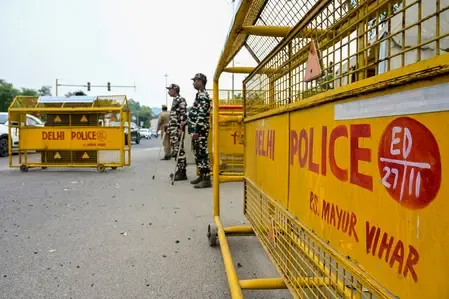
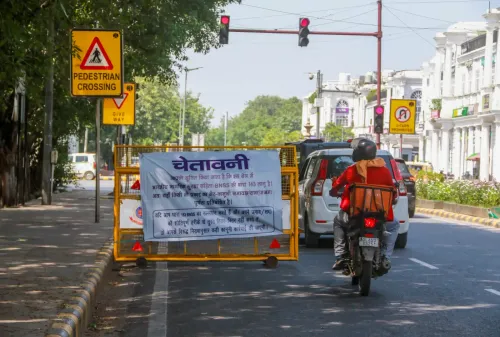
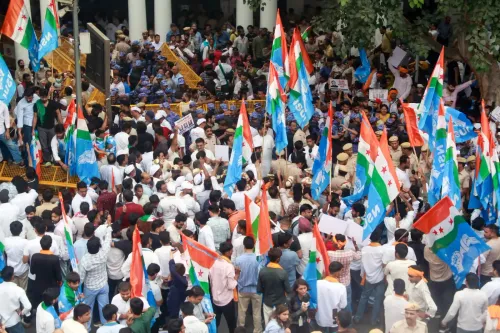
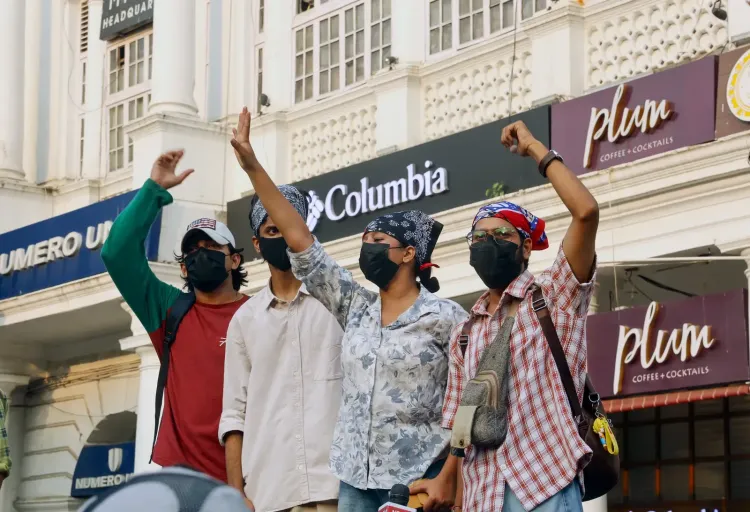
A large protest on 10 October caused heavy congestion and sweeping traffic restrictions across key central Delhi routes.
Traders are calling for large demonstrations to be moved to a dedicated venue outside the central commercial district.
Traders operating in and around Connaught Place in central Delhi on Thursday, 15 October 2026, raised fresh concerns over the economic toll of frequent protests and demonstrations, saying repeated disruptions severely erode revenues and make it difficult to cover fixed costs, including staff salaries. The alarm follows a major protest held in Delhi on 10 October, which triggered heavy congestion and sweeping traffic restrictions across key commercial routes.
Business Slows Days Before a Protest Even Begins
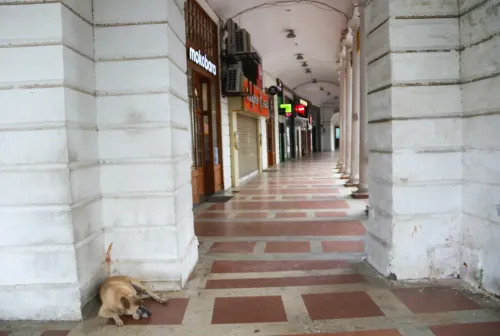
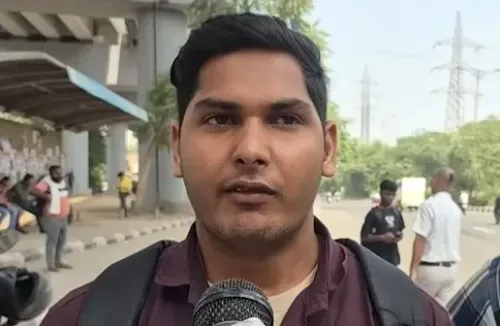
Ayush Chopra, owner of Bhape Da Hotel and Meenar Restaurant in Connaught Place, said the damage to commerce begins well before demonstrators take to the streets. He noted that customers start avoiding central Delhi several days ahead of a scheduled protest, wary of anticipated traffic curbs and general disruption. 'Customer footfall declines significantly as residents prefer to stay indoors,' Chopra said, adding that post-protest recovery is equally slow because videos circulating on social media sustain public apprehension long after the demonstration has dispersed.
He pointed out that while revenues drop sharply during such periods, fixed overhead — rent, electricity bills, and employee wages — continues to accrue uninterrupted, placing acute financial strain on businesses. Chopra stressed that the burden falls not just on large establishments but also on small vendors and street-level traders who depend on consistent daily footfall.
Sales Drop Below Half of Normal Levels
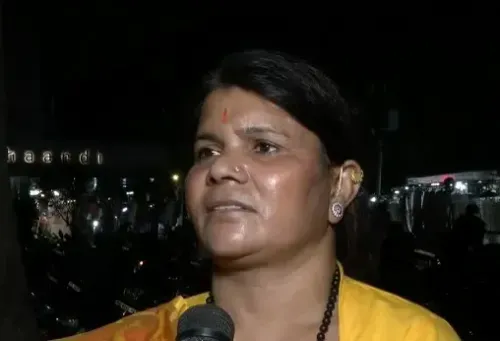
Varjesh Agrawal, owner of Bengali Sweet House and Pastry Shop, said business during the recent protest period fell to less than half of typical daily volumes. He said customer movement remained weak for several days after the event concluded, compounded by traffic restrictions that lingered in the area. Agrawal's account mirrors a pattern that traders say has become a recurring feature of central Delhi's commercial calendar.
The 10 October Protest and Its Fallout
The immediate trigger for Thursday's outcry was the large-scale protest held in Delhi on 10 October, which generated heavy congestion across parts of central Delhi. Authorities imposed traffic restrictions and shut several key routes to maintain law and order, affecting both small and large establishments in the area for multiple consecutive days. Traders said it was one of the more disruptive episodes in recent months, though they acknowledged that such events have grown increasingly frequent.
Traders Propose a Dedicated Protest Site
While the traders said they respect the constitutional right to protest, they argued that repeatedly concentrating large demonstrations in one of the capital's busiest commercial corridors is unsustainable for local livelihoods. Chopra called for a long-term structural solution: relocating large-scale demonstrations to a dedicated venue outside central Delhi, where they would not impinge on commercial activity. The proposal echoes demands made by traders' associations in earlier years but has yet to gain traction with city authorities.
Wider Impact on Central Delhi Commerce
Connaught Place is among India's most visited commercial districts, drawing shoppers, tourists, and office-goers daily. Any sustained dip in footfall has a cascading effect on supply chains, daily-wage workers, and ancillary services in the surrounding area. Traders say the cumulative impact of repeated disruptions — lost sales, deferred salary payments, and eroded customer confidence — is increasingly difficult to absorb without policy intervention from the administration.
With no formal mechanism yet in place to compensate businesses for protest-related losses, traders are watching to see whether city authorities respond to their calls for a designated demonstration zone.
Point of View
Daily-wage workers, and vendors — people who have no stake in the protest itself. Delhi has repeatedly deferred the question of a permanent demonstration ground despite years of similar complaints. Until that structural fix arrives, the burden will keep falling asymmetrically on those least able to absorb it. The silence of city authorities on compensation or relocation is itself a policy choice — one with measurable economic consequences for small businesses in India's capital.
NationPress
15 Oct 2026
Frequently Asked Questions
How have protests affected businesses in Connaught Place?
Traders say protests in central Delhi cause sales to drop to less than half of normal levels, with the slump lasting several days before and after each demonstration. Fixed costs like rent and salaries continue regardless, creating severe financial stress.
What happened during the 10 October protest in Delhi?
A large-scale protest on 10 October led to heavy congestion across central Delhi, prompting authorities to impose traffic restrictions and close several key routes. Both small and large businesses in the area reported sustained losses for multiple days after the event.
Why does business remain slow even after a protest ends?
According to traders, videos of the protest circulating on social media continue to create apprehension among customers, who avoid the area even after streets have reopened. This post-protest slump can persist for several days, compounding revenue losses.
What solution are traders proposing?
Traders, including Ayush Chopra of Bhape Da Hotel, are calling for large demonstrations to be relocated to a dedicated site outside central Delhi so that commercial activity in busy hubs like Connaught Place is not disrupted.
Who is most affected by protest-related disruptions in central Delhi?
While large restaurants and shops report sharp revenue drops, small vendors and street-level traders are also severely affected due to reduced customer footfall. Daily-wage workers dependent on consistent business activity in the area face the most immediate economic impact.