Delhi travel chaos: Commuters walk kilometres, pay double taxi fares amid protest restrictions
Synopsis
Delhi effectively ground to a halt on Saturday as police imposed sweeping travel restrictions to block a CJP protest — leaving ordinary commuters stranded at borders, walking kilometres, and paying triple taxi fares. With metro stations shut, no advance warning, and three party leaders detained at the airport, the fallout hit the public far harder than the protesters.
Key Takeaways
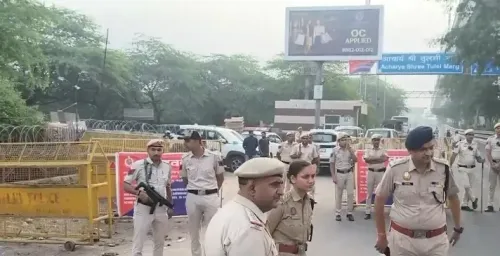
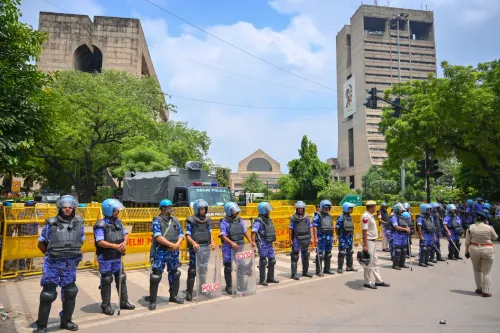
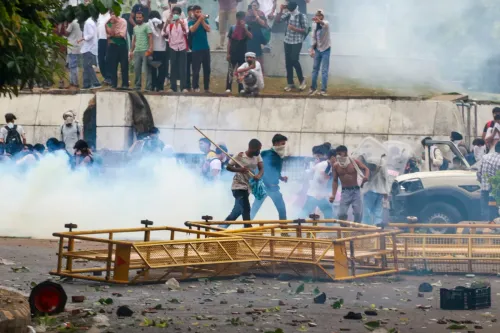
Sweeping travel restrictions were imposed across New Delhi on 10 October to prevent a Cockroach Janta Party (CJP) protest, permission for which was denied by Delhi Police .
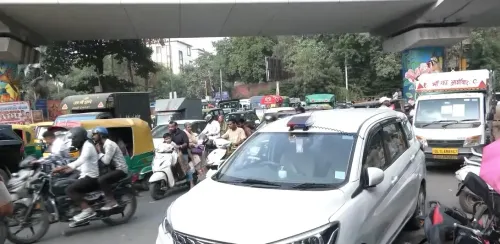
Police checks at Seemapuri's Apsara Border caused major traffic jams, forcing commuters to disembark and walk into Delhi.
Taxi drivers were reportedly charging double or triple standard fares; many refused to travel to key destinations such as Old Delhi Railway Station .
One commuter from Mathura used five different modes of transport and waited one-and-a-half hours for a bus upon reaching Sarita Vihar .
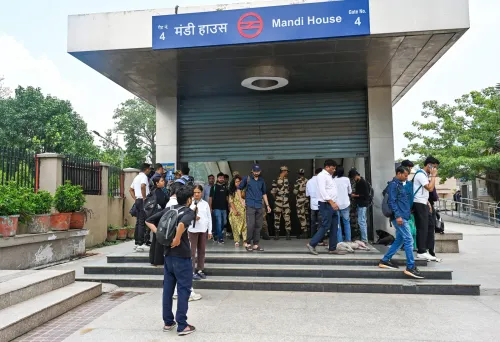
Delhi Metro's 'She Ryds' drivers said they could not fulfil ride requests, with students among those left stranded.
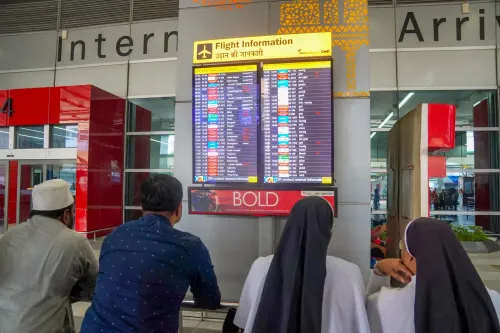
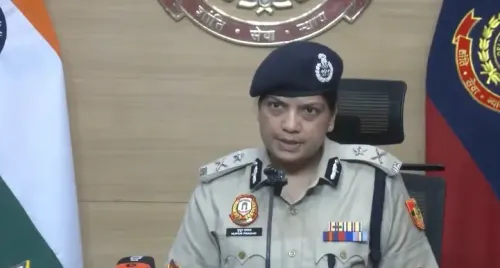
CJP leaders Abhijeet Dipke , Saurav Das , and Ashutosh Ranka were detained at Indira Gandhi International Airport en route to Jantar Mantar .
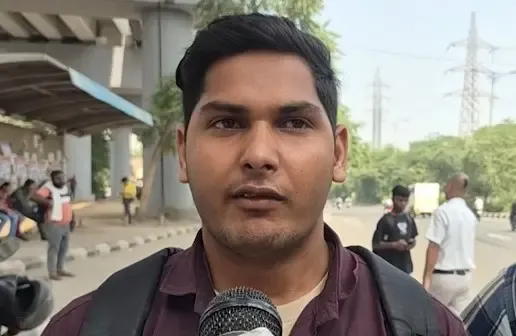
Commuters travelling across the National Capital Region (NCR) on Saturday, 10 October described severe disruption — walking kilometres on foot, scrambling through multiple transport changes, and paying double or triple the standard taxi fare — as sweeping travel restrictions were imposed across New Delhi to prevent a scheduled protest by the Cockroach Janta Party (CJP), permission for which was denied by Delhi Police.
Border Jams and Forced Marches
Security has been significantly tightened across the capital, particularly at border entry points. Police checks at Seemapuri's Apsara Border triggered long traffic jams, with commercial vehicles denied entry into Delhi, forcing bus and taxi passengers to disembark and continue on foot.
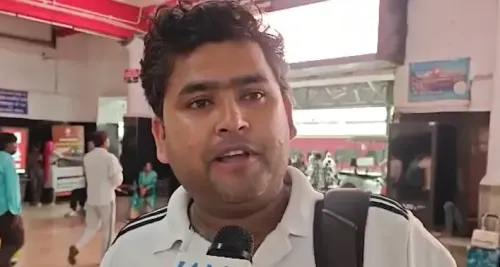
One commuter, travelling from Noida, said he had already walked nearly a kilometre after stepping off a bus: 'The traffic jam is so severe that I got down from the bus and started walking. I am coming from Noida, I need to cross the border and go to Delhi.'
Another traveller headed to New Delhi Railway Station said he was at risk of missing his train due to the gridlock on the roads.
Double and Triple Fares, Stranded Families
Passengers with confirmed train tickets reported being unable to find taxis willing to travel to their destination — and those that agreed were charging two to three times the standard rate.
A passenger travelling with his family from Gwalior to Sri Ganganagar, with a departure from Old Delhi Railway Station, said: 'Whenever we ask for a taxi, no one is willing to go there. Those who are willing to take us are charging double or triple the usual fare.' He added that the short notice — the restrictions were announced just the day before — left his family with no time to make alternative arrangements, compounded by the suspension of metro services.
A Journey of Five Modes of Transport
In Delhi's Sarita Vihar, a commuter described a particularly arduous journey from Mathura: he took an e-rickshaw to Palwal, then an auto whose tyre got punctured mid-route, then a bus to Ballabhgarh, before finally boarding the Metro once service had resumed from that station. Upon reaching Sarita Vihar, he said he had been waiting for a connecting bus for over one-and-a-half hours. 'I would say that the difficulties people are facing are unnecessary,' he remarked.
Riders and Students Hit Hard
A woman driver with Delhi Metro's 'She Ryds' service said the disruption had paralysed ride requests entirely. 'The entire Delhi is shut down and blocked. Metro stations are closed from all sides, and roads have been blocked everywhere. Students are calling us, but how can we reach them? How do we drop them since roads are closed?' she said. She suggested that protesters be allocated a designated venue rather than allowing restrictions to inconvenience the general public.
CJP Leaders Detained at Airport
Meanwhile, CJP leaders Abhijeet Dipke, Saurav Das, and Ashutosh Ranka were detained by police at Indira Gandhi International Airport in Delhi while reportedly travelling to Jantar Mantar to stage a protest. The demonstration was reportedly planned to demand the resignation of Chief Election Commissioner (CEC) Gyanesh Kumar over alleged irregularities in the conduct of the Special Intensive Revision (SIR) of electoral rolls.
With restrictions still in place as of Saturday evening, commuters, daily-wage workers, and students continue to bear the cost of the capital's security lockdown — and the situation is unlikely to ease until Delhi Police formally lifts the curbs.
Point of View
Restrictions were announced just a day in advance, denying commuters — including families with pre-booked train tickets — any meaningful window to reroute. The suspension of metro services, a move that disproportionately hits low-income daily commuters and students, warrants scrutiny: it is a blunt instrument that the city has reached for repeatedly, with little public accounting of the threshold that justifies it.
NationPress
10 Oct 2026
Frequently Asked Questions
Why were travel restrictions imposed in Delhi on 10 October 2026?
Delhi Police imposed travel restrictions to prevent a scheduled protest by the Cockroach Janta Party (CJP), for which police had denied permission. Security was tightened across the capital, including at border entry points such as Seemapuri's Apsara Border.
Which areas were most affected by the Delhi travel disruptions?
The Seemapuri Apsara Border crossing was severely affected, with long traffic jams forcing commuters to walk into Delhi. Areas including Sarita Vihar, Ballabhgarh, and routes to Old Delhi Railway Station and New Delhi Railway Station also saw major disruption.
Were Delhi Metro services suspended during the protest restrictions?
Metro services were shut or severely curtailed on Saturday, 10 October, as part of the restrictions. Services reportedly resumed partially from Ballabhgarh during the day, but station closures persisted in much of central Delhi, leaving commuters without a key transport option.
Who are the CJP leaders detained by Delhi Police on 10 October?
CJP leaders Abhijeet Dipke, Saurav Das, and Ashutosh Ranka were detained by police at Indira Gandhi International Airport while travelling to Jantar Mantar. They were reportedly planning to protest against Chief Election Commissioner Gyanesh Kumar over alleged irregularities in the Special Intensive Revision (SIR) of electoral rolls.
What were commuters being charged by taxi drivers during the Delhi restrictions?
According to commuters, taxi drivers were charging double or triple the standard fare, while many refused entirely to travel to destinations such as Old Delhi Railway Station. One family travelling from Gwalior reported being unable to find any willing taxi driver at a normal rate.