Delhi cuts ATF VAT to 7% from 25%, Aviation Minister hails affordable air travel boost

Synopsis
Delhi has slashed its ATF VAT from 25% to 7% — an 18-percentage-point cut that directly lowers airline operating costs at one of India's busiest airports. Aviation Minister Ram Mohan Naidu has welcomed the move as timely and passenger-centric, and the decision could pressure other high-VAT states to follow suit.
Key Takeaways
Delhi has reduced ATF VAT from 25% to 7% , an 18 percentage point cut.
Union Civil Aviation Minister Ram Mohan Naidu welcomed the decision on 17 May , calling it 'timely'.
Chief Minister Rekha Gupta and the Delhi government were credited with the decision.
Maharashtra had previously taken similar steps to reduce ATF taxes and support airlines.
ATF remains outside the GST framework, giving states full discretion over VAT rates.
The cut is expected to lower operating costs for airlines at Indira Gandhi International Airport and potentially reduce passenger fares.
Union Civil Aviation Minister Ram Mohan Naidu on 17 May welcomed the Delhi government's decision to slash the Value Added Tax (VAT) on Aviation Turbine Fuel (ATF) from 25% to 7%, saying the move will ease cost pressures on airlines and help keep air travel affordable for the lakhs of passengers who fly through the national capital every day.
What Changed and Why It Matters
ATF is among the single largest cost components for any airline, and state-level taxes on the fuel directly affect ticket pricing and route viability. By reducing the ATF VAT by 18 percentage points, the Delhi government under Chief Minister Rekha Gupta has delivered a significant reduction in per-flight operating costs for carriers based at or transiting through Indira Gandhi International Airport, one of the country's busiest aviation hubs.
Minister Naidu described the decision as 'timely', noting that the aviation sector continues to grapple with elevated global operational and fuel costs. Lower state taxes, he said, translate directly into improved operational stability for airlines and, ultimately, more competitive fares for passengers.
Delhi Follows Maharashtra's Lead
The VAT cut is not an isolated move. Naidu pointed out that Maharashtra had earlier taken similar steps to support the aviation sector, and called on other states to consider comparable reductions. The Centre has long argued that rationalising ATF taxes at the state level is critical to unlocking the next phase of growth in Indian aviation, particularly as the government pushes to expand regional connectivity under the UDAN scheme.
This comes amid a broader push by the aviation ministry to make air travel accessible beyond the top metros. With domestic passenger traffic recovering strongly post-pandemic and new carriers entering the market, cost discipline at every level of the supply chain has become a policy priority.
Impact on Airlines and Passengers
Airlines operating out of Delhi — including IndiGo, Air India, and others — are expected to see a measurable reduction in their fuel bills, given the volume of daily operations at the airport. Whether those savings are passed on to passengers in the form of lower fares will depend on competitive dynamics and individual airline pricing strategies.
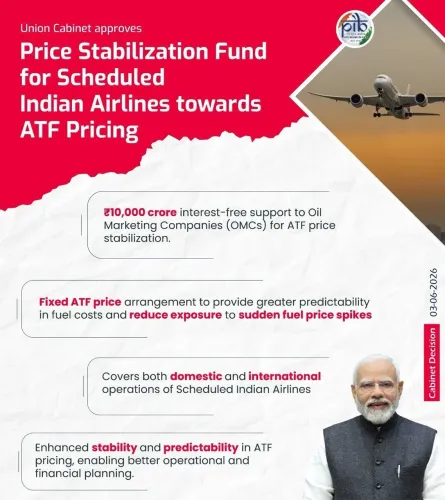
Notably, ATF prices in India are not under the Goods and Services Tax (GST) framework, which means state governments retain full discretion over VAT rates — a structural feature that has long created wide price disparities across airports. Bringing Delhi's rate closer to the lower end of the national range is expected to improve the capital's competitiveness as an aviation hub.
Minister's Statement
Naidu credited the Delhi government for what he called a 'positive and passenger-centric intervention.' 'At a time when the aviation sector continues to face global operational and cost pressures, such proactive measures by State Governments provide much-needed support to airlines and help keep air travel affordable for passengers,' he said. He added that Delhi, given its status as a premier aviation hub, stands to gain disproportionately from the reduction through improved operational stability and sustained affordable connectivity for daily travellers.
The move is expected to be watched closely by other high-VAT states, and could set a precedent for further rationalisation across India's aviation fuel tax landscape.
Point of View
The Centre's leverage over state rates remains limited, making voluntary cuts like this the only lever available. If Maharashtra and Delhi move, the pressure on high-VAT holdouts — some charging upward of 20% — will intensify, but political will to forgo revenue is rarely uniform.
NationPress
27 Sept 2026
Frequently Asked Questions
What is the Delhi ATF VAT cut announced in May 2025?
The Delhi government reduced the Value Added Tax on Aviation Turbine Fuel from 25% to 7%, an 18-percentage-point reduction aimed at lowering airline operating costs and making air travel more affordable for passengers flying through the national capital.
Why does ATF VAT matter for airline ticket prices?
Aviation Turbine Fuel is one of the largest cost components for airlines. When state governments levy high VAT on ATF, it raises per-flight operating costs, which airlines often pass on to passengers through higher fares. A lower VAT rate can improve route viability and competitive pricing.
Which states have already cut ATF VAT?
Maharashtra had previously reduced its ATF VAT to support the aviation sector. Delhi's cut follows that precedent, and Aviation Minister Ram Mohan Naidu has indicated that such steps by state governments are part of a broader effort to strengthen India's aviation ecosystem.
Why is ATF not covered under GST?
Aviation Turbine Fuel has not been brought under the Goods and Services Tax framework, which means each state government independently sets its own VAT rate on the fuel. This creates significant price disparities across airports and limits the Centre's ability to enforce uniform taxation.
Who benefits from the Delhi ATF VAT reduction?
Airlines operating out of Delhi — including carriers at Indira Gandhi International Airport — stand to benefit from lower fuel costs. Passengers may also benefit if airlines pass on the savings through more competitive fares, though that depends on individual airline pricing decisions.