DigiLocker crosses 72.43 crore users; UMANG hits 11.66 crore in digital push
Synopsis
DigiLocker has crossed 72.43 crore users and logged 72.86 crore document transactions in three years — numbers that place it among the world's largest digital document platforms. With UMANG adding 798 crore transactions and over 4 lakh Common Service Centres now live at the Gram Panchayat level, India's digital public infrastructure is no longer just urban — but how deep the usage actually runs is the question the government has yet to answer.
Key Takeaways
DigiLocker has crossed 72.43 crore registered users and recorded 72.86 crore document access transactions in the last three years.
UMANG has surpassed 11.66 crore registered users with approximately 798 crore transactions in the same period.
As of 31 July 2026 , UMANG hosts 2,575 services and DigiLocker offers 5,437 document types/services across Central and state governments.
4,07,122 Common Service Centres were operational at the Gram Panchayat level as of 30 June 2026 , of which 70,069 are run by women Village Level Entrepreneurs.
Both platforms are integrated with Aadhaar , eSign , and API Setu for paperless, consent-based service delivery.
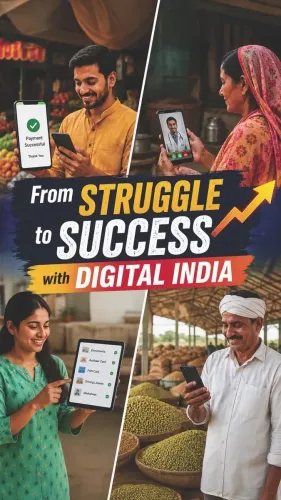
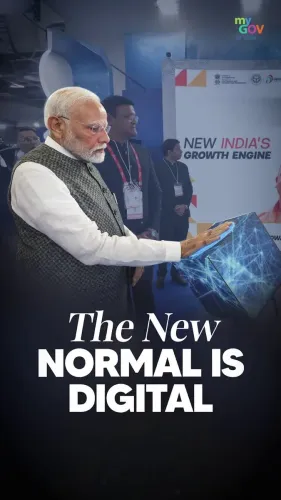
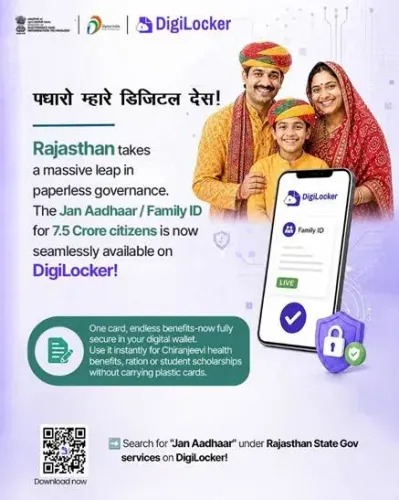
DigiLocker has surpassed 72.43 crore registered users and recorded approximately 72.86 crore document access transactions over the last three years, Union Minister for Electronics and IT Ashwini Vaishnaw informed the Rajya Sabha on 12 August 2026. The figures underscore the scale of India's digital public infrastructure expansion under the Digital India programme.
Platform Scale and Service Reach
The UMANG platform has crossed 11.66 crore registered users, with approximately 798 crore transactions recorded in the last three years. As of 31 July 2026, UMANG hosts 2,575 services — 880 from the Central Government and 1,695 from state governments — making it one of the broadest unified mobile gateways for citizen services in the country.
DigiLocker, meanwhile, now offers 5,437 document types and services, of which 661 are Central Government-linked and 4,776 are state government-linked. Both platforms are accessible via mobile applications and web portals, enabling round-the-clock access to government services.
What the Numbers Mean for Citizens
The platforms provide secure authentication, digital document verification, and consent-based document sharing — significantly reducing the need for physical visits and paper-based processes. They are integrated with key Digital Public Infrastructure components including Aadhaar, eSign, and API Setu, enabling seamless and paperless service delivery across departments and tiers of government.
Notably, this integration means a citizen can access health records, driving licences, educational certificates, and utility payment services from a single interface — a consolidation that was largely unavailable before the Digital India push began in July 2015.
Rural Access: Common Service Centres
Beyond the two flagship platforms, the government has expanded the network of Common Service Centres (CSCs) to extend digital access to rural and remote areas. As of 30 June 2026, 4,07,122 CSCs were operational at the Gram Panchayat level, offering government, banking, financial, insurance, pension, and utility payment services.
Of these, 70,069 CSCs are operated by women Village Level Entrepreneurs — a detail that points to an emerging gender dimension in India's digital access rollout, though independent assessments of income outcomes for these entrepreneurs remain limited.
Policy Context and What Comes Next
The Digital India programme was launched in July 2015 with the stated aim of democratising technology and enabling citizen-centric service delivery. Over a decade later, the user numbers on DigiLocker and UMANG suggest wide adoption, though usage depth — how frequently registered users actively transact — remains a metric the government has not separately detailed.
With state governments now accounting for the majority of services on both platforms, the next phase of growth will likely depend on how quickly laggard states digitise their citizen-facing processes and integrate with the national infrastructure.
Point of View
But registered users and active users are not the same metric — and the government has not disclosed the latter. India's digital infrastructure has clearly achieved reach; the harder question is whether it has achieved routine utility for the citizen at the bottom of the income ladder. The concentration of state-government services — 1,695 on UMANG, 4,776 on DigiLocker — also means that the quality of the citizen experience varies enormously by state, and no state-level performance data was tabled alongside these aggregate figures. The women-led CSC statistic is welcome, but without income or throughput data, it risks being a data point in search of a policy conclusion.
NationPress
27 Sept 2026
Frequently Asked Questions
How many users does DigiLocker have in 2026?
DigiLocker has surpassed 72.43 crore registered users as of August 2026, with approximately 72.86 crore document access transactions recorded over the last three years. The figures were disclosed by Union Minister Ashwini Vaishnaw in the Rajya Sabha on 12 August 2026.
What is the UMANG platform and how many users does it have?
UMANG (Unified Mobile Application for New-age Governance) is a single mobile platform that aggregates government services from Central and state governments. It has crossed 11.66 crore registered users and recorded around 798 crore transactions in the last three years.
How many services are available on DigiLocker and UMANG?
As of 31 July 2026, UMANG offers 2,575 services (880 Central, 1,695 state) and DigiLocker provides 5,437 document types and services (661 Central, 4,776 state) across India.
What are Common Service Centres and how widespread are they?
Common Service Centres (CSCs) are government-backed access points that deliver digital services — including banking, insurance, pension, and utility payments — in rural and remote areas. As of 30 June 2026, 4,07,122 CSCs were operational at the Gram Panchayat level, with 70,069 run by women Village Level Entrepreneurs.
How are DigiLocker and UMANG integrated with other digital systems?
Both platforms are integrated with Aadhaar, eSign, and API Setu, enabling secure authentication, digital document verification, and consent-based sharing. This integration supports paperless service delivery without requiring citizens to make physical visits to government offices.