Dreamfly Innovations to build 100 MWh aviation battery plant in Bengaluru

Synopsis
Dreamfly Innovations is betting big on India's drone future — a 40,000 sq. ft. plant in North Bengaluru with 100 MWh initial capacity (scalable to 200 MWh) aims to slash import dependence on aviation batteries, a critical and largely overseas-sourced component. With 77 per cent indigenous content already, the move signals a maturing deep-tech supply chain beneath India's fast-growing drone economy.
Key Takeaways
Dreamfly Innovations announced a 40,000 sq. ft. aviation battery manufacturing plant in North Bengaluru on 27 July .
Initial annual production capacity of 100 MWh , scalable to 200 MWh — among India's largest drone-dedicated battery units.
Batteries will serve defence, surveillance, agriculture, logistics , and emerging air taxi platforms.
Company's products already carry 77 per cent indigenous content, aligned with the Kisan Drone Policy .
The facility aims to reduce India's dependence on imported aviation batteries and support Make in India and Atmanirbhar Bharat .
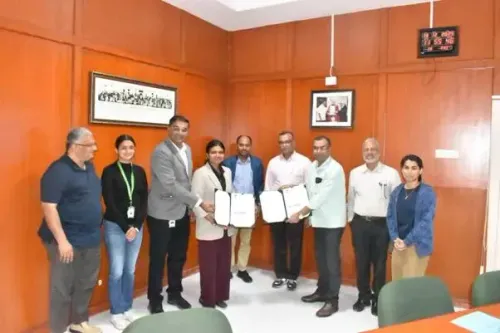
Dreamfly Innovations, an Indian deep-tech company specialising in advanced aviation battery technologies, on Monday, 27 July announced plans to set up a 40,000 sq. ft. aviation battery manufacturing facility in North Bengaluru. The plant is designed to bolster India's drone ecosystem and advance the government's Make in India and Atmanirbhar Bharat objectives.
Scale and Capacity
The upcoming facility will carry an initial annual production capacity of 100 MWh, scalable to 200 MWh, positioning it as one of India's largest dedicated aviation battery manufacturing units for the drone sector. The 40,000 sq. ft. plant is expected to produce advanced batteries catering to a wide spectrum of drone applications.
What the Plant Will Manufacture
Batteries produced at the facility will serve diverse segments including defence, surveillance, infrastructure inspection, agricultural spraying, and logistics. The plant will also supply power solutions for emerging air mobility platforms such as air taxis, reflecting the broadening scope of India's unmanned aerial systems industry.
Indigenous Content and Policy Alignment
According to the company, its products currently carry 77 per cent indigenous content, aligning with the Kisan Drone Policy and supporting domestic drone manufacturers with locally developed power solutions. The investment is intended to reduce India's reliance on imported aviation batteries — a critical input for unmanned aerial systems.
What the Company Said
Kajal Shah, Co-Founder and Chief Executive Officer of Dreamfly Innovations, said aviation batteries are central to the performance, safety, endurance, and reliability of drones. 'As India's drone economy expands, it is essential to build domestic capabilities in advanced battery manufacturing. Our new facility will develop state-of-the-art batteries in India, strengthen local drone manufacturing and contribute to the vision of Viksit Bharat, Make in India and Atmanirbhar Bharat,' Shah said.
Broader Significance
This comes amid a rapid expansion of India's drone policy framework, with the Centre pushing to make the country a global hub for drone manufacturing and next-generation aviation technologies. Dreamfly's move reflects a broader industry trend of deep-tech startups vertically integrating critical components that were previously sourced almost entirely from overseas suppliers. With battery technology remaining one of the most import-dependent nodes in the drone supply chain, the Bengaluru plant could mark a meaningful step toward genuine self-reliance in this segment. The company's long-term ambition, it said, is to support India's emergence as a global centre for advanced aviation innovation.
Point of View
And Dreamfly's plant directly targets that vulnerability. The 77 per cent indigenous content figure is notable, but the harder test will be whether the facility can match Chinese battery suppliers on energy density and cycle life — the benchmarks that defence and logistics operators actually buy on. India's drone policy ambition has outpaced component-level self-reliance for years; a 100 MWh plant is a credible start, but scale and certification timelines will determine whether this becomes a genuine supply-chain shift or another well-intentioned announcement in a sector full of them.
NationPress
25 Oct 2026
Frequently Asked Questions
What is Dreamfly Innovations planning to build in Bengaluru?
Dreamfly Innovations plans to establish a 40,000 sq. ft. aviation battery manufacturing facility in North Bengaluru with an initial annual capacity of 100 MWh, scalable to 200 MWh. The plant will produce advanced batteries for drones used in defence, agriculture, logistics, and air mobility.
How does this plant support Make in India and Atmanirbhar Bharat?
The facility is designed to manufacture aviation batteries domestically, reducing India's dependence on imported components for unmanned aerial systems. Dreamfly's products already carry 77 per cent indigenous content, aligning with government self-reliance targets under Make in India and Atmanirbhar Bharat.
What drone applications will the Bengaluru plant serve?
The plant will supply batteries for a wide range of applications including defence, surveillance, infrastructure inspection, agricultural spraying, logistics, and emerging air mobility platforms such as air taxis.
Who is behind Dreamfly Innovations?
Dreamfly Innovations is an Indian deep-tech company focused on advanced aviation battery technologies. It is co-founded by Kajal Shah, who also serves as Chief Executive Officer.
Why does India need domestic aviation battery manufacturing?
India's drone sector has grown rapidly, but aviation batteries — a critical component — have been largely imported, creating supply-chain risk and cost dependence. A domestic facility of this scale helps reduce that reliance and supports the country's ambition to become a global drone manufacturing hub.