Government Increases Fertiliser Subsidy Allocation by Rs 19,000 Crore to Enhance Agricultural Output
Synopsis
In a bid to strengthen agricultural productivity, Finance Minister Nirmala Sitharaman announced a substantial increase in the fertiliser subsidy allocation. With a current stock of 163 lakh metric tonnes, the government aims to secure adequate supplies for both Kharif and Rabi seasons.
Key Takeaways
Fertiliser stock for April stands at 163 LMT.
Subsidy allocation increases by Rs 19,000 crore .
Domestic urea production has risen significantly.
Government aims for effective preparations for Kharif and Rabi seasons.
Additional spending approved for defence and economic stabilisation.
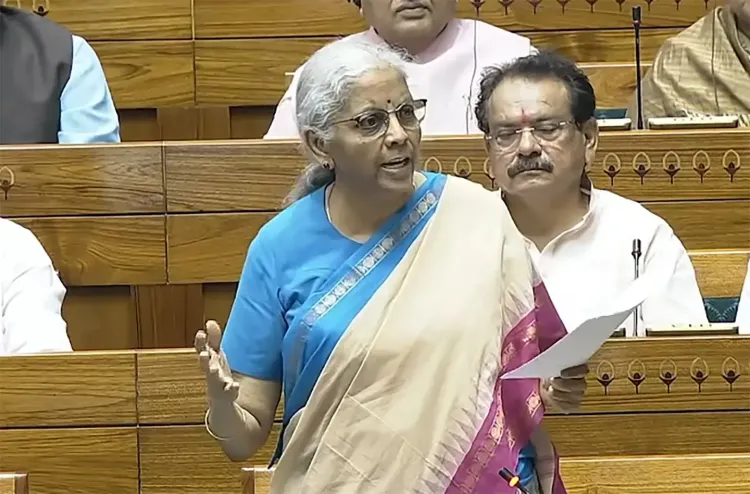
In a recent address to the Lok Sabha, Finance Minister Nirmala Sitharaman announced on March 13 that India boasts a strong fertiliser stock of 163 lakh metric tonnes (LMT) for April.
This figure marks a remarkable 26% increase compared to last year's stock of 128.54 LMT.
The Minister noted that while adequate supplies are available for the Kharif season, the government is proactively preparing for the forthcoming Rabi season through supplementary demands, ensuring the Department of Fertilisers is well-equipped.
During discussions on the second batch of Supplementary Demands for Grants associated with the 2025-26 Budget, the Finance Minister revealed that the government will allocate approximately Rs 19,000 crore more than initially estimated for fertiliser subsidies.
She reiterated the government's commitment to enhancing domestic production while managing necessary imports, highlighting a steady rise in domestic urea output from 225 LMT in 2014-15 to 306.67 LMT in 2024-25.
The Lok Sabha approved the second batch of supplementary demands, allowing the government to incur an additional expenditure of Rs 2.01 lakh crore this financial year.
The government had requested a total of Rs 2.81 lakh crore in additional spending, but with estimated revenues of Rs 80,000 crore for the fiscal year, the net additional expenditure is Rs 2.01 lakh crore.
In her closing remarks, Sitharaman assured that this new spending would not exceed the government's fiscal deficit target.
“The second supplementary demand for grants will not lead to an increase in expenditure beyond the Budget Estimate for 2025-26,” she clarified.
The supplementary demands also encompass funding for establishing an Economic Stabilisation Fund of Rs 1 lakh crore.
Parliament approval was sought for an additional Rs 19,230 crore for fertiliser subsidies and Rs 23,641 crore for subsidies under the Pradhan Mantri Garib Kalyan Anna Yojana (PMGKAY).
Other significant allocations include Rs 41,822 crore earmarked for the defence ministry.
Frequently Asked Questions
What is the current fertiliser stock in India?
India currently holds a fertiliser stock of 163 lakh metric tonnes (LMT) for April, which is a 26% increase from last year's stock.
How much is the government increasing the fertiliser subsidy by?
The government is increasing the fertiliser subsidy allocation by Rs 19,000 crore in the second supplementary demands.
What is the purpose of the Economic Stabilisation Fund?
The Economic Stabilisation Fund is aimed at managing economic fluctuations and ensuring financial stability.
What are the main components of the supplementary demands?
The supplementary demands include additional spending for fertiliser subsidies, the Economic Stabilisation Fund, and allocations for the defence ministry.
Will the new spending affect the fiscal deficit?
No, Finance Minister Nirmala Sitharaman assured that the new spending will not push the fiscal deficit beyond the government's target.