India holds 199.65 LMT fertiliser stock, covering 51% of seasonal demand
Synopsis
India's fertiliser buffer has surged to 199.65 LMT — covering 51% of seasonal demand against the usual 33% — as the government fast-tracks global tenders and clears subsidy bills weekly to shield farmers from Middle East supply disruptions. With MRP held steady and the Empowered Group of Secretaries meeting eight times, this is the most active fertiliser management cycle in recent memory.
Key Takeaways
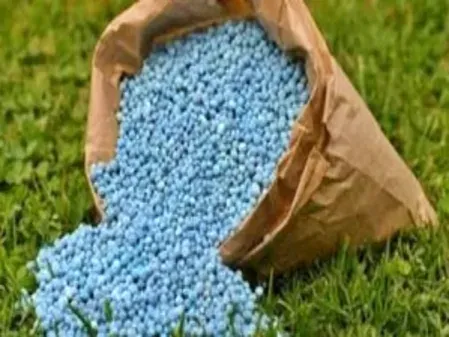
India holds 199.65 LMT of fertiliser stock, covering over 51% of seasonal demand — up from the usual 33% buffer.
Domestic production contributed 76.78 LMT and imports 19.94 LMT , adding approximately 97 LMT to total availability.
Global tenders initiated for 12 LMT of DAP , 4 LMT of TSP , and 3 LMT of ammonium sulphate ; raw material tenders also in progress.
Government confirms no change in MRP of major fertilisers; subsidy bills cleared on a weekly basis .
The Empowered Group of Secretaries has held eight meetings to manage availability challenges amid the Middle East crisis.
Approximately 7 LMT of NPKs expected to arrive at Indian ports through May and June 2025 .
India's fertiliser security remains robust, with the country holding a comfortable stock of 199.65 lakh metric tonnes (LMT) — covering more than 51% of seasonal demand — as the government scales up both domestic production and imports to ensure uninterrupted supply for farmers amid the ongoing Middle East crisis, a senior official of the Department of Fertilisers said on Monday, 11 May 2025.
Additional Secretary, Department of Fertilisers, Aparna S. Sharma, disclosed the figures at a press conference in New Delhi, noting that the current buffer marks a sharp increase from the usual level of approximately 33% at this time of the year — reflecting improved advance stocking and efficient logistics management.
How Stocks Were Built Up
Following a recent crisis period, domestic production and imports were scaled up rapidly, adding approximately 97 LMT to total availability. Domestic production alone contributed 76.78 LMT, while imports reaching Indian ports accounted for 19.94 LMT, Sharma explained. The combined effort has pushed current availability well above the seasonal requirement benchmark.
New Tenders to Plug Peak-Demand Gaps
To ensure zero shortage during peak demand seasons, Indian fertiliser companies have initiated aggregated global tenders for 12 LMT of DAP, 4 LMT of TSP, and 3 LMT of ammonium sulphate. Separately, tenders for critical raw materials — including 5.36 LMT of Ammonia and 5.94 LMT of Sulphur — are currently in progress. The government also confirmed that approximately 7 LMT of NPKs secured from outside the State-Owned Holdings (SOH) framework are expected to arrive at Indian ports through May and June.
No Change in Fertiliser MRP
In a significant relief for the farming community, the government confirmed there is no change in the Maximum Retail Price (MRP) of major fertilisers. The Department of Fertilisers continues to review input availability for Urea and P&K production on a regular basis and is clearing subsidy bills on a weekly basis to maintain supply chain liquidity — a critical measure to prevent bottlenecks at the distributor and retailer level.
Government Oversight and Coordination
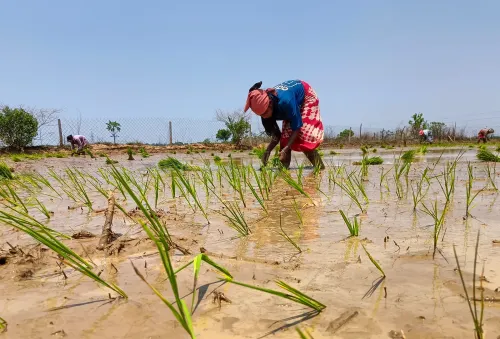
The Empowered Group of Secretaries has convened eight meetings to date to navigate availability challenges and ensure farmers receive fertilisers at affordable rates without disruption. This level of institutional oversight is notably higher than in previous years, underscoring the Centre's sensitivity to any supply disruption ahead of the Kharif sowing season. Notably, fertiliser subsidy management has been a politically significant issue, with any MRP increase capable of triggering rural discontent.
With tenders in progress and port arrivals expected through June, the government appears positioned to maintain adequate supply through the critical sowing window ahead.
Point of View
But the real story is the vulnerability it reveals — India needed eight high-level inter-ministerial meetings and emergency global tenders just to stay ahead of a supply shock it did not control. The Middle East crisis has exposed how dependent Indian agriculture remains on imported DAP and raw materials like Ammonia and Sulphur. Holding MRP steady is politically necessary ahead of the Kharif season, but the subsidy cost of doing so while import prices are elevated will quietly pressure the fertiliser subsidy bill. The weekly subsidy clearance mechanism is a pragmatic fix; whether it scales through a prolonged crisis is the question policymakers have not yet answered publicly.
NationPress
26 Sept 2026
Frequently Asked Questions
How much fertiliser stock does India currently hold?
India currently holds 199.65 LMT of fertiliser stock, covering more than 51% of seasonal demand. This is significantly higher than the usual buffer of approximately 33% at this time of year, according to the Department of Fertilisers.
Has the government changed fertiliser MRP for farmers?
No. The government has confirmed there is no change in the Maximum Retail Price (MRP) of major fertilisers. Subsidy bills are being cleared on a weekly basis to maintain supply chain liquidity.
Why has India issued new global tenders for fertilisers?
To ensure zero shortage during peak demand, Indian fertiliser companies have initiated aggregated global tenders for 12 LMT of DAP, 4 LMT of TSP, and 3 LMT of ammonium sulphate, with additional raw material tenders also in progress. The move comes amid supply pressures linked to the Middle East crisis.
What role is the Empowered Group of Secretaries playing?
The Empowered Group of Secretaries has held eight meetings to navigate fertiliser availability challenges, coordinating between ministries to ensure farmers receive supplies at affordable rates without disruption.
When will additional fertiliser imports arrive in India?
Approximately 7 LMT of NPKs secured from outside the SOH framework are expected to arrive at Indian ports through May and June 2025, helping to bolster stocks ahead of the Kharif sowing season.