FSSAI cracks down on Bengaluru firm over misbranded, expired infant food
Synopsis
FSSAI has seized misbranded infant food and ordered the court-directed destruction of 3.7 metric tonnes of expired stock from a Bengaluru firm — a rare, large-scale enforcement action in one of India's most tightly regulated food categories. Legal proceedings are now underway against British Lifesciences Private Limited, signalling a sharper regulatory posture on infant nutrition compliance.
Key Takeaways
FSSAI initiated enforcement action against British Lifesciences Private Limited , Bengaluru , on 3 September .
A substantial quantity of misbranded infant food was seized under the FSS Act, 2006 .
3.7 metric tonnes of expired infant food articles have been ordered destroyed by court direction.
Legal proceedings have been formally initiated against the food business operator (FBO).
The action is part of a broader nationwide enforcement drive targeting infant food safety and labelling compliance.
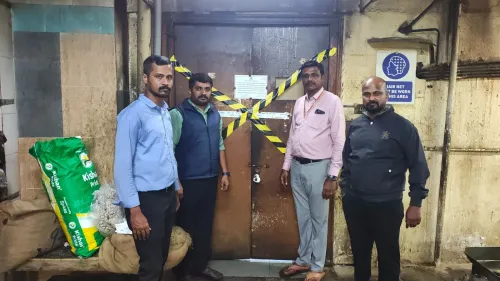
The Food Safety and Standards Authority of India (FSSAI) on Thursday, 3 September launched strict enforcement action against British Lifesciences Private Limited, a food business operator based in Bengaluru, Karnataka, after inspections revealed misbranded and expired infant food products at its premises. The action forms part of a broader regulatory drive to ensure compliance in the infant food segment — one of the most safety-critical categories in the food supply chain.
What the Inspection Found
FSSAI officials conducted a targeted inspection of the firm's infant food stock and identified a substantial quantity of misbranded products — items whose labels did not meet prescribed regulatory standards. In addition, 3.7 metric tonnes of expired infant food articles were discovered, raising serious concerns about the firm's quality control and storage practices.
The misbranded stock was seized on the spot under the provisions of the Food Safety and Standards (FSS) Act, 2006. The expired inventory has been ordered to be destroyed under court directions, with the regulator confirming that the disposal was carried out safely to prevent the stock from being reused, diverted, or reintroduced into the food supply chain.
Legal Action Initiated
'Strict regulatory measures were taken against British Lifesciences Private Limited, Bengaluru, following food safety inspections of infant food products. Substantial quantity of misbranded infant food was seized. Legal proceedings have been initiated against the FBO,' FSSAI stated.
The regulator further noted: 'Considering the serious nature of the violations and the potential risk posed by non-compliant infant food products to infants and young children, appropriate legal proceedings were initiated against the FBO.' The exact nature of the legal charges has not yet been made public.
Why This Action Matters
Infant food products occupy a uniquely sensitive position in food safety regulation — they are consumed by the most vulnerable population group, and any lapse in labelling, composition, or shelf-life compliance can carry direct health consequences. Misbranded products create an additional layer of risk: caregivers and healthcare providers cannot make informed decisions when label information is inaccurate or misleading.
This enforcement action comes amid heightened regulatory scrutiny across India's packaged food sector, with FSSAI placing particular emphasis on infant formula, complementary foods, and nutrition supplements for young children. Notably, this is not an isolated incident — the regulator has stepped up market surveillance of infant food brands in recent months following consumer complaints and third-party audits flagging labelling inconsistencies.
FSSAI's Broader Enforcement Drive
The authority has underscored that the Bengaluru action is part of a sustained, nationwide enforcement campaign rather than a one-off raid. FSSAI said the drive reflects its commitment to ensuring that infant food available in the market meets all prescribed safety, quality, and labelling requirements under Indian food law.
Industry observers note that food business operators handling infant nutrition products are held to a stricter standard under the FSS Act, with penalties for violations significantly higher than those for general food categories. The outcome of legal proceedings against British Lifesciences Private Limited is expected to set a visible precedent for other manufacturers in the segment.
Point of View
Not a labelling oversight. What is striking is that infant food, a category with among the strictest regulatory requirements under the FSS Act, was the site of the violation. FSSAI's decision to pursue legal proceedings rather than settle for a recall or fine signals a deliberate shift toward deterrence. The real question is whether enforcement actions like this are part of a structured, intelligence-led surveillance programme or reactive spot checks — because only the former will change industry behaviour at scale.
NationPress
18 Oct 2026
Frequently Asked Questions
What violations were found at British Lifesciences Private Limited in Bengaluru?
FSSAI inspections found a substantial quantity of misbranded infant food products and 3.7 metric tonnes of expired infant food stock at the Bengaluru firm. The violations were identified under the Food Safety and Standards Act, 2006, and legal proceedings have been initiated against the company.
What action has FSSAI taken against British Lifesciences?
FSSAI has seized the misbranded infant food stock and obtained a court order for the destruction of the 3.7 metric tonnes of expired products. Legal proceedings have been formally initiated against the food business operator to prevent any recurrence or diversion of the non-compliant stock.
Why is misbranded infant food particularly dangerous?
Misbranded infant food poses a direct health risk because caregivers and medical professionals rely on label information to make feeding decisions for infants and young children. Inaccurate or missing labelling can lead to incorrect dosage, allergic reactions, or nutritional deficiencies in the most vulnerable age group.
What is the FSS Act, 2006, and how does it apply here?
The Food Safety and Standards Act, 2006 is India's primary food regulation law, administered by FSSAI. It sets mandatory standards for food safety, labelling, and quality, and grants authorities the power to seize non-compliant products and initiate legal action against violators — powers that were invoked in this Bengaluru case.
Is this part of a wider FSSAI enforcement campaign?
Yes. FSSAI has confirmed that the action against British Lifesciences is part of a broader, ongoing enforcement drive focused specifically on infant food products across India, with heightened scrutiny on safety, quality, and labelling compliance in this segment.