GAIL, KABIL sign MoU to secure critical minerals for India's clean energy future
Synopsis
Two of India's largest public sector enterprises — GAIL and KABIL — have joined forces on critical minerals, the raw-material backbone of batteries, EVs, and renewables. As the global race to lock in lithium, cobalt, and rare earths intensifies, this MoU signals India's intent to stop being a price-taker and start building sovereign supply chains — but the test will be in execution, not paperwork.
Key Takeaways
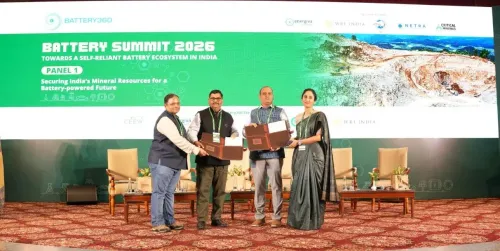
GAIL (India) Limited and KABIL signed an MoU on 18 July in New Delhi to cooperate on critical and strategic minerals.
The agreement covers joint identification, evaluation, and development of mineral opportunities across the full mining value chain.
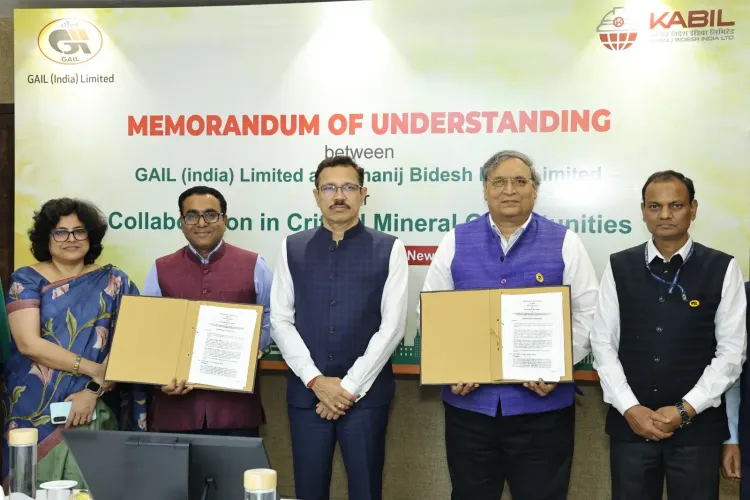
Sanjeev Kumar (GAIL) and Sunil Kumar Singh (KABIL CEO) signed the MoU, witnessed by GAIL Director R.K.
KABIL is a joint venture of NALCO , Hindustan Copper Limited , and MECL , mandated to secure overseas mineral assets for India.
The partnership aims to reduce India's import dependence on critical minerals vital for batteries, EVs, and renewable energy infrastructure.
GAIL (India) Limited and Khanij Bidesh India Limited (KABIL) signed a Memorandum of Understanding (MoU) on 18 July in New Delhi to deepen cooperation on critical and strategic minerals, a move aimed at bolstering India's long-term resource security and accelerating its clean energy transition. The agreement marks a significant step in aligning two major public sector enterprises behind the country's growing need for minerals that underpin batteries, electric vehicles, and renewable energy infrastructure.
Who Signed and What Was Agreed
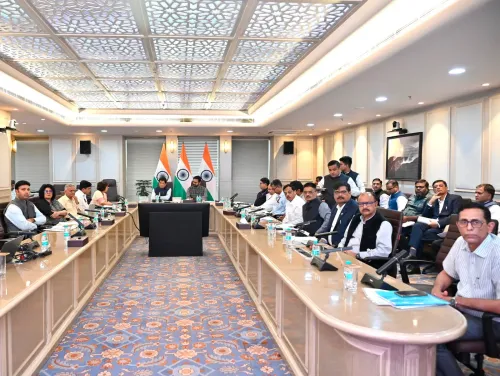
The MoU was executed by Sanjeev Kumar, Executive Director (R&D and Exploration & Production) at GAIL, and Sunil Kumar Singh, Chief Executive Officer of KABIL. The signing took place in the presence of R.K. Singhal, GAIL Director (Business Development), and senior officials from both organisations.
Under the framework, the two entities will jointly identify and evaluate opportunities across the critical minerals space, covering advanced manufacturing inputs, battery materials, EV components, and other strategic-sector requirements. The MoU also provides for technical expertise exchange, knowledge sharing, and capacity-building initiatives between the two organisations.
Joint Projects Across the Mining Value Chain
Beyond knowledge exchange, GAIL and KABIL will explore joint projects spanning the full mining value chain — from prospecting and acquisition to development and supply-chain integration. The collaboration is intended to help India secure a reliable, domestically managed pipeline of critical mineral resources rather than depending on volatile international markets.
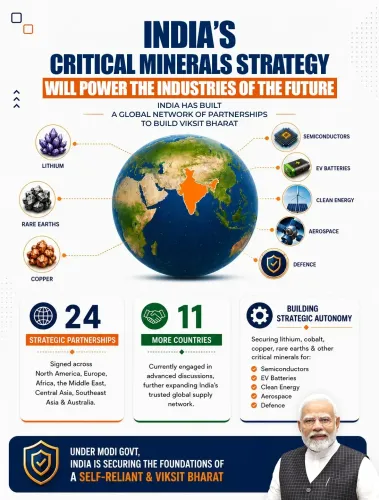
This comes amid a global scramble for critical minerals, with major economies including the United States, the European Union, Japan, and Australia racing to lock in supplies of lithium, cobalt, nickel, and rare earths. India has repeatedly flagged import dependence as a strategic vulnerability, particularly as domestic EV and renewable energy capacity scales up rapidly.
About the Two Organisations
GAIL is a Maharatna Central Public Sector Enterprise under the Ministry of Petroleum and Natural Gas, with a diversified presence across the natural gas value chain — encompassing gas transmission and marketing, LNG sourcing and regasification, LPG transmission, petrochemicals, city gas distribution, renewable energy, and upstream exploration and production.
KABIL is a joint venture of National Aluminium Company Limited (NALCO), Hindustan Copper Limited (HCL), and Mineral Exploration & Consultancy Limited (MECL). It was established specifically to identify, acquire, develop, and secure overseas critical and strategic mineral assets to meet India's long-term industrial, economic, and energy security requirements.
Why This Collaboration Matters
India's clean energy ambitions — including a 500 GW renewable energy target and aggressive EV adoption goals — are heavily dependent on a stable supply of critical minerals, most of which the country currently imports. The GAIL-KABIL partnership pools GAIL's energy sector expertise and financial heft with KABIL's mandate to scout and secure overseas mineral assets.
Notably, this is part of a broader government push to reduce import dependence and build resilient supply chains. Several similar inter-PSU frameworks have been announced in recent years, though execution timelines and outcomes have varied. The real measure of this MoU's impact will lie in how quickly joint projects move from agreement to operational reality.
Both entities are expected to outline specific project pipelines and target geographies in the coming months, as India works to position itself as a credible player in the global critical minerals economy.
Point of View
Harder to operationalise. The GAIL-KABIL pairing makes structural sense: GAIL brings energy-sector capital and downstream market access, while KABIL holds the overseas acquisition mandate. But KABIL itself is a relatively young entity, and its track record of closing mineral asset deals abroad remains limited. The deeper question is whether this partnership accelerates actual supply agreements or remains a coordination framework on paper. With India's EV and renewables buildout accelerating, the window to secure critical mineral supply at favourable terms is narrowing — and intent documents alone will not fill it.
NationPress
18 Jul 2026
Frequently Asked Questions
What is the GAIL-KABIL MoU about?
The MoU, signed on 18 July in New Delhi, establishes a framework for GAIL (India) Limited and Khanij Bidesh India Limited (KABIL) to jointly identify, evaluate, and develop critical and strategic mineral opportunities. It also covers technical knowledge exchange and capacity-building between the two public sector entities.
Why are critical minerals important for India?
Critical minerals such as lithium, cobalt, nickel, and rare earths are essential inputs for batteries, electric vehicles, solar panels, and advanced manufacturing. India currently imports a large share of these materials, making supply-chain security a strategic priority as the country scales up its clean energy capacity.
What is KABIL and who owns it?
KABIL — Khanij Bidesh India Limited — is a joint venture of National Aluminium Company Limited (NALCO), Hindustan Copper Limited (HCL), and Mineral Exploration & Consultancy Limited (MECL). It was set up to identify, acquire, and secure overseas critical mineral assets to meet India's long-term industrial and energy security needs.
What role will GAIL play in this partnership?
GAIL, a Maharatna Central Public Sector Enterprise under the Ministry of Petroleum and Natural Gas, will contribute its energy-sector expertise, R&D capabilities, and presence across the natural gas and renewable energy value chain. Together with KABIL, it will explore joint projects spanning the mining value chain.
What happens next after the MoU is signed?
Both organisations are expected to identify specific joint project opportunities and target geographies in the coming months. The MoU provides the framework; concrete outcomes will depend on how quickly the two entities move from planning to operational project agreements.