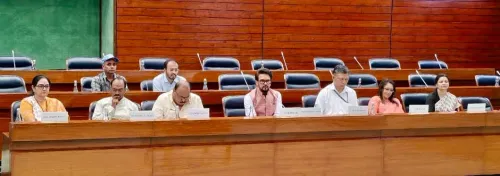
Anurag Thakur Chairs Panel Session on KABIL, Critical Minerals
Synopsis
BJP MP Anurag Thakur's Standing Committee on Coal, Mines and Steel held evidence sessions with the Ministry of Mines and NITI Aayog on KABIL's overseas critical mineral acquisitions, examining India's Rs 16,000 crore National Critical Minerals Mission and supply chain strategy for Viksit Bharat 2047.
Key Takeaways
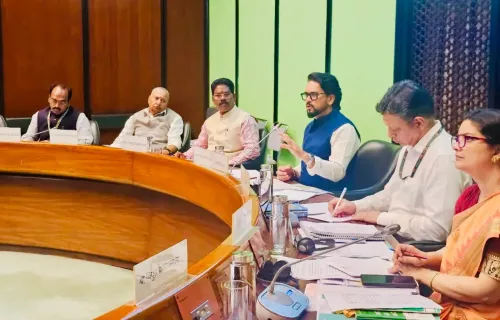
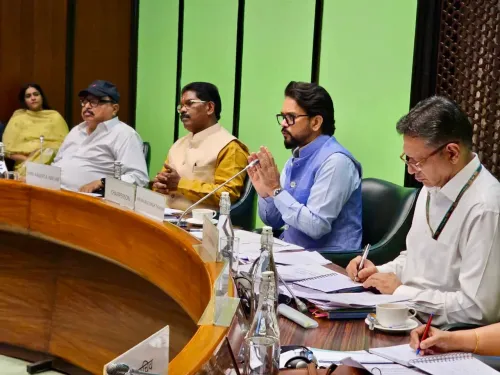
The Standing Committee on Coal, Mines and Steel held oral evidence sessions on 29 May 2026 focused on KABIL and India's critical minerals strategy.
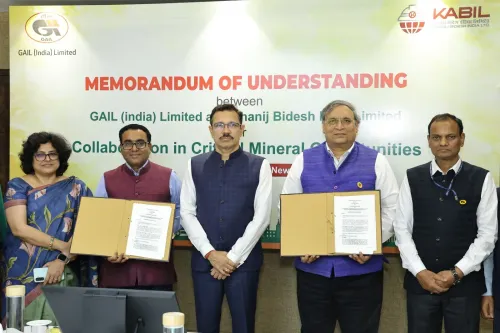
KABIL (Khanij Bidesh India Ltd) was incorporated in 2019 as a joint venture of NALCO, Hindustan Copper, and MECL to acquire overseas strategic mineral assets.
The National Critical Minerals Mission was announced in Union Budget 2024-25 with an outlay exceeding Rs 16,000 crore .
India identified 30 critical minerals in July 2023 to guide exploration and reduce import dependence, particularly from China.
Discussions covered overseas mineral acquisitions, supply chain resilience, and long-term mineral security of India.
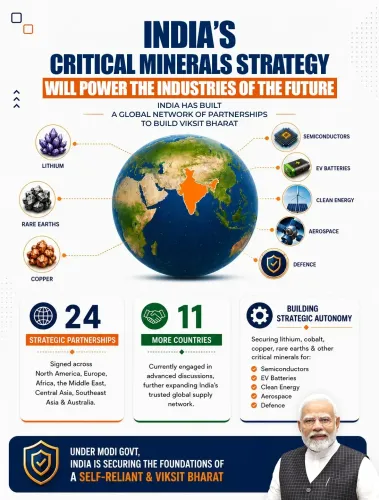
Key sectors dependent on outcomes include EV manufacturing , renewable energy, defence, and electronics industries.
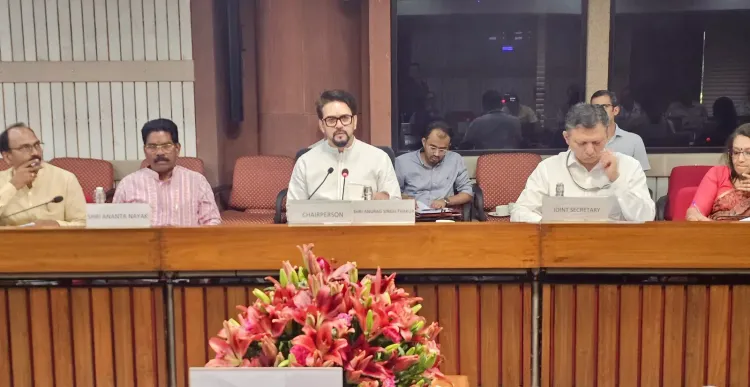
BJP MP Anurag Thakur, chairperson of the Standing Committee on Coal, Mines and Steel, convened in-depth oral evidence sessions on Friday, 29 May 2026, with senior officials from the Ministry of Mines and NITI Aayog on the subject of 'KABIL: India's Quest for Global Critical Minerals'. The sessions examined India's push to secure overseas critical mineral assets and strengthen domestic supply chains under the National Critical Minerals Mission (NCMM).
Context
Khanij Bidesh India Ltd (KABIL), incorporated in 2019 as a joint venture of NALCO, Hindustan Copper, and MECL under the Ministry of Mines, was set up specifically to acquire strategic mineral assets abroad. The committee's oral evidence sessions brought together senior ministry officials and NITI Aayog representatives to assess KABIL's progress and the broader contours of India's critical minerals strategy. Thakur noted that discussions were 'fruitful' and covered overseas mineral acquisitions, supply chain resilience, and long-term mineral security.
Policy Backdrop
India notified a list of 30 critical minerals in July 2023 to guide exploration and policy priorities, followed by the announcement of the National Critical Minerals Mission in the Union Budget 2024-25 with an outlay exceeding Rs 16,000 crore. The Mines and Minerals (Development and Regulation) Amendment Act, 2023 introduced provisions to fast-track exploration of these minerals. These policy moves collectively aim to reduce India's dependence on concentrated import sources — notably China — for minerals critical to electric vehicles, renewable energy, defence, and electronics manufacturing.
India has also engaged with multilateral frameworks such as the Minerals Security Partnership to diversify supply chains globally. The NCMM sits at the intersection of the government's Atmanirbhar Bharat and Viksit Bharat 2047 goals, which seek technological self-reliance and economic resilience by mid-century.
Stakeholders and Impact
The outcomes of KABIL's overseas acquisitions have direct bearing on India's electric vehicle (EV) manufacturers, renewable energy firms, and defence and electronics industries, all of which depend on a stable supply of minerals such as lithium, cobalt, and rare earth elements. Parliamentary scrutiny through the standing committee mechanism provides legislative oversight of how public-sector entities like KABIL are executing on strategic mandates. Thakur's committee has the authority to call officials, examine implementation gaps, and recommend corrective measures to the government.
What's Next
The committee is expected to consolidate its findings into a formal report, whose recommendations could shape future budget allocations and policy adjustments for KABIL and the NCMM. Further overseas mineral acquisition announcements by KABIL, and the government's response to the committee's eventual report, will be key indicators of how India's critical minerals strategy matures. Sustained parliamentary attention to this sector signals that mineral security is increasingly treated as a national-security and economic-sovereignty priority.
Point of View
Cobalt, and rare earths is reshaping geopolitics. By placing KABIL and the NCMM under legislative scrutiny, the committee is effectively stress-testing whether India's public-sector acquisition vehicle can deliver on its mandate before supply-chain vulnerabilities deepen. Thakur's dual background in government and now legislative oversight positions this as a continuity of executive policy rather than adversarial scrutiny, which may limit the committee's appetite for sharp recommendations. The broader arc points to India seeking to institutionalise mineral security as a pillar of economic sovereignty alongside energy transition — a trajectory that will require both diplomatic agility in overseas markets and disciplined domestic follow-through.
NationPress
13 Oct 2026
Frequently Asked Questions
What is KABIL and what does it do?
KABIL, or Khanij Bidesh India Ltd, is a joint venture public sector company under India's Ministry of Mines, formed in 2019 by NALCO, Hindustan Copper, and MECL. Its mandate is to identify, acquire, and develop overseas mineral assets — particularly critical and strategic minerals — to secure India's long-term supply chains.
What is the National Critical Minerals Mission?
The National Critical Minerals Mission (NCMM) is a central government initiative announced in Union Budget 2024-25 with an outlay exceeding Rs 16,000 crore. It aims to promote exploration, mining, and processing of critical minerals domestically and abroad to reduce import dependence and support India's energy transition and technological goals.
Which minerals are on India's critical minerals list?
India notified a list of 30 critical minerals in July 2023 to guide policy and exploration priorities. These include minerals essential for electric vehicles, renewable energy, defence, and electronics, such as lithium, cobalt, nickel, and rare earth elements.
What is the role of the Standing Committee on Coal, Mines and Steel?
The Standing Committee on Coal, Mines and Steel is a Parliamentary committee that provides legislative oversight of the ministries and public sector entities within its purview. It can call government officials for oral evidence, examine policy implementation, and submit recommendations to Parliament.
How does KABIL relate to Atmanirbhar Bharat?
KABIL is a key instrument of the Atmanirbhar Bharat vision, which seeks Indian self-reliance across strategic sectors. By securing overseas mineral assets, KABIL aims to reduce India's dependence on concentrated foreign sources — particularly China — for minerals critical to domestic manufacturing and the clean energy transition.