Anurag Thakur-led Panel Reviews Coal Block Auction Reforms
Synopsis
BJP MP Anurag Thakur announced on June 15, 2026 that the Standing Committee on Coal, Mines and Steel held detailed discussions with three central ministries to review the coal block auction process, crediting NDA-era reforms with replacing a corruption-prone UPA allocation system and boosting India's energy security.
Key Takeaways
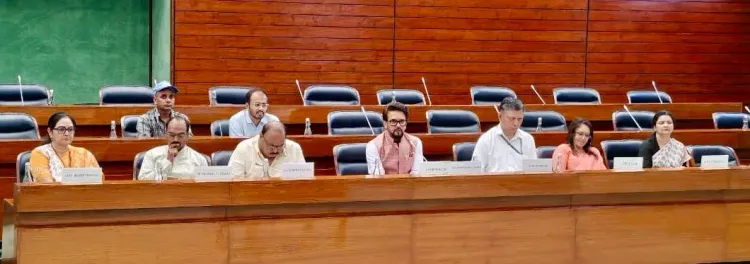
The Standing Committee on Coal, Mines and Steel , chaired by Anurag Thakur , met with the Ministry of Coal , Ministry of Power , and MoEFCC on June 15, 2026 .
The Supreme Court in August 2014 cancelled 214 coal block allocations made under the UPA, triggering the shift to competitive auctions.
The Coal Mines (Special Provisions) Act, 2015 established the e-auction framework that replaced the discretionary screening-committee route.
Commercial mining was opened to private players from 2020 onward, broadening participation in coal block auctions.
The committee's recommendations, when tabled in Parliament, could result in changes to Coal Block Allocation Rules or auction methodology.
Thakur linked the reforms to India's energy security and the 'Viksit Bharat' national development goal.
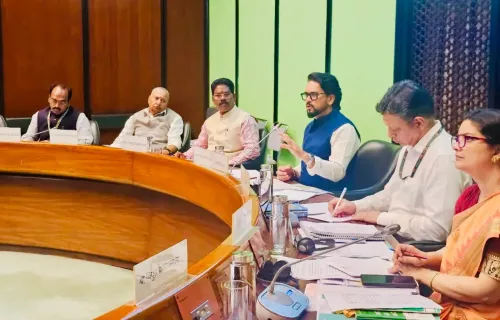
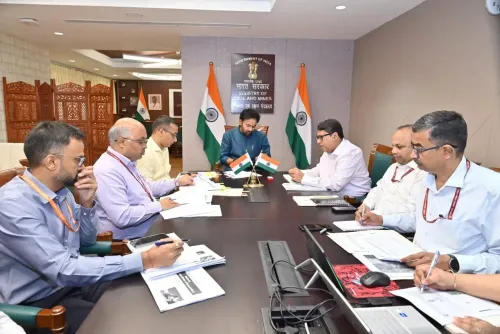
BJP MP Anurag Thakur, who chairs the Standing Committee on Coal, Mines and Steel, on Monday, June 15, 2026, stated that the committee held extensive deliberations with the Ministry of Coal, the Ministry of Power, and the Ministry of Environment, Forest and Climate Change (MoEFCC) to review and strengthen the coal block auction and allocation process.
Context
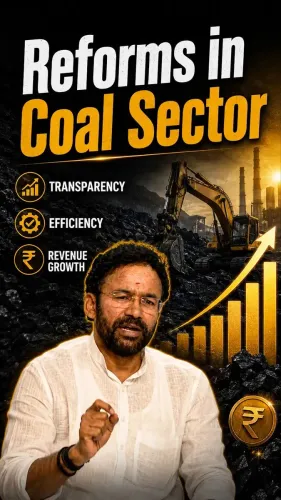
In his post, Thakur asserted that the NDA government under Prime Minister Narendra Modi has replaced what he described as an 'opaque and scam-ridden UPA-era allocation system' with a 'transparent auction regime, streamlined clearances, and comprehensive policy reforms.' He added that these changes have 'effectively eliminated corruption while significantly accelerating project execution.'
The committee's review brings together three key ministries whose mandates intersect at every stage of coal block development — from allocation and mining to power generation and environmental clearance — signalling a coordinated inter-ministerial approach to sector governance.
Policy Backdrop
The current auction-based framework has its roots in a landmark Supreme Court judgment of August 2014, which cancelled 214 coal block allocations made on a discretionary basis during the previous UPA government, citing arbitrariness and lack of transparency. Parliament subsequently enacted the Coal Mines (Special Provisions) Act, 2015, which replaced the earlier screening-committee route with a competitive e-auction mechanism.
The first round of auctions under the new regime was conducted in 2015, and the scope was expanded significantly in 2020 to include commercial mining, opening the sector to a broader pool of private participants. Since 2014, the central government has pursued a wider policy of shifting natural-resource allocations — across coal, spectrum, and minerals — from administrative discretion to competitive bidding, in direct response to judicial findings of opacity.
Inter-ministerial coordination on environmental and forest clearances has been a recurring policy emphasis, presented as a means to reduce project-execution delays without diluting statutory safeguards under environment law.
Stakeholders and Impact
Coal mining companies and power generation firms are the primary commercial stakeholders, as the auction regime determines both the cost and security of their fuel supply. State governments, which receive a share of auction proceeds and royalties, also have a direct fiscal interest in the volume and pace of block allocations.
Thakur framed the reforms in terms of India's energy security and the government's 'Viksit Bharat' development vision, arguing that efficient and sustainable coal supply is a prerequisite for faster economic progress. The MoEFCC's involvement in the committee discussions underlines that environmental clearance timelines remain a critical variable in translating auctioned blocks into operational mines.
What's Next
The Standing Committee is expected to table its recommendations in Parliament, which could lead to modifications in the Coal Block Allocation Rules or the auction methodology. Any such recommendations will be closely watched by mining companies, power utilities, and environmental groups alike.
As India navigates its energy transition, the balance between accelerating domestic coal production for near-term power security and meeting longer-term climate commitments is likely to remain at the centre of parliamentary and executive deliberations on coal sector governance.
Point of View
The committee reinforces a long-running NDA narrative ahead of any legislative tightening of auction rules. The inclusion of MoEFCC in the deliberations also signals that environmental clearance speed — a persistent industry complaint — remains a live policy pressure point. Ultimately, the committee's forthcoming recommendations will be the real test of whether this review translates into substantive rule changes or remains a restatement of existing policy gains.
NationPress
14 Sept 2026
Frequently Asked Questions
What did the Standing Committee on Coal, Mines and Steel discuss on June 15, 2026?
The committee, chaired by BJP MP Anurag Thakur, held discussions with the Ministry of Coal, Ministry of Power, and MoEFCC to review and strengthen the coal block auction and allocation process.
Why were coal block allocations changed from the UPA system to auctions?
The Supreme Court in August 2014 cancelled 214 coal block allocations made under the UPA on grounds of arbitrariness and opacity, prompting Parliament to pass the Coal Mines (Special Provisions) Act, 2015, which introduced competitive e-auctions.
What is the Coal Mines (Special Provisions) Act, 2015?
It is a central law enacted to replace the earlier discretionary screening-committee route for coal block allocation with a transparent, competitive e-auction mechanism overseen by the Ministry of Coal.
How does coal block auction reform relate to India's energy security?
Faster and more transparent allocation of coal blocks is intended to ensure a stable domestic coal supply for power plants, reducing import dependence and supporting uninterrupted electricity generation across the country.
What happens after the Standing Committee submits its recommendations?
The committee's report is tabled in Parliament, and the government may then amend the Coal Block Allocation Rules or auction methodology based on the panel's findings, subject to legislative and executive approval.