Kishan Reddy: Coal sector fully reformed from Congress-era scams
Synopsis
Union Coal and Mines Minister G. Kishan Reddy, posting in Telugu on June 8, 2026, accused the Congress of turning coal into a byword for corruption during the UPA era, invoking the Coalgate scandal and the Supreme Court's 2014 cancellation of 204 coal blocks, and claimed the sector has been fully reformed under the BJP.
Key Takeaways
Union Coal and Mines Minister G.
Kishan Reddy posted on June 8, 2026 accusing Congress of presiding over large-scale coal corruption during the UPA era.
The Coalgate scandal saw the CAG estimate a notional revenue loss of Rs 1.86 lakh crore from discretionary coal block allocations between 2004 and 2009 .
The Supreme Court of India in 2014 cancelled 204 coal blocks , ruling allocations were arbitrary and illegal.
Parliament enacted the Coal Mines (Special Provisions) Act, 2015 , replacing discretionary allocation with competitive e-auctions .
The government opened commercial coal mining to private players in 2020 , ending a decades-old government monopoly.
Reddy's remarks carry political weight in Telangana , where he serves as BJP state president and Congress currently holds power.
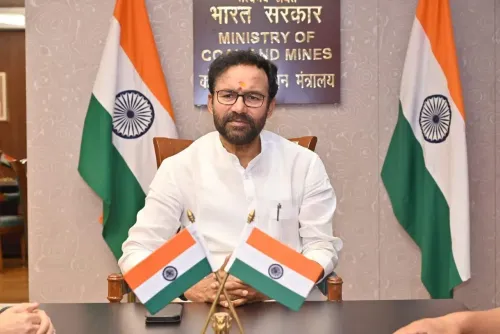
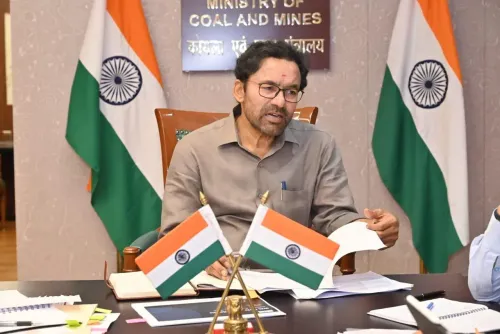
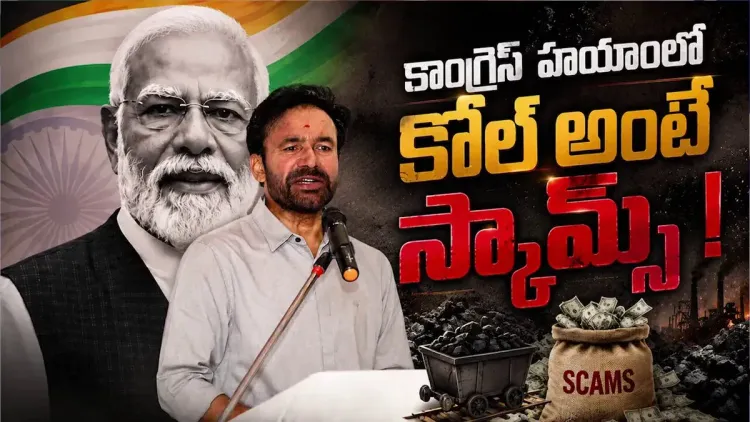
Union Coal and Mines Minister G. Kishan Reddy on Monday, June 8, 2026, sharply attacked the Congress party's record on coal governance, asserting that the sector has been completely reformed under the current BJP-led government after years of corruption and mismanagement during the UPA era.
Posting in Telugu on X, the minister stated: 'కాంగ్రెస్ హయాంలో.. కోల్ అంటే అవినీతి, అసమర్థతకి కేరాఫ్ అడ్రస్ గా ఉండేవి' — 'Under Congress rule, coal was the address for corruption and inefficiency.' He alleged that coal scams during that period were so severe that a coal minister went to jail, and that former Prime Minister Manmohan Singh, who had held additional charge of the Coal Ministry, allocated coal mines simply on the basis of a blank piece of paper.
Context
The remarks refer to the Coalgate scandal, a major controversy that engulfed the UPA-II government after the Comptroller and Auditor General of India reported in 2012 that discretionary coal block allocations between 2004 and 2009 had caused a notional revenue loss of approximately Rs 1.86 lakh crore to the exchequer. The allocations were made through a Screening Committee process widely criticised for lacking transparency and competitive pricing.
The Supreme Court of India, in a landmark 2014 judgment, cancelled 204 coal blocks allocated between 1993 and 2010, ruling that the entire allocation process had been arbitrary and illegal. The ruling sent shockwaves through the power and steel sectors, which had built capacity around those allocations.
Policy Backdrop
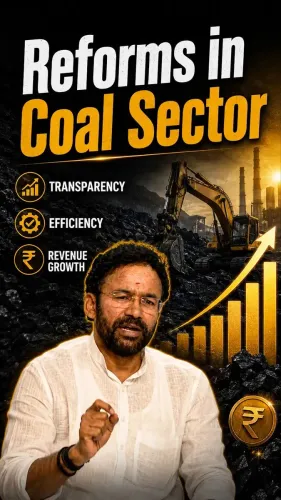
Following the Supreme Court order, Parliament enacted the Coal Mines (Special Provisions) Act, 2015, which replaced the discretionary Screening Committee route with a competitive e-auction framework. The shift was designed to ensure transparency, maximise government revenues, and eliminate the scope for political patronage in block allocations.
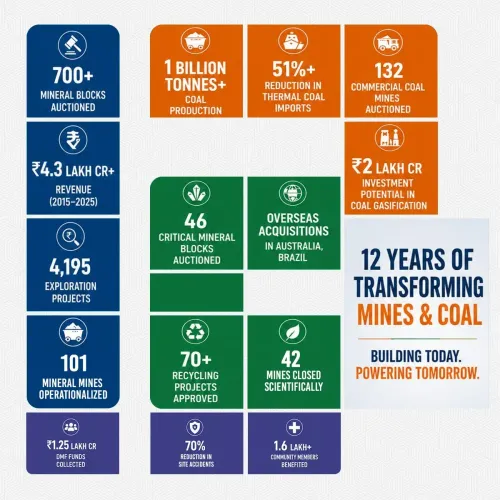
In 2020, the government took a further step by opening commercial coal mining to private players — ending the decades-old government monopoly — and has since reported consistent year-on-year increases in domestic coal production. Kishan Reddy, as the minister responsible for the sector, has been a vocal advocate of these structural changes.
Stakeholders and Impact
The coal sector's overhaul has had wide-ranging consequences for state governments, which now receive auction revenues, as well as for power producers and steel manufacturers who depend on assured fuel supply. Competitive auctions have brought greater price discovery and reduced the arbitrariness that characterised earlier allocations.
Reddy's comments are also politically significant given his dual role as BJP Telangana state president. Addressing voters in Telugu, he frames the coal reform narrative as a contrast between Congress-era governance failures and the BJP's administrative record — a message calibrated for audiences in Telangana, where the Congress currently governs at the state level.
What's Next
The broader reform agenda in the mining sector remains a work in progress. The outcome of the next round of commercial coal block auctions and any potential amendment to the Mines and Minerals (Development and Regulation) Act in the upcoming session of Parliament will be closely watched by industry and state governments alike.
Reddy's pointed invocation of the Coalgate episode signals that the BJP intends to keep Congress's coal governance record in public focus — particularly as the party contests political ground in states where energy policy and mining revenues directly affect local economies.
Point of View
Where the party governs the state. By anchoring his critique in the Coalgate scandal and the Supreme Court's 2014 verdict, he draws on judicially validated facts rather than mere allegation, giving the attack credibility beyond partisan rhetoric. The framing — 'then versus now' on coal governance — is part of a broader BJP communications arc that presents post-2014 institutional reforms as a clean break from UPA-era misgovernance. As the next commercial coal block auction round approaches, such messaging also serves to pre-empt any criticism of the current government's mining policy by keeping the opposition's record in public view.
NationPress
19 Sept 2026
Frequently Asked Questions
What is the Coalgate scam in India?
Coalgate refers to the controversy over discretionary coal block allocations made by the UPA government between 2004 and 2009, which the CAG estimated caused a notional revenue loss of Rs 1.86 lakh crore. The Supreme Court of India cancelled 204 of these coal blocks in 2014, ruling the allocation process was arbitrary and illegal.
Did Manmohan Singh hold charge of the Coal Ministry?
Yes, former Prime Minister Manmohan Singh held additional charge of the Coal Ministry during the UPA-II period when many of the controversial coal block allocations under scrutiny took place.
What reforms did the BJP government make in the coal sector?
After the Supreme Court's 2014 judgment, Parliament passed the Coal Mines (Special Provisions) Act, 2015, replacing the Screening Committee route with competitive e-auctions. In 2020, the government further opened commercial coal mining to private players, ending a decades-old government monopoly.
Who is G. Kishan Reddy?
G. Kishan Reddy is the Union Minister of Coal and Mines in the BJP-led central government and also serves as the BJP's Telangana state president, making him a key political figure in both national coal policy and state-level politics.
Why did the Supreme Court cancel coal blocks in 2014?
The Supreme Court of India in 2014 cancelled 204 coal blocks allocated between 1993 and 2010, ruling that the government's Screening Committee allocation process had been arbitrary, non-transparent, and legally unsustainable.