Mobile Phone Manufacturing Scheme: Govt notifies ₹62,500 crore MPMS, targets 60,000 jobs
Synopsis
India's newly notified ₹62,500 crore Mobile Phone Manufacturing Scheme isn't just another PLI iteration — it ties incentives to incremental sales growth and domestic component sourcing, signalling a deliberate push beyond assembly toward deeper manufacturing. With a ₹39 lakh crore production target and a dedicated track for Indian brands eyeing global markets, the MPMS is the government's most structured bet yet on making India a smartphone powerhouse.
Key Takeaways
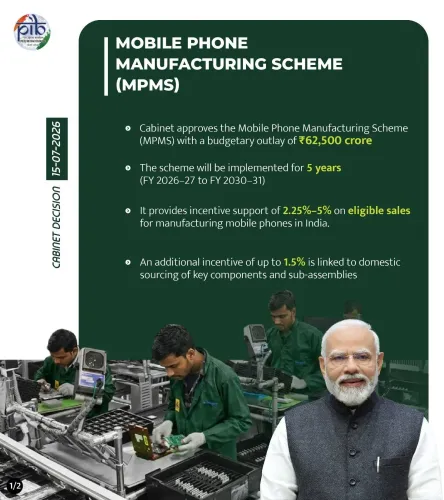
The government notified the ₹62,500 crore Mobile Phone Manufacturing Scheme (MPMS) on 21 August , operative from FY 2026-27 to 2030-31 .
The scheme targets approximately 60,000 direct jobs and cumulative mobile phone production of ₹39 lakh crore .
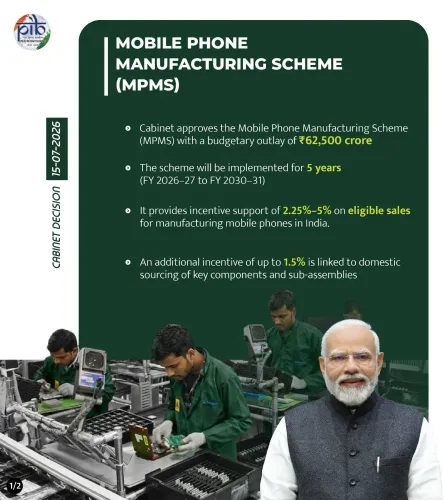
Incentives range from 2.25% to 5% on eligible sales, with an additional 1.5% for domestic component sourcing and 3% for R&D and product design.
Indian handset brands qualify for the highest 5% incentive tier and receive a one-year gestation period under Target Segment 2.
Eligibility requires a minimum turnover of ₹10,000 crore (manufacturers) or ₹1,000 crore (EMS players) in fiscal 2026 .
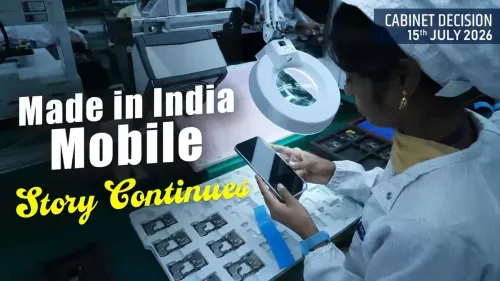
The Union Cabinet had approved the framework on 15 July ; Friday's notification formally operationalises it.
The Indian government on Friday, 21 August formally notified the ₹62,500 crore Mobile Phone Manufacturing Scheme (MPMS), a five-year production-linked incentive programme designed to accelerate indigenous handset manufacturing and generate approximately 60,000 direct jobs. The scheme, operative from financial year 2026-27 to 2030-31, projects cumulative mobile phone production of around ₹39 lakh crore over its tenure.
How the Incentive Structure Works
Under the MPMS, eligible manufacturers will receive production-linked incentives ranging from 2.25% to 5% on qualifying sales of mobile phones made in India. Companies can unlock an additional 1.5% incentive by sourcing specified components and sub-assemblies domestically — a provision aimed at deepening the local supply chain rather than simply assembling imported parts.
A further 3% incentive on eligible sales is available for product design and research and development activities directed at building Indian brands. Electronics and Information Technology Secretary S. Krishnan confirmed that Indian handset brands will qualify for the highest incentive tier of 5%, reflecting the government's intent to back domestic companies eyeing international expansion.
Two Target Segments and Eligibility Criteria
The scheme is structured around two distinct target segments. Target Segment 1 focuses on incentivising mobile phone manufacturing broadly, while Target Segment 2 is dedicated to supporting Indian mobile phone brands. Companies under the second segment will receive a gestation period of one year to scale operations before becoming eligible for financial incentives.
To qualify under the MPMS, mobile phone manufacturers registered in India must have a minimum turnover of ₹10,000 crore in fiscal 2026. Existing brands seeking incentives face a higher bar: they must achieve additional sales of ₹5,000 crore over their total fiscal 2026 sales in each year they claim benefits — ensuring incentives reward genuine growth rather than existing business volumes.
For electronics manufacturing services (EMS) players, the eligibility threshold is set at a minimum turnover of ₹1,000 crore in fiscal 2026, an entry criterion that could draw established contract manufacturers into the scheme and strengthen the broader electronics ecosystem.
Cabinet Approval and Policy Context
The Union Cabinet had approved the MPMS framework on 15 July, with Friday's notification marking the formal operationalisation of the scheme. This comes amid sustained government efforts to position India as a global hub for electronics manufacturing, building on earlier PLI rounds that helped attract major smartphone assemblers to the country.
Notably, the emphasis on incremental sales thresholds for existing brands signals a structural departure from earlier schemes, where incentives were sometimes linked to capacity creation rather than verified output growth. The domestic component sourcing bonus also reflects a push to move up the value chain — from assembly to deeper manufacturing.
What the Scheme Means for the Sector
India's mobile phone manufacturing sector has grown significantly over the past decade, with the country now among the world's largest smartphone producers. The MPMS seeks to consolidate that position by encouraging Indian brands to scale domestically and compete globally, while simultaneously drawing EMS players into a more structured incentive framework.
With sectoral guidelines now notified, industry participants are expected to begin filing applications in the coming weeks. The scheme's five-year runway through 2030-31 provides manufacturers a medium-term horizon to invest in capacity, design capabilities, and supply chain localisation.
Point of View
000 crore for manufacturers) effectively exclude smaller domestic players, concentrating benefits among a handful of large incumbents and global contract manufacturers. The 60,000-job target, while significant, is modest relative to the ₹62,500 crore outlay and the scale of India's manufacturing employment challenge. The real test will be whether the domestic component sourcing bonus actually shifts the needle on local value addition — or whether manufacturers claim it on marginal sourcing changes while keeping deep supply chains offshore.
NationPress
5 Oct 2026
Frequently Asked Questions
What is the Mobile Phone Manufacturing Scheme (MPMS)?
The MPMS is a ₹62,500 crore government scheme notified on 21 August to boost indigenous mobile phone production through production-linked incentives over five financial years, from 2026-27 to 2030-31. It targets 60,000 direct jobs and cumulative production of ₹39 lakh crore.
What incentives does the MPMS offer manufacturers?
Manufacturers receive incentives of 2.25% to 5% on eligible sales of India-made handsets, an additional 1.5% for domestic component sourcing, and a further 3% for product design and R&D aimed at building Indian brands. Indian handset brands qualify for the highest 5% incentive tier.
Who is eligible to apply under the MPMS?
Mobile phone manufacturers registered in India with a minimum turnover of ₹10,000 crore in fiscal 2026 are eligible. Electronics manufacturing services (EMS) companies qualify at a lower threshold of ₹1,000 crore in fiscal 2026. Existing brands must demonstrate additional sales of ₹5,000 crore over their FY26 base in each year they claim incentives.
What is Target Segment 2 under the MPMS?
Target Segment 2 is dedicated to supporting Indian mobile phone brands. Eligible companies under this segment receive a one-year gestation period to scale operations before becoming eligible for financial incentives, giving domestic brands time to meet the required criteria.
How does the MPMS differ from earlier PLI schemes for mobile phones?
Unlike earlier rounds where incentives were sometimes linked to capacity creation, the MPMS ties benefits to incremental sales over a verified fiscal 2026 base, meaning companies must demonstrate real output growth to qualify. It also adds dedicated bonuses for domestic component sourcing and R&D — a push toward deeper manufacturing rather than assembly alone.