One Nation One Time: Govt notifies IST rules for digital, critical infra

Synopsis
India has given legal teeth to its national clock. The newly notified Legal Metrology (IST) Rules, 2026 make Indian Standard Time the single, legally binding time reference for telecom, banking, power grids, and data centres — backed by five regional labs and NavIC satellite dissemination. The 180-day countdown to enforcement has begun.
Key Takeaways
The Legal Metrology (Indian Standard Time) Rules, 2026 were notified on 3 September 2026 , establishing IST as India's legally recognised national time reference.
The rules come into force 180 days from their publication in the Official Gazette.
Five Regional Reference Standard Laboratories (RRSLs) — at Ahmedabad , Bengaluru , Bhubaneswar , Faridabad , and Guwahati — provide distributed IST traceability.
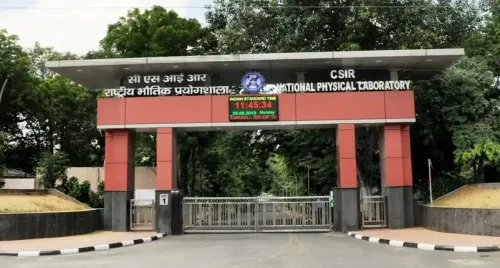
CSIR-NPL , ISRO , and the Department of Legal Metrology (MoCA) jointly underpin the technical and regulatory framework.
IST will be disseminated via NTP , PTP , NavIC , and — under testing — White Rabbit optical fibre technology.
Accurate time stamps under the new rules also serve a cybersecurity function, aligning with CERT-In 2023 guidelines for government ICT systems.
The Indian government on 3 September 2026 notified the Legal Metrology (Indian Standard Time) Rules, 2026, formally establishing Indian Standard Time (IST) as the legally recognised and traceable national time reference — a foundational move under its 'One Nation, One Time' vision for modern digital and critical infrastructure. The rules will come into force 180 days from the date of their publication in the Official Gazette.
What the Rules Cover
The Legal Metrology (IST) Rules, 2026 provide a comprehensive legal framework for the generation, maintenance, dissemination, and use of IST across the country. According to an official statement, sectors including telecommunications, financial transactions and digital payments, power grids, transportation, data centres, and government information systems all depend on accurate time synchronisation and reliable time stamps.
The rules are designed to ensure that these critical systems operate on a single, reliable, and legally binding time reference — eliminating discrepancies that can arise when different systems use different or unverified time sources.
The Infrastructure Behind It
Recognising that legal recognition alone is insufficient without physical reach, CSIR-National Physical Laboratory (CSIR-NPL), ISRO, and the Department of Legal Metrology under the Ministry of Consumer Affairs (MoCA) have jointly established secondary timescales at five Regional Reference Standard Laboratories (RRSLs) — located at Ahmedabad, Bengaluru, Bhubaneswar, Faridabad, and Guwahati.
These secondary timescales are continuously traceable to IST maintained by CSIR-NPL, creating a distributed national architecture for reliable time dissemination. Additionally, CSIR-NPL provides IST traceability to ISRO for the NavIC satellite navigation system, enabling satellite-based dissemination of IST and strengthening the resilience of national timing services.
Dissemination Technologies
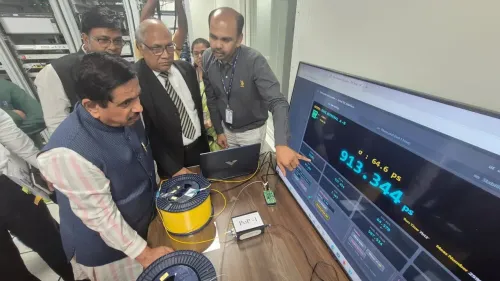
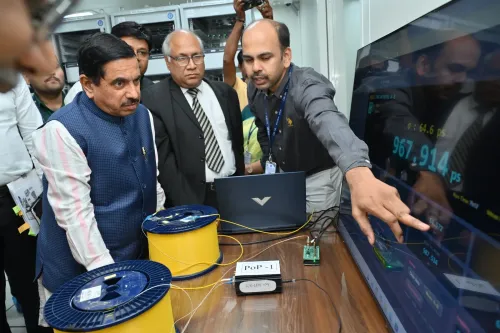
IST can be disseminated through network-based technologies such as NTP (Network Time Protocol) and PTP (Precision Time Protocol), as well as satellite-based systems including NavIC. High-precision optical fibre-based technologies such as White Rabbit are also currently being tested, according to the official statement.
This distributed architecture is designed to serve a wide range of users — from ordinary ICT systems to applications requiring highly precise time and frequency synchronisation.
Cybersecurity Dimension
The government has also highlighted a significant cybersecurity rationale for the move. Accurate time stamps are essential for correlating events across multiple systems during cyber incidents and for effective security monitoring. The CERT-In Guidelines on Information Security Practices for Government Entities, 2023, already recommend synchronisation of ICT systems with standard time sources including NPL and NIC.
Regulatory and Scientific Authority
The Legal Metrology Department under MoCA serves as the regulatory and enforcement authority under the Legal Metrology framework. CSIR-NPL, India's National Metrology Institute, provides the scientific foundation and traceability for IST. Together, they form the backbone of the new rules' implementation machinery.
With the 180-day implementation window now running, the focus shifts to adoption across government systems and regulated sectors — a process that will test the readiness of India's digital infrastructure at scale.
Point of View
2026 are less a technical update and more a sovereignty statement — India is asserting control over its own temporal infrastructure at a moment when GPS dependence and cyber vulnerabilities are live concerns. The five-RRSL distributed architecture and NavIC integration signal a deliberate move away from reliance on foreign satellite timing systems. The real test, however, is adoption: India has a history of sound regulatory frameworks that struggle at implementation. Whether banks, power utilities, and data centres actually migrate to traceable IST within the 180-day window — or treat it as a compliance checkbox — will determine whether 'One Nation, One Time' becomes infrastructure or slogan.
NationPress
3 Sept 2026
Frequently Asked Questions
What are the Legal Metrology (Indian Standard Time) Rules, 2026?
They are newly notified rules that establish Indian Standard Time (IST) as the legally recognised, common, and traceable national time reference for India. The rules provide a framework for the generation, maintenance, dissemination, and use of IST across critical sectors including telecom, banking, power grids, and data centres.
When will the IST rules come into effect?
The Legal Metrology (IST) Rules, 2026 will come into force 180 days from the date of their publication in the Official Gazette, notified on 3 September 2026.
Which agencies are responsible for implementing the IST framework?
CSIR-National Physical Laboratory (CSIR-NPL) provides the scientific foundation and IST traceability. ISRO enables satellite-based dissemination via NavIC. The Department of Legal Metrology under the Ministry of Consumer Affairs (MoCA) is the regulatory and enforcement authority.
What is the cybersecurity significance of the new IST rules?
Accurate, legally traceable time stamps are essential for correlating events across systems during cyber incidents and for effective security monitoring. The CERT-In Guidelines on Information Security Practices for Government Entities, 2023, already recommend synchronisation of ICT systems with standard time sources such as NPL and NIC.
How will Indian Standard Time be distributed across the country?
IST will be disseminated through network protocols (NTP and PTP), satellite-based systems (NavIC), and — under testing — high-precision White Rabbit optical fibre technology. Five Regional Reference Standard Laboratories in Ahmedabad, Bengaluru, Bhubaneswar, Faridabad, and Guwahati form the distributed ground infrastructure.