NSSH scheme empowers SC, ST entrepreneurs to win govt tenders and scale up

Synopsis
India's National SC-ST Hub scheme is doing something rare — turning inclusion into contracts. Through IIM-led Business Accelerator Programs, SC and ST entrepreneurs from West Bengal, Assam, and Nashik have secured government tenders from PGCIL and SAIL. The NSSH is quietly reshaping how marginalised communities access India's vast public procurement ecosystem.
Key Takeaways
The National SC-ST Hub (NSSH) scheme under the Ministry of MSME is helping SC and ST entrepreneurs access government procurement markets.
The Business Accelerator Program (BAP) , conducted at institutions including IIM Sambalpur and IIM Shillong , provides mentorship on pricing, tendering, and business strategy.
A West Bengal -based Safety & Security Engineering firm secured tenders worth ₹8.48 lakh from Power Grid Corporation of India Limited after a BAP session.
Sawalaram Enterprises of Nashik won a ₹5.10 lakh tender from Steel Authority of India Limited (SAIL) through the programme.
The scheme aligns with the Viksit Bharat 2047 vision of inclusive and sustainable economic growth.
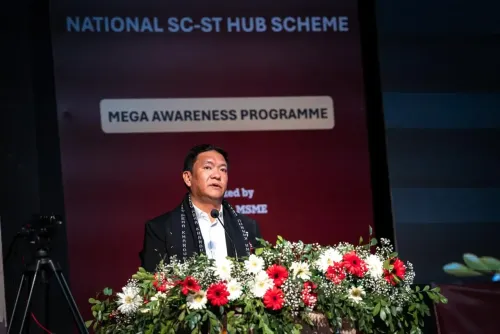
The National SC-ST Hub (NSSH) scheme, run by the Ministry of Micro, Small & Medium Enterprises, is enabling entrepreneurs from Scheduled Castes (SC) and Scheduled Tribes (ST) to break through longstanding barriers in markets, finance, and technology — with a particular focus on unlocking government procurement opportunities, according to an official statement released on Friday, 3 July 2025.
What the Scheme Does
The NSSH targets systemic gaps that have historically kept SC and ST-owned enterprises on the margins of formal economic activity. According to the ministry, the scheme builds capacity across financial management, tender participation, pricing strategies, and regulatory compliance — equipping entrepreneurs with tools to compete in mainstream procurement ecosystems.
Central to this effort is the Business Accelerator Program (BAP), which provides structured mentorship, industry insights, and targeted business interventions. The BAP addresses challenges in business strategy, operational efficiency, and market access, and is conducted in partnership with premier institutions including IIM Sambalpur and IIM Shillong.
Real Enterprises, Measurable Results
The ministry cited several examples of enterprises that translated BAP participation into tangible contract wins. A Safety & Security Engineering operator from West Bengal reworked pricing and business positioning through a BAP session at IIM Sambalpur and subsequently secured tenders worth ₹8.48 lakh from Power Grid Corporation of India Limited.
In Assam, Renergy Solution Pvt. Ltd. — already active in the public procurement ecosystem securing solar installation contracts for government institutions — used the BAP to formalise business processes and sharpen strategic direction, strengthening its readiness for larger government contracts.
Meanwhile, Sawalaram Enterprises of Nashik won a ₹5.10 lakh tender from the Steel Authority of India Limited (SAIL) after participating in a BAP conducted at IIM Shillong.
Ministry's Position
'From overcoming barriers to scaling up operations and participating in mainstream economic activities, these enterprises exemplify how focused support can unlock potential across sectors and geographies,' the ministry stated.
Officials framed the scheme's outcomes as evidence that inclusivity, when backed by structured intervention, can translate into measurable economic progress — not just symbolic participation.
Broader Context and Significance
The NSSH sits within India's wider push toward a Viksit Bharat 2047 vision, which emphasises inclusive growth as a pillar of long-term development. SC and ST communities collectively represent a significant share of India's population, yet their enterprises have historically been underrepresented in formal government procurement, which runs into lakhs of crores annually through platforms such as the Government e-Marketplace (GeM).
By integrating mentorship with procurement access, the NSSH attempts to move beyond welfare-oriented support toward building commercially viable, self-sustaining enterprises. The ministry indicated the scheme is designed to create long-term resilience and greater market visibility for participating firms.
As the programme expands, the focus will likely shift to scaling the BAP to more institutions and geographies, with the ultimate measure of success being the volume and value of contracts secured by SC and ST entrepreneurs in open competitive procurement.
Point of View
Not just policy-eligible. But the ministry's examples, while illustrative, involve relatively modest contract values. The real test is whether the programme can consistently produce enterprises competing for crore-scale tenders, not lakh-scale wins. India's public procurement market is enormous, and SC and ST participation in it remains structurally thin. Without published aggregate data on total contract value secured and enterprise survival rates post-BAP, it is difficult to assess whether the NSSH is moving the needle at scale or generating headline-friendly case studies.
NationPress
3 Jul 2026
Frequently Asked Questions
What is the National SC-ST Hub (NSSH) scheme?
The National SC-ST Hub is a scheme run by India's Ministry of Micro, Small & Medium Enterprises designed to help entrepreneurs from Scheduled Castes and Scheduled Tribes access markets, finance, technology, and government procurement opportunities. It provides capacity building, mentorship, and business support through its Business Accelerator Program.
What is the Business Accelerator Program under the NSSH?
The Business Accelerator Program (BAP) is a structured mentorship initiative under the NSSH, conducted in partnership with institutions such as IIM Sambalpur and IIM Shillong. It equips SC and ST entrepreneurs with skills in pricing strategy, tender participation, operational efficiency, and regulatory compliance to help them compete for government contracts.
Which enterprises have benefited from the NSSH scheme?
Notable beneficiaries include a Safety & Security Engineering operator from West Bengal who secured ₹8.48 lakh in tenders from Power Grid Corporation of India Limited, Renergy Solution Pvt. Ltd. of Assam which strengthened its government procurement readiness, and Sawalaram Enterprises of Nashik which won a ₹5.10 lakh tender from Steel Authority of India Limited.
How does the NSSH connect to the Viksit Bharat 2047 vision?
The NSSH is positioned as part of India's broader Viksit Bharat 2047 agenda, which frames inclusive economic participation as central to long-term national development. By integrating SC and ST enterprises into mainstream procurement ecosystems, the scheme aims to ensure that growth is both broad-based and sustainable.
Who can benefit from the NSSH scheme?
The scheme is open to entrepreneurs and enterprises owned by individuals belonging to Scheduled Castes or Scheduled Tribes. It targets micro, small, and medium enterprises seeking to grow their businesses, improve processes, and participate more effectively in government procurement markets across India.