Gujarat Set to Host Four of the World's Leading High-Tech Industries: Minister
Synopsis
Gujarat is emerging as a national powerhouse in economic growth and technology, with strategic investments attracting global high-tech industries. Minister Arjun Modhwadia announces significant developments, including a historic semiconductor facility inauguration, reversing brain drain and boosting local industries.
Key Takeaways
Gujarat's economic growth is bolstered by strategic investments.
Four high-tech industries are establishing operations in the state.
The inauguration of the Micron facility is a historic milestone .
Gujarat is reversing brain drain with returning professionals.
The state is leading in renewable energy and AI advancements.
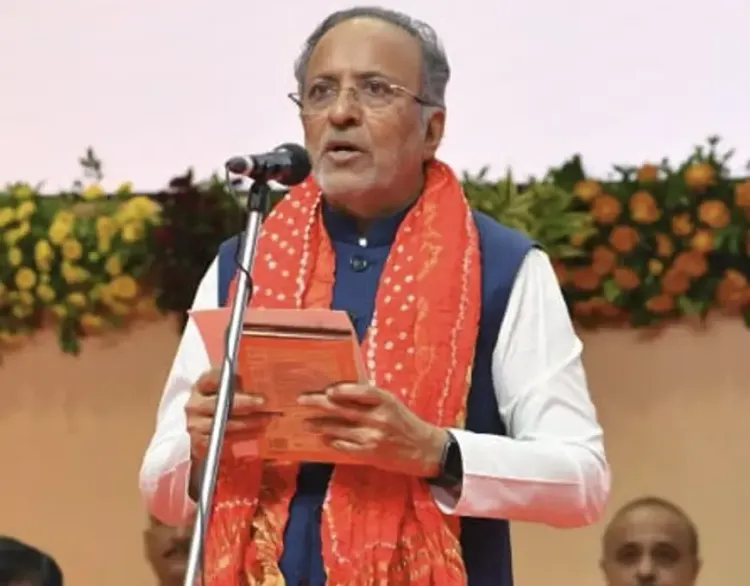
Gandhinagar, Feb 27 (NationPress) Gujarat has significantly reinforced its status as a frontrunner in national economic development, manufacturing, and technological innovation, thanks to strategic investments and effective fiscal governance, as noted by Science and Technology Minister Arjun Modhwadia on Friday.
During the state budget discussion for 2026-27, Modhwadia emphasized that Gujarat's economic discipline, infrastructure enhancements, and industry-centric policies are successfully drawing talent and investments back to the state.
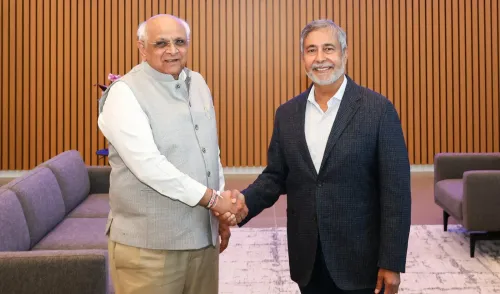
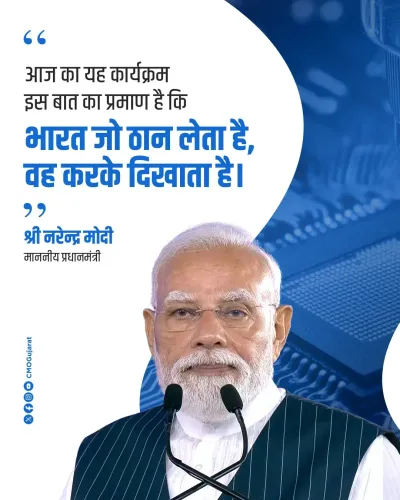
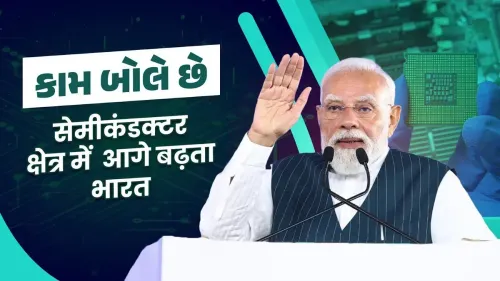
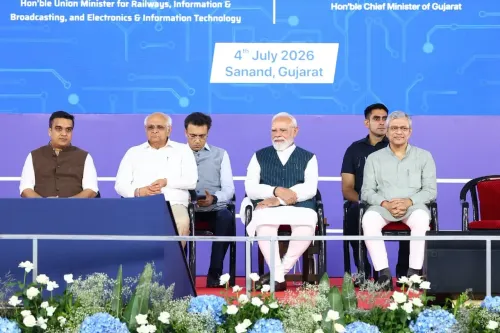
“Among the world’s leading high-tech sectors, four are set to establish a presence in Gujarat. The inauguration of the Micron semiconductor facility in Sanand tomorrow, under the guidance of Prime Minister Narendra Modi, will be a landmark moment in India’s technological journey,” stated Modhwadia.
This advancement is reversing the trend of brain drain, encouraging Indian professionals and CEOs from abroad to return and aid in Gujarat’s industrial expansion.
The minister highlighted Gujarat’s proactive measures during the COVID-19 pandemic, mentioning that under Prime Minister Modi’s leadership, India successfully developed three vaccines in record time and provided them free to 1.4 billion citizens.
“India also provided vaccine support to other nations, transforming a challenge into an opportunity,” he added.
Under the stewardship of Chief Minister Bhupendra Patel and Deputy Chief Minister Harsh Sanghavi, the state government has enacted initiatives to support farmers and enhance agricultural productivity.
Rs 15,000 crore has been allocated for groundnut procurement, while Rs 11,000 crore has been directly credited to the accounts of farmers across 16,000 villages during monsoon disasters, streamlining the process by avoiding delays from survey procedures.
Modhwadia further stated that modern digital systems now empower farmers to access land records, including 7/12 and 8-A, online without needing to visit government offices.
The financial discipline and budgetary management of Gujarat were also highlighted.
The state’s budget has soared to Rs four lakh crore, with committed expenditures on salaries, pensions, and interest accounting for 47%, considerably lower than states like Punjab, which stands at 85%.
Robust GSDP ratios and revenue streams minimize the need for borrowing, facilitating investments in significant projects such as bullet trains, modern bus terminals, airport and railway upgrades, and five expressways, including Ahmedabad-Rajkot, Rajkot-Dwarka, and Jetpur-Somnath, all being constructed at a cost of Rs one lakh crore.
Modhwadia underscored Gujarat’s leadership across multiple sectors.
The state produces 33 percent of India’s pharmaceutical output and 28 percent of its exports, contributes 37 percent of the nation's cotton, and hosts global manufacturing centers for Maruti Suzuki and Honda, which collectively produce nearly one million vehicles annually.
In the dairy sector, Gujarat has positioned itself as a national leader, with the Amul brand gaining worldwide recognition, while Surat’s Diamond Bourse competes with Mumbai in terms of exports and job creation.
Investment in education and social development remains a priority, with Rs 62,000 crore earmarked for education, Rs 7,690 crore for women and child development, and Rs 36,000 crore for urban development.
Additionally, the state is pioneering advancements in renewable energy and cutting-edge technologies, including artificial intelligence.
“India and Gujarat are advancing alongside global leaders in AI, which is a source of pride for all Gujaratis,” concluded Modhwadia.
Point of View
Investment, and infrastructure enhancement. The state's initiatives during the pandemic and its proactive agricultural support are commendable, showcasing a balanced approach towards economic growth and social responsibility.
NationPress
8 Oct 2026
Frequently Asked Questions
What industries are coming to Gujarat?
Four of the world's top high-tech industries are set to establish their presence in Gujarat.
How is Gujarat supporting farmers?
Gujarat has implemented measures such as direct financial support to farmers and digital access to land records.
What significant event is happening in Sanand?
The Micron semiconductor facility is being inaugurated in Sanand, marking a historic milestone for India's technology sector.
How has Gujarat managed its budget?
Gujarat's budget has reached Rs four lakh crore, with a low percentage of committed expenditures compared to other states.
What is Gujarat's role in the pharmaceutical industry?
Gujarat accounts for 33% of India's pharmaceutical production and 28% of pharmaceutical exports.