Hyundai, Kia clock 11.6% combined growth in India in Jan-May on SUV surge
Synopsis
Hyundai and Kia together sold over 4 lakh vehicles in India in just five months, with SUVs like the Creta, Venue, Seltos and Sonet doing the heavy lifting. The 11.6% combined growth rate — outpacing the broader market — signals that South Korean automakers are consolidating their grip on India's fast-evolving SUV segment even as a fresh price hike tests demand elasticity.
Key Takeaways
Hyundai Motor and Kia posted combined sales of 4,05,514 units in January–May 2025 , up 11.6% year-on-year.
Hyundai India sold 2,66,317 units , growing 10.1% on-year; ranked 4th in India's passenger vehicle market.
Kia India grew 14.6% on-year, ranking 6th ; the Seltos and Sonet made up 76.3% of its sales.
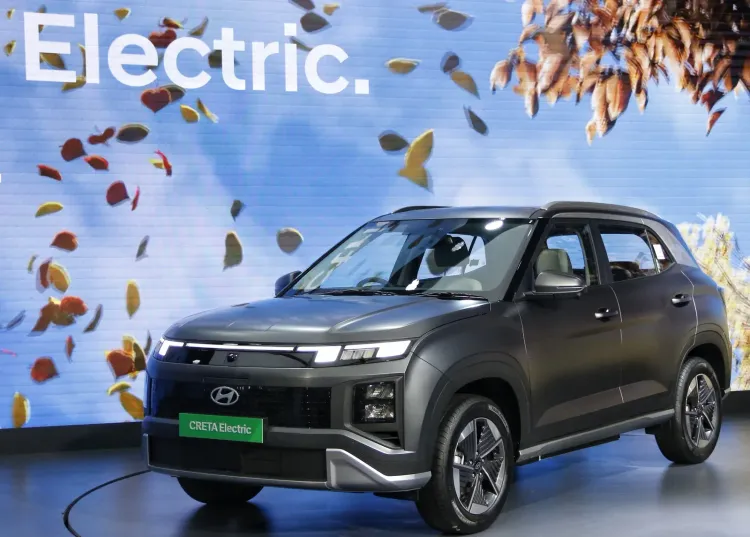
Hyundai's Creta and Venue SUVs accounted for more than half of the brand's total India volumes.
Hyundai Motor India raised prices by up to ₹12,800 from 1 June 2025 , citing input cost pressures.
Hyundai Motor and Kia delivered strong sales momentum in India during the January–May 2025 period, with combined volumes rising 11.6 percent year-on-year to 4,05,514 units, according to data released by the Society of Indian Automobile Manufacturers (SIAM). The growth was powered almost entirely by surging demand for sport utility vehicles (SUVs), underscoring how thoroughly the segment has reshaped India's passenger vehicle market.
Hyundai's Performance
Hyundai Motor India sold 2,66,317 passenger vehicles in the five-month period, a 10.1 percent increase over the same period a year ago, according to SIAM data. The automaker retained its position as India's fourth-largest passenger vehicle maker, trailing Maruti Suzuki, Tata Motors, and Mahindra & Mahindra. Its two flagship SUVs — the Creta and the Venue — together accounted for more than half of all Hyundai sales during the period, affirming their status as the company's core volume drivers in the Indian market.
Kia's SUV-Led Surge
Kia India recorded an even sharper 14.6 percent on-year sales increase over the same five months, ranking sixth in the passenger vehicle segment behind Toyota. The Seltos and Sonet were the primary growth engines, together accounting for a commanding 76.3 percent of Kia's total India sales — a concentration that reflects both the models' popularity and the broader market pivot toward SUVs at all price points.
Price Hike from June 1
Hyundai Motor India raised vehicle prices by up to ₹12,800 effective 1 June 2025, citing rising input costs, higher commodity prices, and increased operational expenses. In an exchange filing, the company said it had worked to optimise costs and limit the burden on customers, but was ultimately compelled to pass on a portion of the increased expenditure through what it described as a 'nominal' price adjustment. The quantum of increase varies by model and variant.
India's SUV Market in Context
The performance of both Korean automakers reflects a structural shift in Indian consumer preference: SUVs now dominate new-car buying decisions across urban and semi-urban markets. This is the third consecutive year in which SUV-heavy portfolios have outpaced the broader passenger vehicle market's growth rate. Notably, the combined Hyundai Motor Group tally of over 4 lakh units in just five months positions the conglomerate as a formidable force in a market increasingly contested by domestic players such as Tata Motors and Mahindra, both of which have aggressively expanded their own SUV lineups.
With demand resilient and model pipelines active, both Hyundai and Kia are expected to sustain their growth trajectories through the second half of 2025, even as the price revision tests buyer sensitivity at the entry and mid segments.
Point of View
And the Korean duo has positioned itself squarely in the winning half. What mainstream coverage underplays is the concentration risk — Kia's reliance on just two models for over three-quarters of its volume leaves it exposed if either the Seltos or Sonet faces a serious domestic rival. The June price hike, modest as it is, also arrives at a moment when entry-level buyers are already stretched; whether demand holds through Q3 will be the real test of how durable this growth is.
NationPress
19 Sept 2026
Frequently Asked Questions
How much did Hyundai and Kia sell in India in January–May 2025?
Hyundai Motor and Kia together sold 4,05,514 units in India during January–May 2025, a combined growth of 11.6 percent year-on-year, according to SIAM data. Hyundai accounted for 2,66,317 units and Kia made up the remainder.
Which SUVs drove Hyundai and Kia's growth in India?
Hyundai's Creta and Venue together contributed more than half of the brand's total India sales. At Kia, the Seltos and Sonet accounted for 76.3 percent of all volumes sold in the five-month period.
What is Hyundai's rank in India's passenger vehicle market?
Hyundai ranked fourth in India's passenger vehicle market during January–May 2025, behind Maruti Suzuki, Tata Motors, and Mahindra & Mahindra. Kia placed sixth , trailing Toyota.
Why did Hyundai raise car prices in India from June 2025?
Hyundai Motor India raised vehicle prices by up to ₹12,800 from 1 June 2025 , citing rising input costs, higher commodity prices, and increased operational expenses. The company said it tried to absorb costs internally before passing on a 'nominal' portion to customers.
How does the Hyundai Motor Group's India performance compare to the broader market?
The combined 11.6 percent growth of Hyundai and Kia outpaced the broader market trend, reflecting the outsized role of SUVs in driving India's passenger vehicle demand. The two brands together sold over 4 lakh units in five months, underscoring their growing scale in one of the world's fastest-growing auto markets.