India emerging as a telecom tech nation, says Minister Pemmasani at Bharat 6G Symposium
Synopsis
India is no longer just a massive telecom market — it wants to write the rules of the next generation. At the third Bharat 6G Symposium, Minister Pemmasani declared that self-reliance and global collaboration are not opposites, and India signed five new international MoUs to back that claim. The 6G race is intensifying globally, and New Delhi is staking out a seat at the standards table.
Key Takeaways
Minister Chandra Sekhar Pemmasani declared at the Bharat 6G Symposium 2026 in New Delhi on 10 October 2026 that India is evolving from a telecom market into a telecom technology nation.
The symposium featured over 75 speakers , including more than 30 international experts , covering 6G standards, spectrum, AI-native networks, and industrial use cases.
Five new MoUs were signed with GSMA , one6G , GTI Alliance , 6G IF Taiwan , and VOICE to advance joint research and trials.
The Bharat 6G Alliance , established in July 2023 , is the industry-led body coordinating India's 6G push across telecom providers, startups, and academia.
Minister Pemmasani stressed that 6G must be affordable, accessible, and satellite-integrated to avoid creating a new digital divide.
India's 6G mission is tied to the Viksit Bharat goal — a developed India by 2047 .
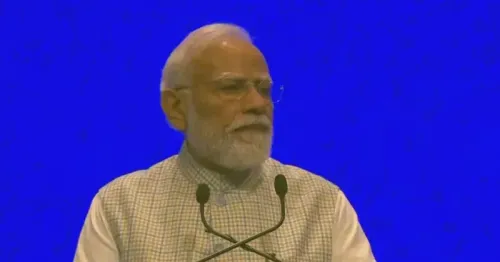
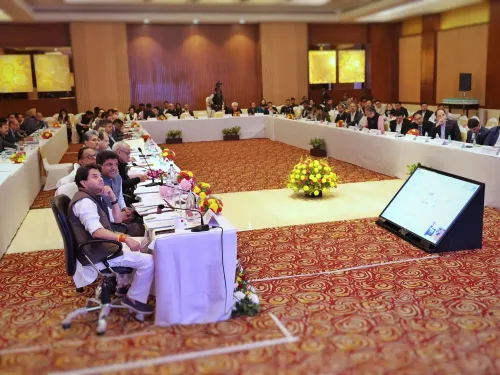
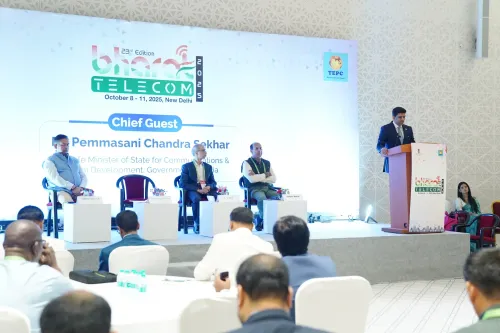
Union Minister of State for Communications Chandra Sekhar Pemmasani on 10 October 2026 said that India is transitioning from being one of the world's largest telecom markets to becoming a significant telecom technology nation, emphasising that self-reliance and global collaboration are complementary, not competing, goals. The minister was speaking at the third International Bharat 6G Symposium 2026 in New Delhi, organised by the Bharat 6G Alliance.
India's 6G Vision and Indigenous Technology Journey
Minister Pemmasani congratulated the Bharat 6G Alliance for bringing together over 75 speakers, including more than 30 international experts, for the symposium. He underscored that India's indigenous technology journey has reinforced a crucial lesson: building domestic capability and forging international partnerships are mutually reinforcing.
'The stronger our capabilities, the stronger the partner we can be to the world,' Pemmasani said.
He stressed that 6G development must not replicate past inequities. Affordability, accessibility, and coverage should be built into the design of 6G networks from the outset — not addressed as afterthoughts. He also highlighted that the integration of terrestrial and satellite networks could extend connectivity to remote villages, islands, oceans, and other areas that traditional infrastructure struggles to reach.
About the Bharat 6G Alliance
Established in July 2023, the Bharat 6G Alliance is an industry-led collaborative platform that brings together telecom service providers, industry players, startups, academia, and research institutions to advance India's 6G ambitions. The symposium featured expert sessions covering 5G-Advanced foundations for 6G, global standards, spectrum and WRC-27, international trials and testbeds, AI-native and sustainable networks, startups and academia, global alliances, and industrial use cases.
Key MoUs and International Partnerships
A significant outcome of the symposium was the exchange of five new MoUs with international bodies: GSMA, one6G, GTI Alliance, 6G Innovation Forum (6G IF) Taiwan, and VOICE. These agreements are aimed at strengthening opportunities for joint research, international trials, and knowledge exchange — reinforcing India's ambition to be a co-author of global 6G standards rather than merely a consumer of them.
The event reaffirmed India's commitment to contributing to global 6G research and standards while simultaneously building indigenous capabilities. Minister Pemmasani linked the 6G mission to India's broader national goal of Viksit Bharat — a developed India by 2047, the centenary of its independence.
Why This Matters for India's Telecom Future
India's push into 6G technology comes as countries including the United States, China, South Korea, and members of the European Union are already investing heavily in 6G research. This comes amid growing recognition that standards-setting in 6G will determine not just technical architecture but also geopolitical influence in the next decade of connectivity. Notably, India's 6G push is being positioned as a global public good — one that prioritises inclusive access, particularly for the unconnected populations that 4G and 5G have yet to fully serve.
With five new international MoUs signed and a third annual symposium concluded, India's 6G roadmap is gaining institutional depth. The next milestone to watch will be how India's contributions translate into formal positions at WRC-27 and global standards bodies.
Point of View
But the real measure of progress will come at WRC-27, where spectrum allocations for 6G will be contested. Every major power — the US, China, South Korea, the EU — is jockeying to shape 6G architecture in ways that favour its own industrial ecosystem. India's 'global collaboration plus self-reliance' framing is smart positioning, but it needs to be backed by substantive standards contributions and indigenous chipset or platform capabilities. The 6G window for influence is open now; it will narrow considerably once dominant architectures are locked in by 2028-29.
NationPress
10 Oct 2026
Frequently Asked Questions
What is the Bharat 6G Symposium 2026?
The International Bharat 6G Symposium 2026 is the third annual event organised by the Bharat 6G Alliance in New Delhi, bringing together over 75 speakers including more than 30 international experts to advance India's 6G research, standards, and global partnerships.
What did Minister Chandra Sekhar Pemmasani say about India's 6G ambitions?
Minister Pemmasani said India is transitioning from being one of the world's largest telecom markets to becoming a key telecom technology nation, and that self-reliance and global collaboration are complementary goals. He also stressed that 6G must be affordable and accessible to avoid creating a new digital divide.
Which international organisations signed MoUs with India at the symposium?
Five new MoUs were signed with GSMA, one6G, GTI Alliance, 6G Innovation Forum (6G IF) Taiwan, and VOICE. These agreements focus on joint research, international trials, and knowledge exchange in 6G technology.
What is the Bharat 6G Alliance?
The Bharat 6G Alliance is an industry-led collaborative platform established in July 2023 that brings together telecom service providers, startups, academia, and research institutions to advance India's 6G development goals and global standards contributions.
How does India's 6G push connect to the Viksit Bharat goal?
Minister Pemmasani directly linked India's 6G ambitions to Viksit Bharat — the government's vision of a fully developed India by 2047, the centenary of independence. 6G is seen as a foundational technology for achieving that development milestone, particularly through satellite-terrestrial integration to connect remote and underserved regions.