India pushes for developing nations' role in global tech standards at ITU PP-26
Synopsis
At the ITU Plenipotentiary Conference in Doha, India's Communications minister made a pointed argument: developing nations must write the rules of global tech governance, not just follow them. With a $15 billion rural broadband bet, 100 5G labs, and a Bharat 6G Vision in hand, India is positioning itself as the voice of the unconnected 2.2 billion — and staking a claim at the top table of international spectrum and standards policy.
Key Takeaways
Chandra Sekhar Pemmasani addressed the ITU Plenipotentiary Conference (PP-26) in Doha on 11 November 2026 .
He called for developing nations to actively shape global technology standards and spectrum policies, not merely adopt them.
Approximately 2.2 billion people globally remain without internet access, the minister noted.
India has invested nearly $15 billion in BharatNet to expand rural broadband connectivity.
India's initiatives include 100 5G use-case labs , indigenous language AI models, quantum research hubs, and the Bharat 6G Vision .
Samriddh Gram Centres , a WSIS Prize winner, deliver healthcare, banking, and government services to rural communities.
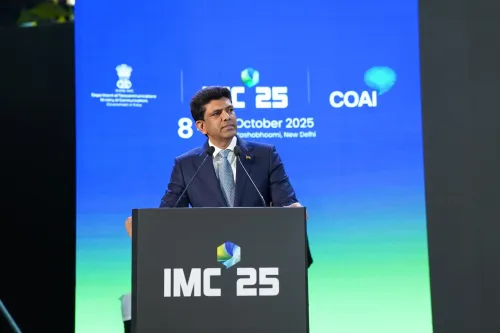
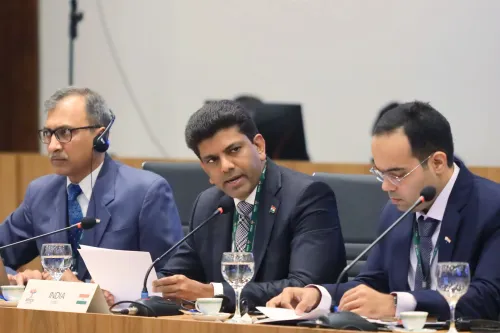
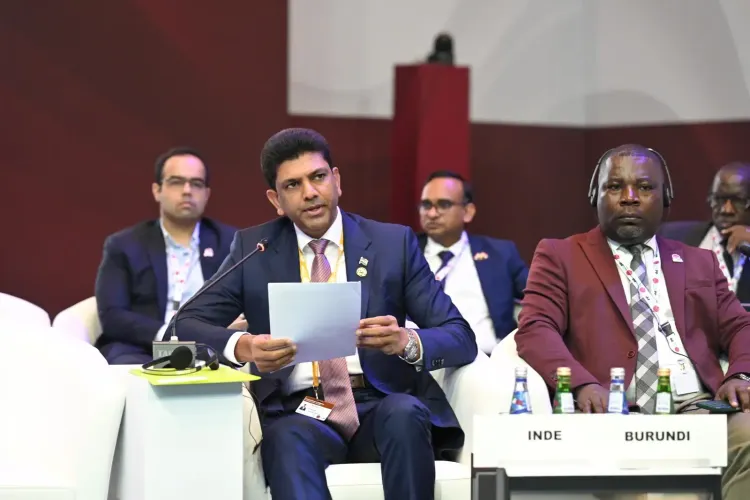
Union Minister of State for Communications and Rural Development Dr. Chandra Sekhar Pemmasani on Wednesday, 11 November 2026, called for a more inclusive global technology governance framework at the International Telecommunication Union (ITU) Plenipotentiary Conference (PP-26) in Doha, arguing that developing nations must have a greater say in shaping international technology standards and spectrum policies. Addressing a high-level discussion on emerging technologies, the minister also showcased India's strides in digital connectivity, artificial intelligence, quantum research, and 5G innovation.
The Case for Inclusive Tech Governance
Pemmasani underscored a stark global digital divide, noting that approximately 2.2 billion people worldwide still lack internet access. He argued that developing countries, which represent the majority of those yet to be connected, must be active architects of the frameworks governing global technology — not passive adopters of standards set elsewhere.
'Called for global cooperation on standards, spectrum and capacity building, so developing nations shape these technologies, not merely adopt them,' the minister said at the conference.
India's Digital Push Under the Modi Government
The minister outlined a broad range of domestic initiatives being undertaken under Prime Minister Narendra Modi's leadership to make technology accessible and affordable. India has invested nearly $15 billion in the BharatNet programme to extend broadband connectivity to rural regions, one of the world's largest rural broadband infrastructure projects.
'Under PM Narendra Modi, India is democratising technology: affordable AI compute for our innovators, AI models in Indian languages, quantum research hubs, and 100 5G labs building talent for the future,' Pemmasani stated.
6G Vision, AI and Quantum Research
Pemmasani highlighted India's forward-looking regulatory environment and the Bharat 6G Vision, which aims to position the country at the forefront of next-generation telecom infrastructure. He pointed to 100 5G use-case laboratories, indigenous AI models in Indian languages, affordable AI computing infrastructure for domestic innovators, and dedicated quantum technology research hubs as evidence of India's preparedness for a future where telecom networks, AI, and satellites converge.
Samriddh Gram Centres and Rural Connectivity
The minister also drew attention to Samriddh Gram Centres, which won the World Summit on the Information Society (WSIS) Prize, as a model for delivering essential digital services to rural communities. Through these centres, villagers can access healthcare services, agricultural advisory support, banking facilities, and government certificates — illustrating that last-mile connectivity can translate into tangible citizen benefit.
Cyber Cooperation and the Road Ahead
On cybersecurity, Pemmasani emphasised that threats transcend national borders, calling for collective international learning. 'Cyber threats do not respect borders, and neither should our cooperation. Learning from each other's best practices makes all of us stronger,' he said.
India's interventions at PP-26 signal a broader strategic intent: to leverage its scale as a digitally transforming economy to shift the balance of influence in global tech governance toward the developing world. The outcomes of the ITU conference could shape spectrum allocation and standards frameworks for the decade ahead.
Point of View
The countries that set the standards will also set the terms of market entry. The minister's call is less about altruism and more about ensuring India — and nations like it — are not handed a finished blueprint built around Western or Chinese industrial interests. The $15 billion BharatNet figure is real, but the deeper question is whether India's diplomatic influence at bodies like the ITU matches the ambition of its domestic digital agenda. Historically, developing nations have struggled to convert conference rhetoric into binding standards wins; India will need sustained coalition-building, not just eloquent speeches, to change that.
NationPress
11 Nov 2026
Frequently Asked Questions
What did India's minister say at the ITU Plenipotentiary Conference in Doha?
Union Minister of State Dr. Chandra Sekhar Pemmasani called for developing nations to have a greater say in shaping global technology standards and spectrum policies at the ITU PP-26 conference in Doha on 11 November 2026. He also showcased India's advances in BharatNet, 5G, AI, and quantum research.
What is the ITU Plenipotentiary Conference (PP-26)?
The ITU Plenipotentiary Conference is the supreme policymaking body of the International Telecommunication Union, held every four years to set the organisation's direction on global telecom standards, spectrum management, and digital development. The 2026 edition, PP-26, is being held in Doha, Qatar.
What is India's BharatNet programme?
BharatNet is India's flagship rural broadband initiative, with an investment of nearly $15 billion aimed at extending high-speed internet connectivity to villages and rural regions across the country. It is one of the largest rural broadband infrastructure projects in the world.
What is the Bharat 6G Vision?
The Bharat 6G Vision is India's strategic framework for developing and deploying sixth-generation telecom technology, positioning India to be an active contributor to 6G standards rather than a consumer of foreign-designed networks. It is part of a broader push to converge telecom, AI, and satellite infrastructure.
What are Samriddh Gram Centres?
Samriddh Gram Centres are rural digital service hubs in India that deliver healthcare, agricultural advisory, banking, and government certificate services to village communities. They won the World Summit on the Information Society (WSIS) Prize, an international recognition of impactful digital development initiatives.