India to lead AI and biotech industrial revolution, says MoS Jitendra Singh
Synopsis
India's MoS Dr Jitendra Singh has drawn a sharp contrast with the past: where India arrived late to the IT revolution, it is now among the first movers in the AI and biotech wave — backed by BioE3, IndiaAI Mission, and a space economy projected to hit $40–45 billion. The question is whether institutional scaffolding translates into measurable industrial leadership.
Key Takeaways
MoS Dr Jitendra Singh said India will be an 'essential player' in the next industrial revolution, driven by AI and biotechnology .
India is among the first countries globally to have a dedicated biotechnology policy — BioE3 (Biotechnology for Economy, Employment and Environment).
Three flagship missions underpin the push: BioE3 policy , National Quantum Mission , and IndiaAI Mission .
India's space economy has grown to approximately $9 billion and is projected to reach $40–45 billion in the next 8–9 years .
The space sector's growth is attributed to the 2020 decision to open it to private participation.
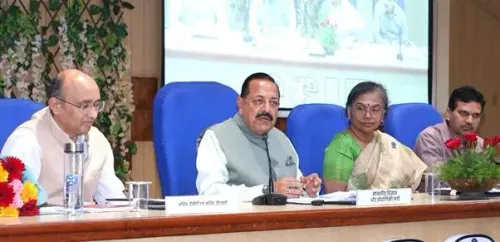
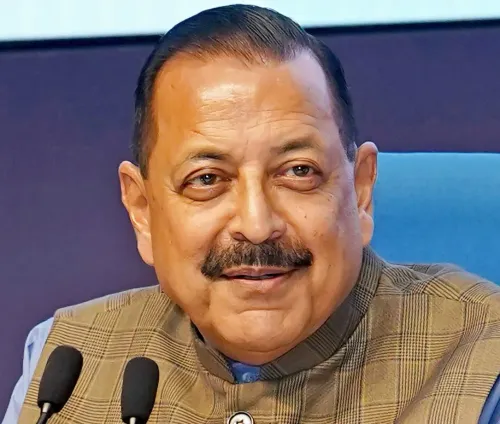
Union Minister of State Dr Jitendra Singh on Sunday, 9 August declared that India is on course to become a pivotal force in the next global industrial revolution — one driven by artificial intelligence and biotechnology — positioning the country as an early mover rather than a late entrant, as was the case during the IT-led wave of the past.
Key Developments
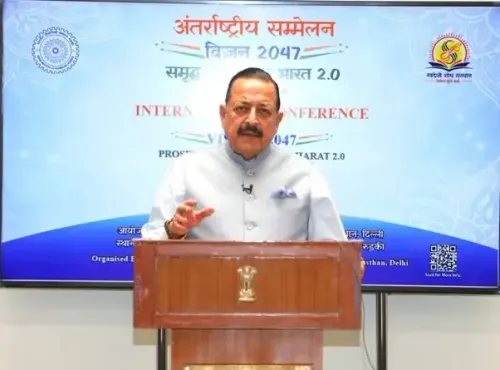
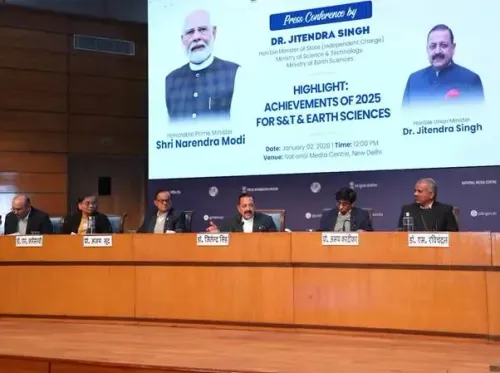
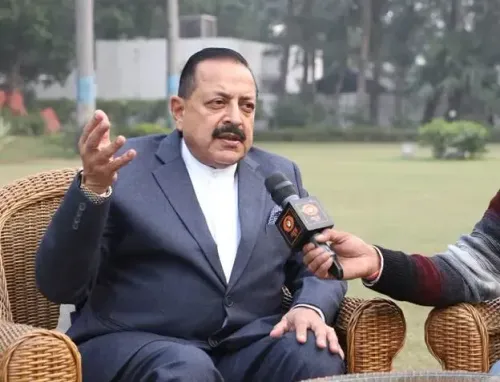
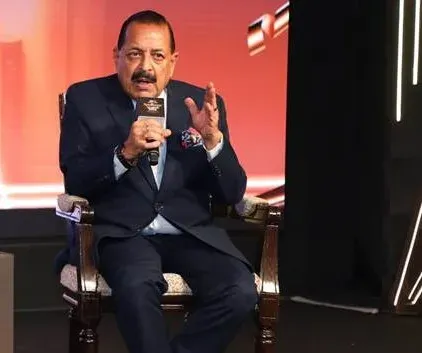
Speaking at a media conclave attended by technology developers, industry leaders, and other stakeholders in New Delhi, Singh said India has already laid the institutional groundwork through three flagship initiatives: the BioE3 policy (Biotechnology for Economy, Employment and Environment), the National Quantum Mission, and the IndiaAI Mission.
'India will be an essential player in the next industrial revolution which will be biotechnology and AI driven, unlike the last industrial revolution which was IT driven and India was late in becoming a part of that,' Singh stated.
What Sets This Push Apart
Singh underscored that India is among the first nations globally to have a dedicated biotechnology policy in the form of BioE3 — a distinction he framed as a strategic advantage. The global economy, he noted, is shifting toward frontier sectors including biotechnology, artificial intelligence, recycling, and the circular economy, and India is actively positioning itself at the forefront of this transition.
Notably, this marks a conscious course correction from the previous industrial cycle. During the IT revolution, India joined the global transformation at a later stage, largely as a services provider rather than an originator. The current policy architecture, according to Singh, is designed to ensure India shapes the next wave from the outset.
Space Economy as a Benchmark
Highlighting the pace of India's broader technological ascent, Singh pointed to the country's space economy — once negligible — which has grown to approximately $9 billion and is projected to reach $40–45 billion over the next eight to nine years. He attributed this trajectory to policy reforms, particularly the 2020 decision to open the space sector to private participation.
'India's technological journey has undergone a significant transformation, with the country now operating against global benchmarks in several areas,' Singh said.
What This Means Going Forward
The minister's remarks signal a broader government intent to anchor India's industrial identity in deep-tech rather than services arbitrage. With the BioE3 policy, National Quantum Mission, and IndiaAI Mission now operational, the policy scaffolding is in place — though execution timelines and measurable targets were not detailed at the conclave. Industry observers and stakeholders present at the event will be watching for follow-through in budget allocations and regulatory frameworks in the months ahead.
Point of View
We won't be late to AI and biotech' — is politically resonant but demands scrutiny. India has strong policy documents in BioE3 and IndiaAI Mission, yet the gap between policy announcement and industrial outcome has historically been wide. The space economy's $9 billion figure, while encouraging, was built over decades; replicating that velocity in biotech and AI requires not just missions but deep R&D funding, talent pipelines, and regulatory agility that remain works in progress. The conclave setting, absent specific targets or timelines, risks making this another aspirational declaration rather than a strategic inflection point.
NationPress
23 Sept 2026
Frequently Asked Questions
What did MoS Dr Jitendra Singh say about India's role in the AI and biotech revolution?
Dr Jitendra Singh said India will be an 'essential player' in the next industrial revolution, which will be driven by biotechnology and artificial intelligence. He contrasted this with the previous IT-led revolution, where India was a late participant.
What is the BioE3 policy?
BioE3 stands for Biotechnology for Economy, Employment and Environment — India's dedicated national biotechnology policy. Singh cited it as evidence that India is among the first countries globally to formalise a comprehensive biotech framework.
What are the key missions supporting India's deep-tech ambitions?
The government has launched three key initiatives: the BioE3 policy for biotechnology, the National Quantum Mission, and the IndiaAI Mission. Together, these form the policy foundation for India's early-mover positioning in frontier technologies.
How large is India's space economy and what is its growth target?
India's space economy has grown to approximately $9 billion and is projected to reach $40–45 billion over the next eight to nine years, according to Singh. He attributed this growth to the 2020 opening of the space sector to private participation.
Why does Singh argue India will not repeat its late entry into this revolution?
Singh pointed to India's proactive policy moves — including being among the first nations with a dedicated biotech policy and launching the IndiaAI and National Quantum missions — as evidence that the country is shaping the next wave of innovation from the outset, unlike its delayed entry into the IT era.