India CPI likely at 4.5% in July 2026 as food inflation broadens
Synopsis
Bank of Baroda's latest report puts India's July 2026 CPI at 4.5%, but the real alarm is the Essential Commodities Index hitting its sharpest-ever rise at 4.1% year-on-year — and accelerating to 5.4% in the first five days of August. Food inflation is broadening beyond vegetables into staples, and corporate cost pass-throughs are beginning, raising the stakes for the RBI's next policy call.
Key Takeaways
India's CPI inflation is forecast at 4.5 per cent for July 2026 , with risks tilted upward, per a Bank of Baroda report.
The bank's Essential Commodities Index (BoB ECI) rose 4.1 per cent year-on-year in July 2026 — its sharpest increase on record — and accelerated to 5.4 per cent in the first five days of August 2026 .
Key food inflation drivers include onions , edible oils , rice , and pulses ; vegetable arrivals and a normal monsoon offer partial relief.
Core inflation (excluding food and fuel) is expected to stay contained at 4–4.1 per cent , aided by a 3.7 per cent month-on-month fall in international gold prices.
Corporate Q1 earnings transcripts signal input-cost pass-throughs to consumers, posing a near-term upside risk to core readings.
63 per cent of states received normal monsoon rainfall; Kharif sowing as of 31 July 2026 exceeded the previous year's pace.
India's Consumer Price Index (CPI) inflation is projected to settle at 4.5 per cent in July 2026, with risks skewed to the upside as food price pressures spread across essential commodities, according to a report released by Bank of Baroda on Thursday, 6 August 2026. The forecast signals that while inflation remains within a manageable range, the breadth of price increases warrants close monitoring.
Food Inflation Remains Broad-Based
The Bank of Baroda report flagged that inflation is broad-based across essential commodities, with onions, edible oils, rice, and pulses among the key drivers. The bank's proprietary Essential Commodities Index (BoB ECI) rose by 4.1 per cent on a year-on-year basis in July 2026 — its sharpest increase since the index was launched. In the first five days of August 2026, the build-up accelerated further to 5.4 per cent, pointing to sustained pressure in the near term.
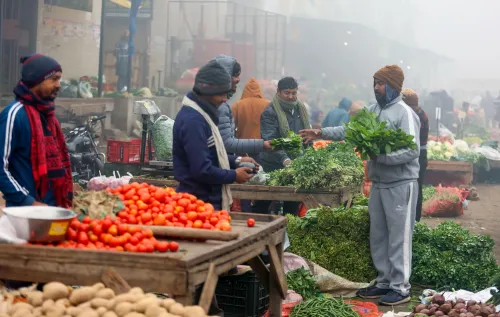
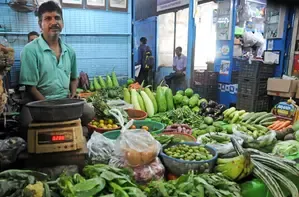
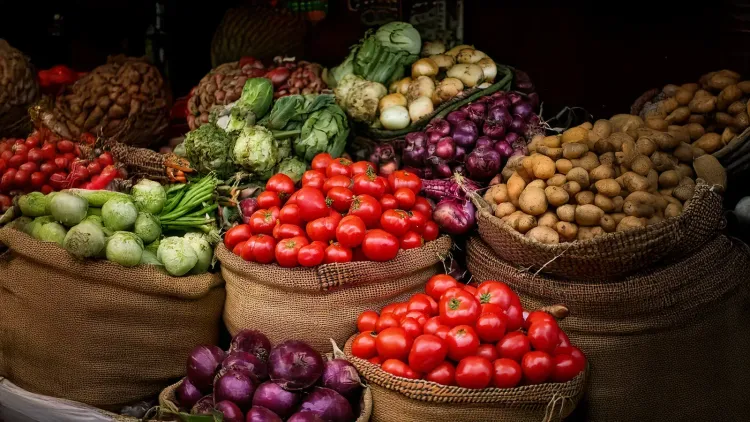
On the vegetable front, arrival statistics for TOP crops — tomato, onion, and potato — have offered some comfort, even as onion prices remain sticky. International food prices, particularly for edible oils, have softened, providing a partial offset.
Core Inflation Expected to Stay Contained
Core inflation, which strips out food and fuel, is expected to remain relatively subdued at around 4 to 4.1 per cent. A key factor is the softening of international gold prices, which fell by 3.7 per cent on a month-on-month basis, easing pressure on personal care and effects sub-categories. Core inflation excluding precious metals is also expected to remain muted for now, the report noted.
However, the bank cautioned that higher input costs could generate upside pressure on core inflation going forward, particularly as corporate earnings transcripts for Q1 indicate companies are beginning to pass through cost increases to end consumers amid robust demand conditions.
Monsoon and Kharif Sowing Offer Relief
The report cited favourable monsoon progress as a mitigating factor, with 63 per cent of states receiving normal rainfall. Area sown under major Kharif crops as of 31 July 2026 — excluding oilseeds and sugarcane — remained above the corresponding period of the previous year, suggesting the agricultural supply outlook is broadly supportive.
This combination of improved vegetable arrivals and adequate monsoon coverage is expected to cap the worst-case food inflation scenarios in the months ahead, according to the report.
Upside Risks and What to Watch
Despite these positives, Bank of Baroda warned that upside risks to the 4.5 per cent CPI estimate persist. The primary concerns are the broadening of food inflation beyond vegetables into staples such as rice and pulses, and the potential for corporate cost pass-throughs to lift core readings. The trajectory of the BoB ECI in August — already running at 5.4 per cent in the first five days — will be a critical indicator of whether July's elevated readings are a peak or a prelude to further acceleration.
With the Reserve Bank of India (RBI) closely tracking inflation dynamics ahead of its next monetary policy review, the July CPI print — due for official release — will be watched for any signal that could influence the rate-setting trajectory.
Point of View
But the BoB ECI accelerating to 5.4 per cent in the first five days of August is a warning the headline number may not hold. What is more concerning is the broadening: this is no longer a tomato-or-onion story — rice and pulses are in the mix, which means the inflation burden is falling on the staple food basket of lower-income households. The RBI will be watching whether corporate cost pass-throughs, flagged in Q1 transcripts, feed into services inflation — the one component that has historically been hardest to reverse. A monsoon-driven soft landing is possible, but it is not guaranteed, and the August data will be decisive.
NationPress
20 Sept 2026
Frequently Asked Questions
What is India's CPI inflation forecast for July 2026?
India's Consumer Price Index inflation is projected at 4.5 per cent for July 2026, according to a Bank of Baroda report released on 6 August 2026. The bank flagged that risks are skewed to the upside, driven by broad-based food price pressures.
Why is food inflation a concern in July 2026?
Food inflation is broad-based, with onions, edible oils, rice, and pulses all contributing to price pressures. Bank of Baroda's Essential Commodities Index rose at its sharpest-ever pace of 4.1 per cent year-on-year in July 2026, and the early August build-up has already reached 5.4 per cent.
What is the outlook for core inflation in India?
Core inflation, excluding food and fuel, is expected to remain contained at around 4 to 4.1 per cent. Softer international gold prices — down 3.7 per cent month-on-month — are providing relief, though higher corporate input costs could push core readings higher in coming months.
How is the monsoon affecting India's inflation outlook?
The monsoon has been broadly favourable, with 63 per cent of states receiving normal rainfall as of early August 2026. Kharif crop sowing as of 31 July 2026 was also tracking above the previous year, which should support agricultural supply and cap food inflation over the harvest season.
What upside risks could push CPI above the 4.5 per cent forecast?
The main upside risks are a further broadening of food inflation into staples such as rice and pulses, and the pass-through of higher input costs by corporates to end consumers — a trend flagged in Q1 earnings commentary. The BoB ECI's early-August acceleration to 5.4 per cent suggests these risks are already materialising.