India-EU FTA concluded on equal terms after 17 years: Jitin Prasada
Synopsis
After 17 years of on-and-off negotiations, India's free trade agreement with the European Union has been concluded — and on terms New Delhi is calling equal. Minister Jitin Prasada's remarks at UPITS signal a harder line on foreign investment: technology transfers and joint ventures, not just market access, are now the price of entry into India's growth story.
Key Takeaways
Union Minister Jitin Prasada confirmed at UPITS on 26 September 2026 that India concluded the India-EU FTA on equal terms after nearly 17 years of negotiations.
Negotiations began in 2007 , stalled for years, were relaunched in 2022 , and formally concluded on 27 January 2026 .
The European Commission has submitted the agreement to the EU Council for authorisation for signature and conclusion.
India will increasingly require foreign firms to enter joint ventures and facilitate technology transfers as a condition of market expansion.
Uttar Pradesh is emerging as a data centre and AI hub, with investments from Samsung and Yotta cited as examples.
Wider adoption of AI is expected to boost productivity and cut costs for India's MSMEs .
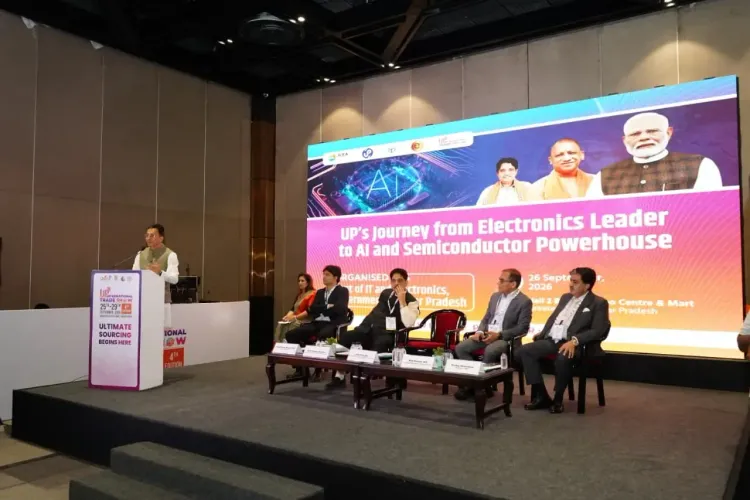
Union Minister of State for Commerce and Industry Jitin Prasada on Saturday, 26 September 2026, said India successfully concluded its long-pending free trade agreement (FTA) with the European Union on equal terms after nearly 17 years of negotiations. Speaking at the Uttar Pradesh International Trade Show (UPITS) in New Delhi, Prasada stressed that technology transfers, local manufacturing, and artificial intelligence (AI) would be critical drivers of India's next phase of industrial growth.
A Historic Trade Milestone
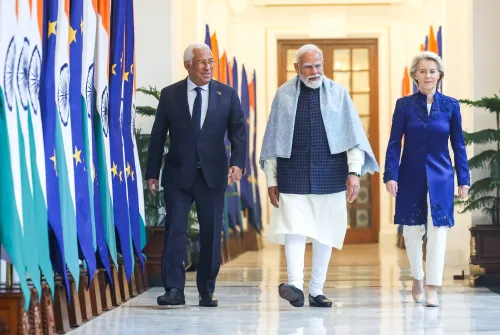
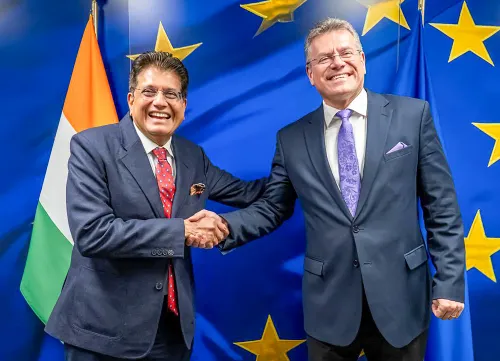
India and the European Union formally concluded negotiations for the trade pact on 27 January 2026, ending a process that had begun in 2007 and remained stalled for several years before being relaunched in 2022. The agreement advanced further earlier this month when the European Commission submitted it to the EU Council for authorisation for signature and conclusion.
'The EU FTA was in talks for 17 years. They were not ready to have a conversation with us. Our government was able to strike a deal on equal terms,' Prasada said at the event.
India's New Terms for Foreign Investment
Prasada outlined a sharpened stance on foreign direct investment, saying India now expects international companies to contribute to domestic manufacturing capabilities and technological advancement rather than treating the country merely as a consumer market. Foreign firms seeking to expand their presence in India would increasingly be encouraged to enter into joint ventures and facilitate technology transfers to strengthen local manufacturing ecosystems, according to the minister.
He also stressed the importance of quality enhancement for Indian products, arguing that domestic manufacturers must align with global standards as they seek to capture international markets. 'We need to ensure quality and the global market is waiting for us,' he said.
AI and MSMEs: The Next Growth Frontier
The minister highlighted the transformative potential of artificial intelligence for India's manufacturing sector, particularly for micro, small and medium enterprises (MSMEs), citing expected gains in productivity and reductions in production costs. He pointed to Uttar Pradesh as an emerging hub for data centres and AI-driven technologies, noting investments by companies such as Samsung and Yotta in the state. Wider adoption of AI, he argued, could significantly improve industrial competitiveness across sectors.
Context and Significance
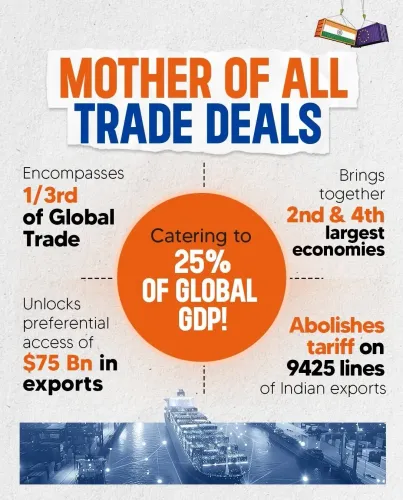
The India-EU FTA is among the most consequential trade agreements in recent Indian economic history. The EU is one of India's largest trading partners, and a deal on equal terms — after negotiations that critics had long described as lopsided — marks a notable shift in India's trade diplomacy. This comes amid a broader push by New Delhi to integrate deeper into global supply chains while protecting domestic manufacturing interests through conditions such as technology transfer mandates and joint-venture requirements.
With the EU Council's authorisation process now underway, attention shifts to ratification timelines and the specific sectoral commitments that will define the agreement's real-world impact for Indian industry.
Point of View
But the minister's framing — 'equal terms' — deserves scrutiny once the full text enters the public domain. India's insistence on technology transfers and joint ventures as conditions for foreign investment reflects a deliberate industrial policy pivot, but such conditions have historically slowed FDI inflows if applied too broadly. The real test will be in sectoral annexures: whether sensitive areas like dairy, automobiles, and government procurement were protected without triggering retaliatory carve-outs on the EU side. Prasada's emphasis on AI and MSMEs is directionally correct, but the pathway from Uttar Pradesh data-centre investments to shop-floor productivity gains for small manufacturers remains underspecified.
NationPress
26 Sept 2026
Frequently Asked Questions
What is the India-EU Free Trade Agreement?
The India-EU Free Trade Agreement is a bilateral trade pact concluded between India and the European Union on 27 January 2026, after negotiations that began in 2007 and were relaunched in 2022. It is designed to expand market access, reduce tariffs, and set terms for investment and technology cooperation between the two economies.
Why did the India-EU FTA take 17 years to conclude?
Talks that began in 2007 stalled for several years over disagreements on market access, intellectual property, and investment terms — with neither side willing to make concessions on sensitive sectors. Negotiations were formally relaunched in 2022, ultimately leading to a conclusion in January 2026 that India's government describes as being on equal terms.
What is the current status of the India-EU FTA?
The agreement has been concluded and the European Commission has submitted it to the EU Council for authorisation for signature and formal conclusion. Ratification by EU member states and the European Parliament remains a subsequent step before the deal enters into force.
What role will technology transfer play under India's new investment approach?
According to Minister Jitin Prasada, foreign companies seeking to expand in India will increasingly be encouraged to form joint ventures and transfer technology to local partners, supporting domestic manufacturing ecosystems rather than using India purely as a consumer market.
How does AI fit into India's manufacturing growth strategy?
Prasada said AI has the potential to transform manufacturing — particularly for MSMEs — by raising productivity and lowering production costs. Uttar Pradesh is cited as an emerging AI and data centre hub, with Samsung and Yotta among the investors already committing to the state.