India's merchandise exports set for 28.7% growth in Q3 FY27: Exim Bank
Synopsis
Exim Bank projects India's merchandise exports will hit $141.8 billion in Q3 FY27 — a 28.7% year-on-year surge — powered by trade agreement gains and strong US, UK, China and South Korea demand. Engineering goods have already logged six straight months of growth, though a $3.43 billion engineering trade deficit and headwinds from CBAM, West Asia logistics, and global monetary tightening could test the optimism.
Key Takeaways
Exim Bank projects India's total merchandise exports at $141.8 billion in Q3 FY27 , up 28.7 per cent year-on-year .
Non-oil exports forecast at $120.3 billion (+21.9% YoY); non-oil, non-gems exports at $106.4 billion (+16.2% YoY).
Engineering goods exports rose 20.91 per cent to $12.17 billion in September 2026 — the sixth consecutive month of growth.
Engineering imports rose 12.3 per cent to $15.6 billion , leaving an engineering trade deficit of $3.43 billion .
Key risks include tighter global monetary policy, CBAM regulations in Europe, rising protectionism, and West Asia logistics disruptions.
Growth supported by trade agreement utilisation, exchange rate movements, and demand from the US , UK , China , and South Korea .
India's total merchandise exports are projected to reach $141.8 billion in Q3 FY27 (October–December 2026), marking a 28.7 per cent year-on-year growth, according to a forecast released on Monday, 2 November 2026. The outlook, shared by the Export-Import Bank of India (Exim Bank), cites continued market and product diversification, greater utilisation of trade agreements, and sustained demand across key export destinations as the primary drivers.
Headline Projections
Exim Bank projected non-oil exports at $120.3 billion for the quarter, up 21.9 per cent year-on-year. Non-oil and non-gems and jewellery exports are forecast to reach $106.4 billion, reflecting a 16.2 per cent annual increase. The bank said India's positive export outlook is further supported by an improving global and domestic growth environment, strong investment activity, and favourable exchange rate movements.
Engineering Goods Lead the Charge
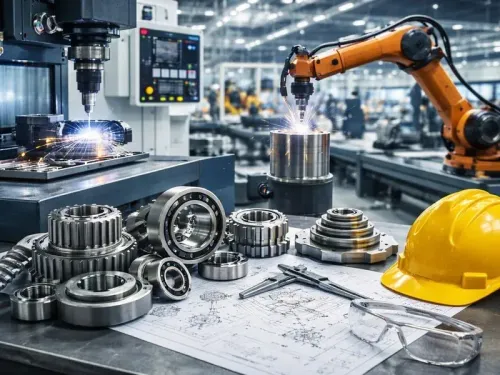
India's engineering goods exports rose 20.91 per cent year-on-year to $12.17 billion in September 2026, marking the sixth consecutive month of growth. Strong demand from the United States, the United Kingdom, China, and South Korea helped sustain double-digit export growth even as regional tensions and logistical challenges dampened shipments to the UAE and Saudi Arabia.
On the import side, engineering imports climbed 12.3 per cent to $15.6 billion, leaving an engineering trade deficit of $3.43 billion — a figure that analysts say highlights structural dependence on precision machinery and components from a narrow set of suppliers.
Downside Risks and Structural Challenges
Exim Bank flagged several headwinds that could temper the optimistic outlook. Tighter global monetary policy and evolving trade regulations remain the primary downside risks. A recent report also flagged market-specific frictions, including the Carbon Border Adjustment Mechanism (CBAM) in Europe, rising protectionism in key markets, and logistics disruptions in West Asia. The report recommended that India reduce import intensity in precision machinery, diversify away from concentrated suppliers, and proactively address these regulatory barriers.
Trade Agreements and Diversification
Amid global uncertainties and ongoing supply chain realignments, Exim Bank expects India's export growth to be meaningfully supported by the effective utilisation of recent trade agreements with key trading partners. India has signed or operationalised free trade agreements with several economies in recent years, and the bank's forecast suggests these are beginning to translate into measurable export gains. This comes amid a broader global trend of supply chain diversification away from concentrated manufacturing hubs, which has created fresh opportunities for Indian exporters across sectors.
What to Watch
The Q3 FY27 projection, if realised, would represent one of India's strongest quarterly merchandise export performances in recent years. Markets and policymakers will closely track November and December shipment data to gauge whether early-quarter momentum holds against the backdrop of a still-uncertain global trade environment. The trajectory of the rupee, US demand, and West Asia logistics will be critical variables in the weeks ahead.
Point of View
But the engineering trade deficit of $3.43 billion tells a more complicated story — India is exporting machinery while still heavily importing it. The CBAM threat in Europe is not hypothetical; it will progressively raise the cost of carbon-intensive Indian exports, and the window to adapt is narrowing. Six consecutive months of engineering export growth is genuinely encouraging, but diversifying away from a handful of demand markets — the US, UK, China, South Korea — remains an unfinished structural task. The Exim Bank forecast is a credible base case, not a guarantee, and much depends on whether New Delhi can convert trade agreement text into on-the-ground compliance infrastructure for exporters.
NationPress
2 Nov 2026
Frequently Asked Questions
What is India's merchandise export forecast for Q3 FY27?
Exim Bank projects India's total merchandise exports will reach $141.8 billion in Q3 FY27 (October–December 2026), marking a 28.7 per cent year-on-year increase. The forecast is driven by trade agreement utilisation, product diversification, and sustained demand from key markets.
What are India's non-oil export projections for Q3 FY27?
Non-oil exports are forecast at $120.3 billion, up 21.9 per cent year-on-year. Non-oil and non-gems and jewellery exports are projected at $106.4 billion, reflecting a 16.2 per cent annual rise.
Why have India's engineering goods exports grown for six straight months?
Engineering goods exports rose 20.91 per cent year-on-year to $12.17 billion in September 2026, the sixth consecutive month of growth, underpinned by strong demand from the United States, United Kingdom, China, and South Korea. Logistical challenges in the UAE and Saudi Arabia did limit some shipments, but demand from other key markets more than offset the shortfall.
What are the main risks to India's export outlook?
Exim Bank has flagged tighter global monetary policy and evolving trade regulations as the primary downside risks. Additional headwinds include the Carbon Border Adjustment Mechanism (CBAM) in Europe, rising protectionism in key markets, and logistics disruptions in West Asia.
What structural changes has India been advised to make to sustain export growth?
A recent report recommended that India reduce import intensity in precision machinery and components, diversify away from concentrated supplier nations, and proactively address market-specific barriers such as CBAM compliance, protectionist policies, and West Asia supply chain disruptions.