MSME export guidebook launched to boost global trade readiness
Synopsis
India's Commerce Ministry, IIFT, and CII have jointly launched a practical guidebook to help MSMEs crack international markets — addressing the four barriers that have long held small businesses back: market intelligence gaps, buyer identification, certification hurdles, and price competitiveness. With India's FTA network expanding, the timing could be decisive for millions of small exporters.
Key Takeaways
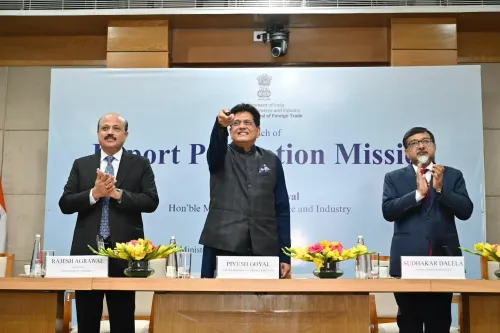
The Commerce Ministry launched an MSME export guidebook on 17 July in New Delhi .
Developed by CTIL, IIFT in collaboration with CII , it provides a practical roadmap for export readiness.
The guidebook addresses four core MSME pain points: market information gaps, buyer identification, certification compliance, and price competitiveness.
A panel discussion examined how India's Free Trade Agreements and Rules of Origin can be leveraged by MSMEs to access new markets.
All trade intelligence tools highlighted in the guidebook are freely available , reducing research costs for smaller enterprises.
The Commerce Ministry on 17 July unveiled a comprehensive guidebook aimed at equipping Indian Micro, Small and Medium Enterprises (MSMEs) with the tools and knowledge needed to expand into international markets. The publication targets longstanding barriers that have kept MSMEs from realising their export potential, including limited market intelligence, unfamiliarity with overseas buyers, and difficulty meeting international certification standards.
What the Guidebook Covers
Developed by the Centre for Trade and Investment Law (CTIL) at the Indian Institute of Foreign Trade (IIFT) in collaboration with the Confederation of Indian Industry (CII), the guidebook offers a practical, step-by-step roadmap for export readiness. It simplifies market analysis, explains standards and certification requirements, provides guidance on identifying international buyers, and highlights freely available trade intelligence tools that can significantly reduce the cost of market research.
According to the Commerce Ministry statement, the publication is designed to help MSMEs 'make informed business decisions and participate more effectively in international trade.' Crucially, the tools highlighted are freely accessible, addressing the cost constraints that often prevent smaller enterprises from investing in market research.
Key Challenges the Publication Addresses
The guidebook directly responds to four persistent pain points for MSMEs: limited access to market information, inadequate knowledge of overseas buyers, difficulties complying with international standards and certifications, and maintaining price competitiveness in global markets. These barriers have historically restricted Indian MSMEs to domestic markets despite strong product capabilities.
Panel Discussion: FTAs, Value Chains, and Competitiveness
Following the launch, a panel discussion explored how Indian MSMEs can leverage preferential Rules of Origin and cooperation mechanisms under India's Free Trade Agreements (FTAs) to expand their international footprint. Panellists discussed strategies for identifying promising export destinations, understanding certification requirements, and positioning products to meet evolving global demand.
The discussion also emphasised diversification and value addition as tools for enhancing competitiveness. Panellists stressed the importance of building trust through joint ventures, participation in trade exhibitions, and stronger institutional support to facilitate MSME integration into global value chains.
Who Was in the Room
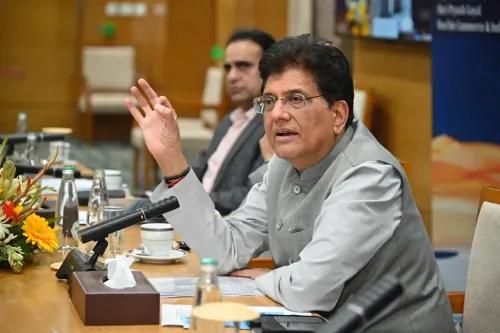
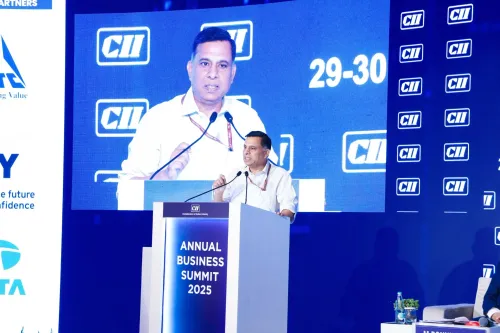
The event brought together policymakers, industry representatives, trade experts, and MSME stakeholders to deliberate on practical strategies for strengthening the global competitiveness of Indian MSMEs. It concluded with an interactive question-and-answer session, enabling participants to engage directly with policymakers and industry experts on export preparedness, standards compliance, and market access.
With India actively expanding its FTA network and global supply chains undergoing structural realignment, this guidebook arrives at a moment when MSMEs have a genuine window to capture new export share — provided they can navigate the compliance and market-access maze.
Point of View
Yet their share of merchandise exports has remained stubbornly below their economic weight. Launching a guidebook is a low-cost, high-reach intervention — but the real question is whether it translates into measurable uptake or becomes shelf material. Past government trade-support initiatives have often stalled at awareness; the addition of freely available digital tools and an FTA-linked discussion signals a more operationally grounded approach this time. The test will be whether IIFT and CII follow through with district-level outreach, because a guidebook that reaches only conference attendees in New Delhi will not move the export needle for MSMEs in tier-2 and tier-3 clusters.
NationPress
15 Oct 2026
Frequently Asked Questions
What is the MSME export guidebook launched by the government?
It is a practical publication developed by the Centre for Trade and Investment Law (CTIL) at IIFT, in collaboration with CII, and released on 17 July under the Commerce Ministry. The guidebook helps MSMEs identify export opportunities, understand certification requirements, locate international buyers, and use freely available trade intelligence tools to reduce market research costs.
Who developed the MSME export guidebook?
The guidebook was developed by the Centre for Trade and Investment Law (CTIL) at the Indian Institute of Foreign Trade (IIFT), in collaboration with the Confederation of Indian Industry (CII), with support from the Commerce Ministry.
What challenges does the guidebook address for MSMEs?
The guidebook targets four key barriers: limited access to market information, inadequate knowledge of overseas buyers, difficulties complying with international standards and certifications, and maintaining price competitiveness in global markets.
How can MSMEs use India's Free Trade Agreements to boost exports?
Panellists at the launch event discussed how MSMEs can leverage preferential Rules of Origin under India's existing FTAs to access partner markets at lower tariffs. The discussion also covered strategies for identifying export destinations and positioning products to meet global demand through diversification and value addition.
Are the tools mentioned in the guidebook free to use?
Yes. The guidebook specifically highlights trade intelligence tools that are freely available, with the explicit aim of reducing the cost of market research for smaller enterprises that may lack the budget for paid research platforms.