Viksit Bharat 2047: CEA Nageswaran calls for manufacturing push, FDI reforms
Synopsis
India's Chief Economic Adviser V. Anantha Nageswaran used the SBI Banking & Economics Conclave 2026 to lay out the hard truths behind the Viksit Bharat dream: a goods trade deficit stuck at 3.5–4% of GDP, fierce competition for global capital, and a workforce that must rapidly upskill for AI. The message was pointed — manufacturing and services must both grow, or the 2047 target stays a slogan.
Key Takeaways
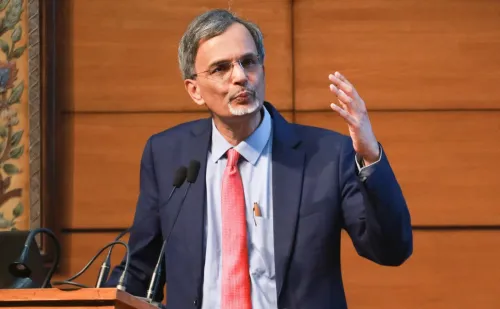
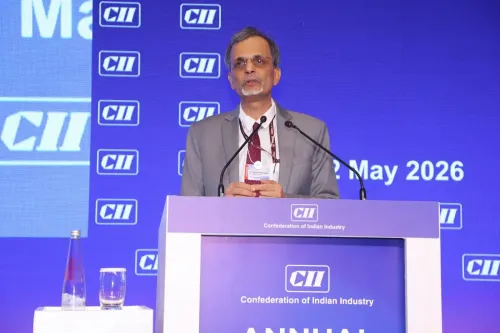
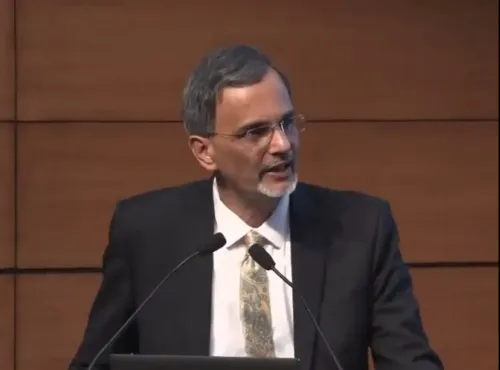
Anantha Nageswaran addressed the 13th SBI Banking & Economics Conclave 2026 in Mumbai on 24 September 2026 .
India's goods trade deficit (ex-oil, ex-gold) stands at 3.5–4% of GDP , underscoring the need for deeper domestic manufacturing.
The CEA called for tax certainty, simpler regulations, stronger investor protection and skilled talent access to attract global capital.
Both manufacturing and services must grow simultaneously — India cannot choose one over the other, Nageswaran said.
He advocated strategic commodity buffers and domestic capability in essential supply-chain components to guard against global disruptions.
Preparing the workforce for an AI-driven economy was identified as critical to achieving the Viksit Bharat 2047 goal.
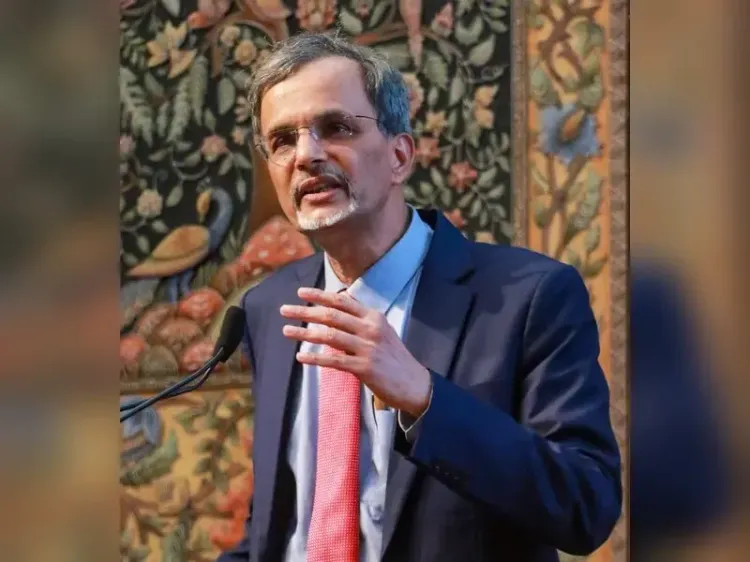
Chief Economic Adviser (CEA) V. Anantha Nageswaran on Thursday, 24 September 2026 said India must urgently strengthen its manufacturing base, attract greater foreign direct investment, and future-proof its workforce for an AI-driven economy if the country is to realise its goal of becoming a developed nation by 2047. He was addressing the 13th SBI Banking & Economics Conclave 2026 in Mumbai.
Key Challenges on the Road to Viksit Bharat
Nageswaran outlined a demanding external environment facing India's development ambitions. He cited rising geopolitical tensions, the weaponisation of global supply chains, climate-related uncertainties, and intensifying competition from China's manufacturing sector as the principal headwinds. He stressed that both the public and private sectors must fundamentally rethink existing approaches and adapt to a rapidly shifting global economic order.
According to the CEA, building resilience while sustaining high economic growth will be the central challenge for India's long-term development strategy. Notably, this comes at a moment when India is widely regarded as one of the world's fastest-growing major economies, yet its structural transformation from a services-dominated to a more balanced economy remains incomplete.
Manufacturing and Services Must Grow Together
Nageswaran was emphatic that India cannot afford to treat manufacturing and services as competing priorities. He argued that both sectors must expand simultaneously to underpin sustainable, broad-based growth. Manufacturing, he said, will play a decisive role in diversifying India's growth drivers and enhancing economic security.
Pointing to a specific structural concern, the CEA noted that India's goods trade deficit — excluding oil and gold — remains at around 3.5–4 per cent of GDP, signalling the urgent need to deepen domestic manufacturing capabilities. Crucially, he warned that indigenisation efforts must go beyond mere import substitution and must be paired with a sharper focus on export competitiveness.
Attracting Investment: What India Must Do
On foreign investment, Nageswaran acknowledged that India faces stiff competition from advanced economies in the race for global capital. He called for stronger policy frameworks at both the national and state levels, flagging four specific priorities: greater tax certainty, a simpler regulatory environment, stronger investor protection, and reliable access to skilled talent. He added that these measures are not optional add-ons but prerequisites for sustained FDI inflows.
Supply Chain Resilience and Strategic Buffers
Beyond large-scale industrial capacity, the CEA advocated the creation of strategic buffers in critical commodities and the development of domestic capabilities in smaller but essential components that could become supply-chain bottlenecks during global disruptions. He cautioned that resilience cannot be built through big-ticket capacity alone — policymakers and businesses must systematically map vulnerabilities across supply chains and prepare contingency plans for potential shocks.
The AI and Workforce Dimension
Nageswaran also underscored the need to prepare India's large and young workforce for an artificial intelligence-driven future. While he did not detail specific skilling programmes, his remarks echo a growing consensus among economists that India's demographic dividend will only translate into sustained growth if the workforce can participate meaningfully in technology-intensive sectors. The clock is ticking: by 2047, India aims not merely to be a large economy but a developed one — a target that requires compounded structural gains across manufacturing, services, investment climate, and human capital.
Point of View
From Make in India to PLI, has narrowed but not closed that gap. Until policy certainty and state-level regulatory reform move in lockstep — and not just as conference talking points — the 2047 target risks being a deadline without a mechanism.
NationPress
24 Sept 2026
Frequently Asked Questions
What did CEA V. Anantha Nageswaran say about Viksit Bharat 2047?
CEA V. Anantha Nageswaran said India must strengthen its manufacturing base, attract greater foreign investment, and prepare its workforce for an AI-driven economy to achieve the Viksit Bharat goal of becoming a developed nation by 2047. He made these remarks at the 13th SBI Banking & Economics Conclave 2026 in Mumbai on 24 September 2026.
What is India's current goods trade deficit according to the CEA?
According to Nageswaran, India's goods trade deficit — excluding oil and gold — remains at around 3.5–4% of GDP. He cited this as evidence of the urgent need to deepen domestic manufacturing capabilities alongside a focus on export competitiveness.
What policy changes did the CEA call for to attract foreign investment?
Nageswaran called for greater tax certainty, a simpler regulatory environment, stronger investor protection, and better access to skilled talent. He said these reforms are needed at both the national and state levels to help India compete with advanced economies for global capital.
Why did Nageswaran stress supply chain resilience?
The CEA warned that resilience cannot be built through large industrial capacity alone. He advocated strategic buffers in critical commodities and domestic production of smaller but essential components that could become bottlenecks during global supply-chain disruptions.
Can India focus only on manufacturing and ignore services, according to the CEA?
No. Nageswaran explicitly said India cannot choose between manufacturing and services — both must expand simultaneously. He argued that only a dual-track expansion of the two sectors can deliver the sustainable, broad-based growth needed to meet the Viksit Bharat 2047 target.