India on track for upper-middle-income status, says US economist Noah Smith
Synopsis
US economist Noah Smith has argued that India's development task is simpler than China's — and achievable. With highway spending up fivefold, railway investment eightfold, poverty falling, and manufacturing diversifying despite Chinese headwinds, Smith says India is tracking where China was in the late 2000s and can realistically cross into upper-middle-income territory.
Key Takeaways
Noah Smith , American economist, says India is on course to achieve upper-middle-income status in his 13 November 2026 blog post.
India's development stage is comparable to China's in the late 2000s , per both GDP and Human Development Index metrics.
Highway spending has risen fivefold and central railway spending eightfold over the past decade.
World Bank data cited by Smith shows significant reduction in extreme poverty, aided by rising female employment and expanded food subsidies.
India's growth is broad-based, with manufacturing and services expanding simultaneously despite reported Chinese efforts to restrict technology exports to India.
American economist Noah Smith has said that India is well-positioned to achieve upper-middle-income status in the near term, citing broad-based economic growth, poverty reduction, and accelerating infrastructure investment. Writing in a new blog post published on 13 November 2026, Smith described India's development trajectory as structurally sound and achievable — a notably more optimistic framing than what many analysts extend to comparable emerging economies.
Poverty Reduction and Social Progress
Smith noted that India has made significant strides in reducing extreme poverty over the past two decades, while simultaneously lowering inequality — a combination rarely achieved in tandem. Citing World Bank data, he attributed these gains to strong consumption growth, rising employment — especially among women — and expanded social transfers, including food subsidies. This social floor, he argued, provides a stable base for the next phase of economic acceleration.
Where India Stands Relative to China
According to Smith, India has reached a stage of economic development comparable to where China stood in the late 2000s, both in terms of gross domestic product and the Human Development Index. Crucially, he argued that India's challenge is structurally less demanding than China's, whose success metrics — dominating artificial intelligence, surpassing the combined economies of the US and its allies, or reaching the income levels of Taiwan or South Korea — are far more ambitious. 'But India's job right now is a lot simpler — it just has to escape poverty and become an upper middle-income country. And this I think it can do,' Smith wrote.
Infrastructure Surge Underpins Growth
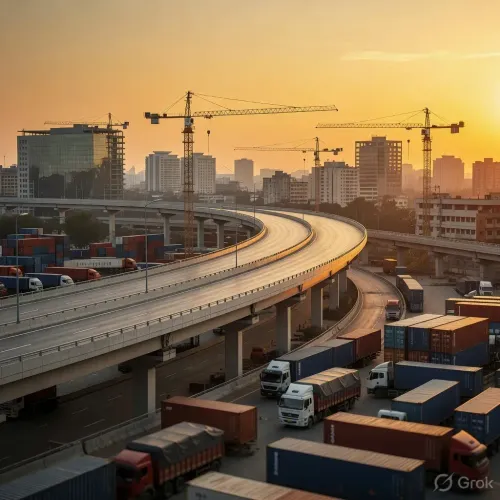
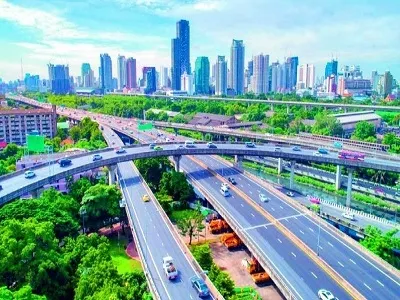
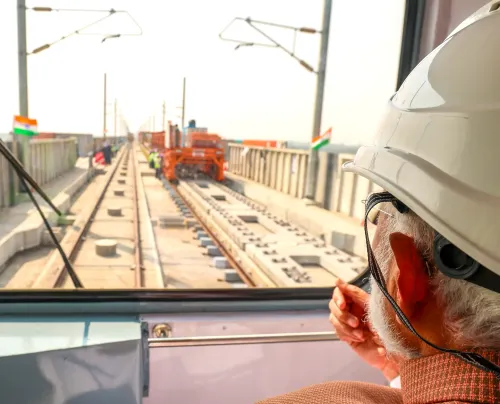
The blog post highlighted India's sharp ramp-up in public infrastructure spending as a key growth driver. Highway spending has risen fivefold over the past decade, while central government railway spending has increased eightfold over the same period. Smith drew a direct parallel to China's infrastructure-led growth sprint of the 2010s, noting that India now faces a similar inflection point. 'The challenge now for India is to make the leap that China made in the 2010s — to build abundant high-quality roads, trains, housing, and energy, provide decent jobs and livelihoods to the majority of its people, and catch up to the frontier of technology,' he said.
Broad-Based Growth Across Sectors
Smith described India's current expansion as unusually broad-based, with manufacturing growing in tandem with services — a pattern that eluded many earlier middle-income transitions. He noted that India is 'making and exporting a bunch of different high-tech products' despite what he characterised as China's attempts to throttle Indian industrialisation by restricting key technological exports and factory expertise. This comes amid a wider global reconfiguration of supply chains, with India emerging as a preferred alternative manufacturing hub for multinational companies seeking to diversify away from China.
The Road Ahead
Smith's analysis positions India's near-term development goal as achievable and comparatively straightforward — a marked contrast to the increasingly contested outlook for China's growth ambitions. Whether India can sustain this momentum will depend on continued infrastructure delivery, job creation at scale, and technology absorption. The government's ongoing production-linked incentive schemes and infrastructure pipeline will be critical variables in that equation.
Point of View
Top-down resource allocation; India's federal, democratic complexity makes infrastructure delivery and industrial policy harder to synchronise. The fivefold highway and eightfold railway spending figures are real, but absorption capacity and project execution remain uneven. More importantly, the jobs question — whether manufacturing scale translates into quality formal employment — is precisely where India has historically underperformed. Escaping poverty and achieving upper-middle-income status are not the same thing; the latter requires sustained productivity gains across the labour force, not just headline GDP growth.
NationPress
14 Nov 2026
Frequently Asked Questions
What did US economist Noah Smith say about India's economy?
Noah Smith wrote in a blog post on 13 November 2026 that India is well-positioned to reach upper-middle-income status, citing broad-based growth in manufacturing and services, poverty reduction, and sharp increases in infrastructure investment. He described India's development goal as achievable and less complex than China's.
How does India's economic development compare to China's?
According to Smith, India has reached a stage comparable to where China stood in the late 2000s, in terms of both GDP and the Human Development Index. However, India's target — escaping poverty and reaching upper-middle-income status — is structurally less ambitious than China's goals of dominating AI or surpassing the combined economies of the US and its allies.
What infrastructure progress has India made recently?
Smith's blog post noted that India's highway spending has increased fivefold over the past decade, while central government railway spending has risen eightfold. He drew a parallel to China's infrastructure-led growth in the 2010s, suggesting India is at a similar inflection point.
How has India reduced poverty according to this analysis?
Citing World Bank data, Smith attributed India's poverty reduction to strong consumption growth, rising employment — particularly among women — and expanded social transfers including food subsidies. He noted that India has simultaneously lowered inequality, an uncommon achievement among fast-growing economies.
What are the key challenges India must overcome to reach upper-middle-income status?
Smith identified the core challenge as replicating China's 2010s infrastructure and technology catch-up: building quality roads, rail, housing, and energy infrastructure, while generating decent jobs for the majority of the population. He also flagged that China has reportedly attempted to restrict key technological exports and factory expertise to India, complicating its industrialisation path.