India-New Zealand FTA in force: 8,284 duty-free lines boost exporters
Synopsis
India's FTA with New Zealand is now live — and it is the most structurally layered trade deal India has signed with a developed Pacific economy in years. With 8,284 product lines going duty-free, 5,000 employment visas annually, and a rare shift from surplus to deficit in FY26, this agreement is as much about shoring up export momentum as it is about long-term integration into global value chains.
Key Takeaways
The India-New Zealand FTA has entered into force as of 21 October 2026 , granting duty-free access across 8,284 product lines .
Sectors covered include pharmaceuticals, textiles, engineering goods, gems and jewellery, footwear and leather .
India's exports to New Zealand fell from $711 million (FY2024-25) to $567 million (FY2025-26); India moved into a trade deficit of $22 million in FY2025-26.
India will phase out tariffs on 35.6% of tariff lines over 10 years and immediately remove duties on wood, wool and sheep meat.
The pact includes 5,000 temporary employment visas and 1,000 working holiday visas annually for Indian professionals.
ASSOCHAM President Nirmal K.
Minda called the deal a 'winning partnership' for MSMEs, artisans, farmers and women entrepreneurs.
The India-New Zealand Free Trade Agreement (FTA) has entered into force, unlocking duty-free market access across 8,284 product lines for Indian exporters and marking a significant expansion of India's economic footprint in the developed world. Industry chamber ASSOCHAM on 21 October 2026 welcomed the development, calling it a milestone for MSMEs, artisans, farmers and women entrepreneurs.
What the Agreement Covers
New Zealand will provide immediate duty-free access for Indian exports spanning sectors including pharmaceuticals, textiles, machinery, engineering goods, gems and jewellery, footwear and leather. On its part, India has agreed to immediately eliminate duties on wood, wool and sheep meat, while phasing out tariffs on 35.6% of tariff lines over a 10-year period. Quota-based concessions have also been carved out for select products including Manuka honey and kiwifruit.
Trade Figures and the Deficit Shift
India's exports to New Zealand stood at $711 million in FY2024-25 before declining to $567 million in FY2025-26, while imports held relatively steady at $587 million and $589 million respectively. Notably, India moved from a trade surplus of $124 million in FY2024-25 to a marginal trade deficit of $22 million in FY2025-26 — a shift that underscores the importance of a structured framework to arrest further deterioration and rebuild export momentum.
ASSOCHAM's Reading of the Pact
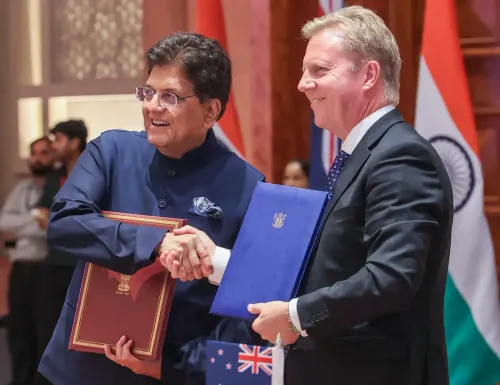
ASSOCHAM President Nirmal K. Minda described the agreement as a 'winning partnership' and said duty-free access would particularly benefit Indian micro, small and medium enterprises. 'The success of this agreement will be measured by the opportunities it creates and the difference it makes to the lives of people in both countries,' Minda said. He also pointed to the first-ever export of a JCB machine from India to New Zealand — flagged off by Commerce and Industry Minister Piyush Goyal — as a symbol of India's strengthening manufacturing base.
People-to-People and Sectoral Action Plans
Beyond goods trade, the FTA includes provisions for professional mobility: 5,000 temporary employment visas and 1,000 working holiday visas annually. Dedicated action plans cover sectors such as kiwifruit, apples, honey, horticulture, forestry and livestock, with an emphasis on technology transfer, training and productivity enhancement — a recognition that trade in goods alone cannot capture the full potential of the relationship.
Broader Significance for Indian Industry
This comes amid India's accelerating push to diversify its export partnerships beyond traditional markets. The New Zealand FTA is one of several agreements India has concluded or is negotiating with developed economies, following pacts with the UAE and Australia. According to ASSOCHAM, the agreement is expected to help integrate Indian businesses more deeply into global value chains, strengthen MSME competitiveness, and improve agricultural productivity through knowledge-sharing. With sectoral action plans already in place, the implementation phase will be closely watched by industry stakeholders for on-ground impact.
Point of View
Making a structured export-boosting framework more urgent than celebratory. The 8,284 duty-free lines are meaningful, but the real test will be whether Indian MSMEs, which often lack the logistics muscle to penetrate distant Pacific markets, can actually capitalise. Past FTAs with developed economies have sometimes widened deficits as cheaper imports outpaced export growth — a pattern India's negotiators will need to actively monitor here. The inclusion of employment visas and sectoral action plans suggests New Delhi is thinking beyond goods trade, but implementation depth, not signing ceremonies, will determine whether this FTA ages better than its predecessors.
NationPress
21 Oct 2026
Frequently Asked Questions
What is the India-New Zealand Free Trade Agreement?
The India-New Zealand FTA is a bilateral trade pact that grants duty-free market access across 8,284 product lines to Indian exporters in sectors including pharmaceuticals, textiles, engineering goods, and gems and jewellery. It entered into force on 21 October 2026 and also includes provisions for employment visas and sectoral cooperation.
Which Indian sectors benefit most from the India-New Zealand FTA?
Key beneficiaries include pharmaceuticals, textiles, machinery, engineering goods, gems and jewellery, footwear and leather. MSMEs, artisans, farmers and women entrepreneurs are specifically highlighted by ASSOCHAM as among the primary beneficiaries of duty-free access.
What are India's trade figures with New Zealand?
India's exports to New Zealand were $711 million in FY2024-25 and $567 million in FY2025-26, while imports were $587 million and $589 million respectively. India moved from a trade surplus of $124 million in FY2024-25 to a marginal trade deficit of $22 million in FY2025-26.
What does India give up under the FTA?
India has agreed to immediately eliminate duties on wood, wool and sheep meat, and will phase out tariffs on 35.6% of its tariff lines over a 10-year period. Quota-based concessions apply to select products including Manuka honey and kiwifruit.
Does the FTA include visa or mobility provisions?
Yes. The agreement provides for 5,000 temporary employment visas and 1,000 working holiday visas annually to facilitate professional mobility between India and New Zealand.