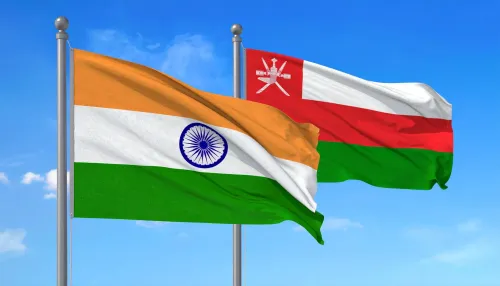
India-Oman CEPA: Why timing and geography make this trade deal critical
Synopsis
With the Strait of Hormuz in crisis, India's trade with Oman has surged 246% in a single year — and the newly enforced CEPA locks in that advantage. Oman's ports at Salalah and Duqm sit outside the Strait entirely, making them a ready overland gateway to Saudi Arabia, the UAE, and Yemen. This isn't just a trade deal; it's a strategic rerouting.
Key Takeaways
The India-Oman CEPA entered into force amid Strait of Hormuz disruptions that have reshaped India's Gulf trade flows.
India's imports from Oman jumped from $430 million (April 2025) to nearly $1.5 billion (April 2026), a rise of 246.4 per cent .
Oman's ports — Salalah and Duqm — lie outside the Strait of Hormuz, offering an uninterrupted overland corridor to Saudi Arabia , the UAE , and Yemen .
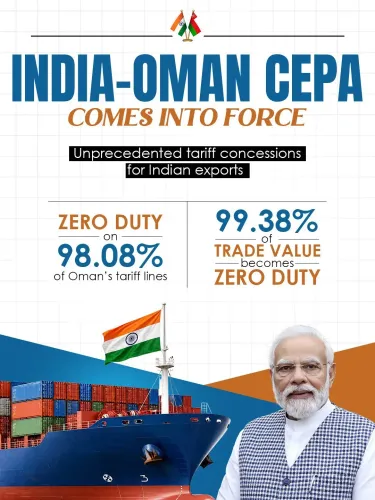
The CEPA grants 100% duty-free access in Oman to 98% of tariff lines , covering 99.38% of India's exports — up from 15.3% pre-CEPA.
Sectors such as iron and steel , textiles , leather , auto components , and industrial equipment are expected to see a surge in orders.
The India-Oman Comprehensive Economic Partnership Agreement (CEPA) has taken on outsized strategic importance, entering into force precisely as Strait of Hormuz disruptions have rattled India's Gulf trade and as Oman's unique geography positions it as an indispensable alternative corridor. According to a report by The Diplomat, the confluence of crisis and geography makes this agreement unlike any other India has signed in the region.
Oman's Geography: A Natural Bypass
Oman holds a rare geographic advantage: its major commercial ports — Salalah and Duqm — lie entirely outside the Strait of Hormuz, keeping them operational even when Strait traffic is choked or closed. The country shares land borders with Saudi Arabia to the west, the UAE to the northwest, and Yemen to the southwest.
According to the report, cargo offloaded from Indian vessels at Salalah and Duqm could be trucked overland to Saudi Arabia, Yemen, the UAE, and beyond — effectively routing around the Strait altogether. Notably, Oman's Musandam peninsula in the north reaches into the Strait of Hormuz itself, with Iran on the opposite shore, giving Oman a stake on both sides of the chokepoint.
Trade Surge Signals Strategic Shift
Ajay Srivastava, founder of the Global Trade Research Initiative, was cited in the report as identifying Oman's strategic location as the primary driver behind a dramatic spike in bilateral trade. India's imports from Oman surged from $430 million in April 2025 to nearly $1.5 billion in April 2026 — a rise of approximately 246.4 per cent — driven largely by increased purchases of crude oil and urea after supply shortages from other Gulf states.
This comes amid a broader reconfiguration of India's Gulf supply chains, as attacks and disruptions in the Strait reduced the reliability of traditional routes. The India-Oman trade relationship already encompasses significant cooperation in hydrocarbons, LNG, fertilizers, and petrochemicals.
What the CEPA Unlocks
The agreement immediately grants 100 per cent duty-free market access in Oman to 98 per cent of tariff lines, covering 99.38 per cent of India's exports to that market. This is a substantial upgrade from the pre-CEPA baseline, under which only 15.3 per cent of Indian exports enjoyed zero-duty access.
The CEPA also creates a more predictable framework for investment and supply arrangements, reducing transactional uncertainty and encouraging long-term contracts — particularly relevant for energy and commodity trade, where price and supply visibility matter most.
Impact on Small Businesses and Industry
According to the report, sectors dominated by small and medium enterprises — including iron and steel, textiles, leather, auto components, and industrial equipment — stand to benefit significantly from the new duty structure. The expanded tariff access could unlock large international orders for businesses that previously faced prohibitive duties in the Omani market.
As Gulf trade routes remain under pressure, the India-Oman CEPA is increasingly viewed not just as a bilateral commercial arrangement, but as a strategic hedge — and its full impact will likely become clearer as Strait of Hormuz conditions evolve.
Point of View
Converting Oman's geographic quirk into a treaty-backed logistics corridor. What deserves scrutiny, however, is whether India's overland trucking infrastructure and Omani port capacity can actually absorb the volumes this deal implies. A 246% import surge in one year is striking, but it also reflects emergency buying — crude and urea under stress conditions. The CEPA's durability will depend on whether Indian SMEs in textiles and auto components can compete on quality and delivery timelines, not just on tariff arbitrage. The strategic logic is sound; the execution risk is real.
NationPress
26 Oct 2026
Frequently Asked Questions
What is the India-Oman CEPA and when did it come into force?
The India-Oman Comprehensive Economic Partnership Agreement (CEPA) is a bilateral trade deal that grants 100% duty-free market access in Oman to 98% of tariff lines covering 99.38% of India's exports. It entered into force in 2026, significantly expanding on the pre-CEPA baseline where only 15.3% of Indian exports enjoyed zero-duty access.
Why is Oman's geography strategically important for India?
Oman's major ports — Salalah and Duqm — lie outside the Strait of Hormuz, meaning they remain accessible even when Strait traffic is disrupted. Cargo can also be trucked overland from these ports to Saudi Arabia, the UAE, and Yemen, making Oman a critical bypass route for Indian trade.
How much has India-Oman trade grown amid the Strait of Hormuz crisis?
India's imports from Oman surged from $430 million in April 2025 to nearly $1.5 billion in April 2026, a jump of approximately 246.4%, driven by increased purchases of crude oil and urea as supplies from other Gulf states were disrupted.
Which Indian industries benefit most from the CEPA?
Sectors dominated by small and medium enterprises — including iron and steel, textiles, leather, auto components, and industrial equipment — are expected to benefit most, as the new duty-free access could open large international orders previously blocked by tariffs.
How does Oman's Musandam peninsula factor into the strategic picture?
Oman's Musandam peninsula extends into the northern entrance of the Strait of Hormuz, with Iran on the opposite shore. This means Oman has a physical presence at the world's most critical oil chokepoint, giving it — and by extension, India through the CEPA — a unique strategic foothold in the region.