Rising US yields pose limited threat to India, economists urge growth focus
Synopsis
With only 3% of India's government bonds in foreign hands, the country is structurally insulated from the global yield surge — a fact underscored by former RBI Deputy Governor Michael Debabrata Patra at the Kautilya Economic Conclave. The harder question, economists say, is not shielding India from external shocks but sustaining the growth rate once reforms have done their work.
Key Takeaways
Former RBI Deputy Governor Michael Debabrata Patra said only 3% of India's government bonds are foreign-held, limiting direct US yield spillover.
India-specific factors — not US monetary conditions — are the primary driver of Indian bond yields, according to Patra.
Former NITI Aayog Vice Chairman Arvind Virmani called for replacing product subsidies with direct benefit transfers to reduce market distortions.
Virmani cautioned that sustaining a higher growth rate — not accelerating it further — is India's core economic challenge.
Patra said India is diversifying fertiliser import sources to manage supply disruptions caused by conflicts in Ukraine and West Asia .
Remarks were made on the sidelines of the 5th Kautilya Economic Conclave in New Delhi on 3 October .
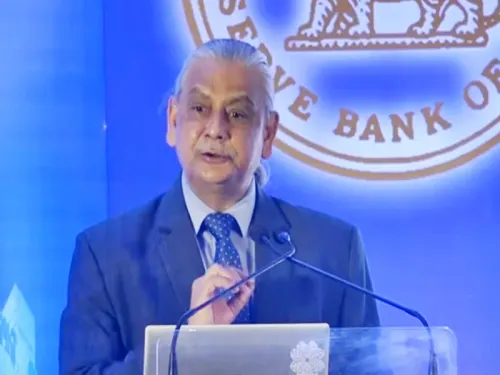
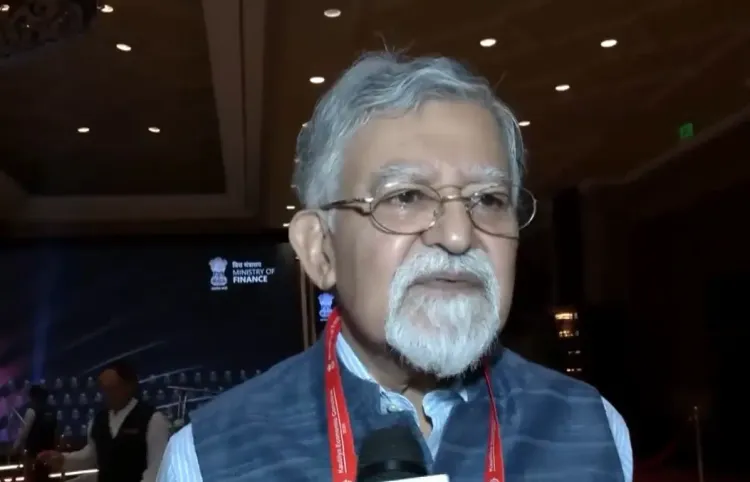
India remains relatively shielded from the turbulence caused by rising US bond yields, owing to the predominantly domestic ownership of its government securities, economists and policy experts said on Saturday, 3 October. Speaking on the sidelines of the 5th Kautilya Economic Conclave in New Delhi, senior voices from India's economic establishment stressed that sustaining growth through structural reforms is the country's defining long-term challenge.
Why India Is Insulated from US Yield Pressures
Former Reserve Bank of India (RBI) Deputy Governor and economist Michael Debabrata Patra said the direct transmission of higher US yields into India's debt market is limited by the structure of bond ownership. 'Not really, because only 3 per cent of India's stock of government bonds is held by foreigners. It is mostly domestically held,' Patra said when asked about spillover risks to emerging markets like India.
He acknowledged a degree of sentiment contagion — when yields rise globally, Indian markets tend to reflect that mood — but was clear about the primary driver. 'India-specific factors are driving Indian bond yields. It's not so much the US,' he added. This structural insulation distinguishes India from more externally exposed emerging economies such as Turkey or South Africa, where foreign ownership of sovereign debt is significantly higher.
Food Security and Fertiliser Diversification
Patra also addressed concerns raised by External Affairs Minister S. Jaishankar about a potential global food crisis linked to fertiliser shortages arising from ongoing geopolitical conflicts. He said India is actively working to broaden its import base. 'The war in Ukraine and in West Asia are creating supply bottlenecks, but I believe that while the shortages may be temporary, over the longer run, India will widely diversify its sources and import markets and manage the situation,' Patra said.
This comes amid sustained disruption to global fertiliser supply chains since 2022, when Russia's invasion of Ukraine cut off significant volumes of potash and nitrogen-based fertilisers from international markets. India, which imports a substantial share of its fertiliser requirements, has been exploring alternative suppliers across West Asia, Canada, and North Africa.
The Case for Rationalising Subsidies
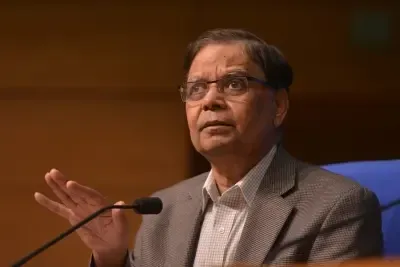
Economist and former NITI Aayog Vice Chairman Arvind Virmani made a strong case for moving away from product-specific subsidies toward direct benefit transfers. 'Reducing subsidies is a good thing. Subsidies should be given directly. Subsidies are an inefficient way of providing support because they distort the market,' Virmani said.
He framed the shift as part of a broader structural transition toward a less distorted economic framework — one that preserves support for vulnerable households while reducing inefficiencies embedded in commodity-level price interventions. Critics of the current subsidy architecture have long argued that blanket subsidies on fertilisers and fuel disproportionately benefit larger agricultural and industrial consumers rather than marginal farmers.
Sustaining Growth: The Harder Challenge
On India's medium-term economic trajectory, Virmani cautioned against expecting continuous acceleration. 'The history of growth tells you that you cannot keep raising it continuously. You undertake reforms, push growth to a higher level and then the challenge is sustaining that rate,' he said, pointing to external shocks such as the Ukraine war as illustrations of how unpredictable global disruptions can undercut even well-designed domestic policy.
The remarks come as India navigates a complex global environment — slowing demand in key export markets, elevated commodity prices, and tightening financial conditions in advanced economies. Notably, the International Monetary Fund (IMF) has flagged that while India remains among the fastest-growing major economies, sustaining that pace requires accelerating second-generation reforms in labour, land, and logistics.
What to Watch
Economists at the conclave broadly agreed that India's near-term macro stability is not under serious threat from US yield movements, but warned that complacency on structural reform could erode the growth dividend over the medium term. The next critical data points will be India's CPI inflation print and the RBI's upcoming monetary policy review, both of which will test whether domestic factors continue to anchor Indian bond markets independently of global volatility.
Point of View
But it should not breed complacency — sentiment contagion is real, and a prolonged global risk-off could still pressure the rupee and FII equity flows even if the bond market holds. More importantly, Virmani's growth-sustaining argument cuts to the heart of India's policy dilemma: the reform dividend has been partially captured, and the next leg requires politically harder choices on labour and land that successive governments have deferred. The subsidy rationalisation argument is sound in theory, but the track record of direct benefit transfers reaching the last mile — especially in agriculture — remains patchy. The Kautilya Conclave consensus is reassuring on stability, but short on specifics about how the next reform cycle actually gets executed.
NationPress
3 Oct 2026
Frequently Asked Questions
Why is India relatively insulated from rising US bond yields?
India is insulated because only 3% of its government bonds are held by foreign investors, with the rest domestically owned. This limits the direct transmission of global yield movements into India's sovereign debt market, according to former RBI Deputy Governor Michael Debabrata Patra.
What did economists say about India's growth challenge?
Former NITI Aayog Vice Chairman Arvind Virmani said the key challenge is sustaining growth at a higher level once reforms have been implemented, not continuously accelerating it. He cited global disruptions like the Ukraine war as examples of external risks that complicate domestic policymaking.
What is India doing about fertiliser supply disruptions?
According to Michael Debabrata Patra, India is actively diversifying its fertiliser import sources to manage supply bottlenecks caused by conflicts in Ukraine and West Asia. He said the shortages are likely temporary and that India will broaden its supplier base over the longer run.
What did Arvind Virmani say about subsidies?
Virmani argued that product-specific subsidies are inefficient because they distort markets, and that support should instead be delivered directly to beneficiaries. He described this shift as part of a broader transition toward a less distorted economic framework.
Where were these views expressed?
The remarks were made on the sidelines of the 5th Kautilya Economic Conclave held in New Delhi on 3 October, where economists and policy experts gathered to discuss India's economic outlook amid global uncertainties.