India smartphone shipments drop 26% in Q3 2026, Samsung reclaims top spot
Synopsis
India's smartphone market just posted its steepest quarterly decline in recent memory — down 26% to 35.8 million units in Q3 2026 — as higher prices, a Diwali timing quirk, and fading online-sales momentum converged. Samsung is back at the top, Chinese brands are losing share, and Omdia sees more contraction ahead in 2027.
Key Takeaways
India's smartphone shipments fell 26% year-on-year to 35.8 million units in Q3 2026 , per Omdia data.
Samsung reclaimed the top position with 6.7 million units shipped — its first time at No.
Vivo posted the steepest decline among the top five, down 34% to 6.4 million units .
Chinese brands' combined market share fell to ~68% in Q3 2026, from 75% a year earlier.
Apple shipped 3.9 million units , aided by dealer stocking ahead of anticipated price increases and demand for the iPhone 17 and iPhone 16 .
Omdia forecasts a further low-single-digit contraction in India's smartphone market in 2027 .
India's smartphone shipments fell 26 per cent year-on-year to 35.8 million units in the third quarter of 2026, with higher device prices, cautious consumer spending, and weaker replacement demand dragging volumes to a sharp decline, according to a report by market research firm Omdia. The data, released on Monday, 19 October 2026, also confirmed that Samsung reclaimed its position as India's top smartphone brand for the first time since Q1 2024.
Key Developments in Q3 2026
The steep decline was compounded by a slowdown in online-focused shipments and the later timing of Diwali this year, which pushed a significant portion of festive inventory build-up from September into October, effectively shifting volumes out of the quarter. According to Omdia, vendors responded by adopting more conservative inventory strategies, limiting order volumes amid pricing uncertainty.
The quarter also marked what Omdia describes as a structural shift — festive-season growth is increasingly channel-driven rather than powered by large online sales events. Fewer online-exclusive launches, a limited number of affordable models, and narrowing promotional differences reduced the pull of digital platforms during the period.
Samsung Regains the Lead
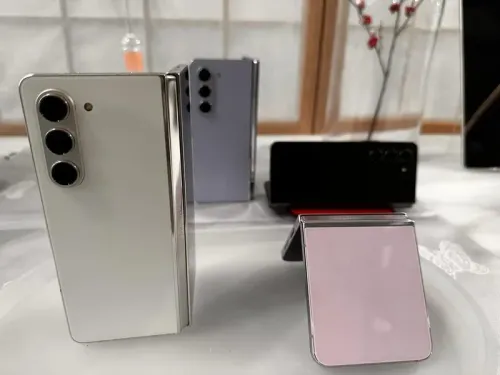
Samsung shipped 6.7 million units in Q3 2026, reclaiming the top position it last held in Q1 2024. The South Korean brand benefited from strong demand for its Galaxy A07, A17, and A27 models in the mass segment, while the Galaxy S26 series, foldable devices, and the S26 FE bolstered its premium standing. Promotional levers — including cashback schemes, exchange benefits, and extended financing plans — further supported consumer upgrades.
How Other Top Brands Fared
Vivo slipped in rank with shipments of 6.4 million units, down 34 per cent from a year earlier — the sharpest decline among the top five brands. Omdia attributed the fall to repeated price increases, inventory planning disruptions, and constrained supplies in the entry-level segment.
OPPO recorded shipments of 4.9 million units, down 24 per cent year-on-year, while Xiaomi's shipments fell 28 per cent to 4.7 million units. Rising component costs affected pricing strategies and weakened value propositions for both brands across key product categories, the report noted.
Apple rounded out the top five with 3.9 million units, supported by dealer stocking ahead of anticipated price increases and continued demand for the iPhone 17 and iPhone 16 models. Cashback offers, exchange programmes, and no-cost financing schemes also aided Apple's sales momentum in India.
Chinese Brands Lose Ground
The quarter was particularly challenging for Chinese smartphone makers, whose combined market share declined to approximately 68 per cent in Q3 2026, down from 75 per cent a year earlier. The shift reflects both the structural pricing pressures and the relative gains by Samsung and Apple in premium and mid-premium tiers.
Sanyam Chaurasia, principal analyst at Omdia, said: 'India's smartphone market is shifting from online-led shipment expansion during the festive period to more selective, channel-driven growth, challenging vendors' traditional volume strategies.'
Outlook: Further Contraction Expected
Omdia has forecast that India's domestic smartphone market will contract by a further low-single-digit percentage in 2027, following a difficult 2026, as vendors contend with rising prices and longer device replacement cycles. The structural drag — compressed entry-level demand and slowing upgrades — suggests the sector's near-term recovery may be gradual rather than sharp.
Point of View
Longer replacement cycles reducing upgrade urgency, and online-channel fatigue eroding the festive-sale playbook that vendors have relied on for years. Samsung's return to the top is partly a story of disciplined portfolio management, but it is equally a story of Chinese OEMs over-correcting on pricing under margin pressure. The forecast of further contraction in 2027 is the harder number to sit with: India, long pitched as the world's next great smartphone growth story, may be entering a prolonged consolidation phase that neither volume strategies nor promotional intensity can easily reverse.
NationPress
19 Oct 2026
Frequently Asked Questions
How much did India's smartphone shipments fall in Q3 2026?
India's smartphone shipments declined 26% year-on-year to 35.8 million units in Q3 2026, according to Omdia. The drop was driven by higher prices, cautious consumer spending, weaker replacement demand, and a Diwali timing shift that pushed festive inventory into October.
Why did Samsung reclaim the top spot in India's smartphone market?
Samsung regained the No. 1 position in India for the first time since Q1 2024, shipping 6.7 million units in Q3 2026. Strong demand for its Galaxy A07, A17, and A27 models, a reinforced premium portfolio including the Galaxy S26 series and foldables, and promotional offers including cashback and exchange schemes all contributed.
Which brand recorded the steepest decline among India's top five smartphone vendors?
Vivo posted the sharpest drop, with shipments falling 34% to 6.4 million units in Q3 2026. Omdia attributed the decline to repeated price increases, inventory planning disruptions, and constrained supplies in the entry-level segment.
What is the outlook for India's smartphone market in 2027?
Omdia expects India's smartphone market to contract by a further low-single-digit percentage in 2027 , following a difficult 2026. Rising device prices and longer replacement cycles are seen as the primary headwinds vendors will need to navigate.
How are Chinese smartphone brands performing in India?
Chinese brands' combined market share in India fell to approximately 68% in Q3 2026, down from 75% a year earlier. Vivo, OPPO, and Xiaomi all recorded double-digit year-on-year shipment declines, with rising component costs and pricing strategy missteps cited as key factors.