India solar module capacity crosses 200 GW; cell output at 45 GW
Synopsis
India's solar module manufacturing capacity has quietly crossed 200 GW — a number that would have seemed implausible at the 3 GW installed base of 2014. With one lakh rooftop solar installations completed every six days under PM Surya Ghar, the story is no longer just about capacity targets — it is about a manufacturing and household energy revolution running in parallel.
Key Takeaways
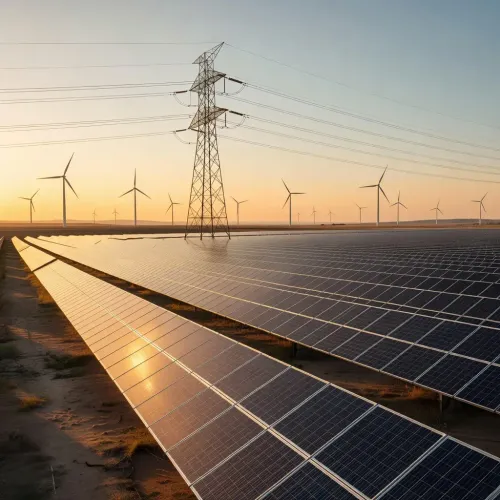
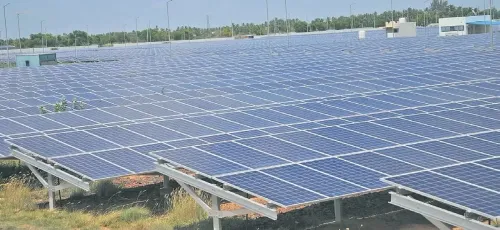
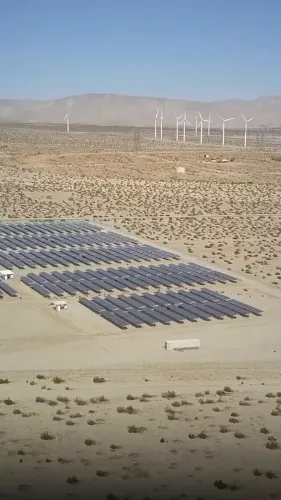
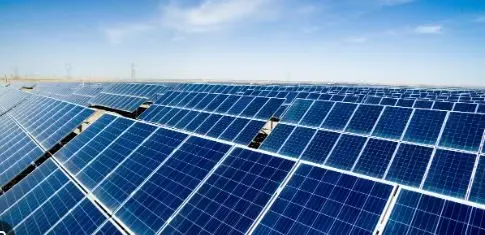
India's solar module manufacturing capacity has surpassed 200 GW , with solar cell manufacturing at approximately 45 GW .
Total solar installed capacity has risen from 3 GW in 2014 to 172 GW as of November 2026.
The PM Surya Ghar: Muft Bijli Yojana is driving approximately one lakh rooftop solar installations every six days .
The National Green Hydrogen Mission targets 5 million tonnes of annual green hydrogen production capacity by 2030 .
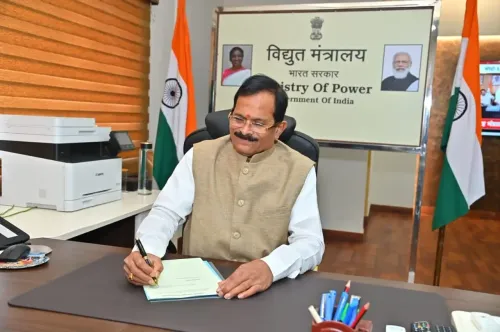
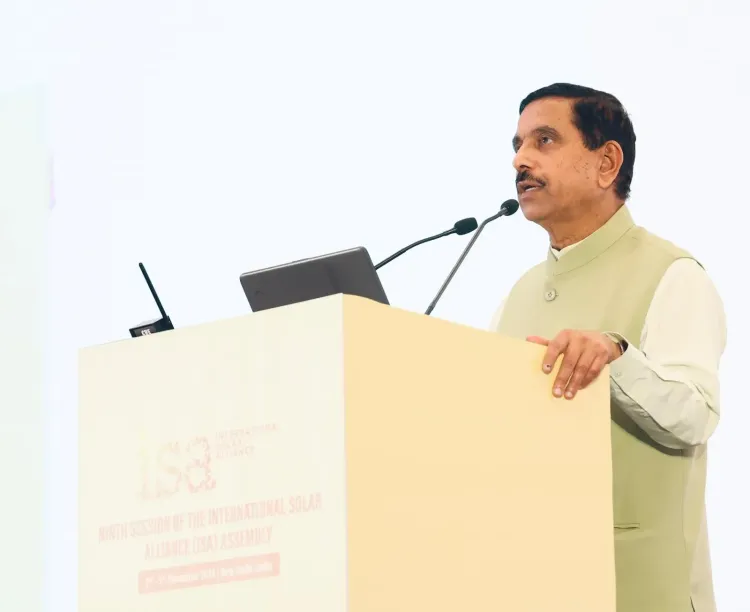
Union Minister Pralhad Joshi and Minister of State Shripad Yesso Naik addressed the Bharat Renewable Energy Summit and Expo 2026 in New Delhi.
India's solar manufacturing sector has crossed a landmark threshold, with solar module manufacturing capacity surpassing 200 GW and solar cell manufacturing reaching approximately 45 GW, according to government data released on 5 November 2026. The figures, shared at the Bharat Renewable Energy Summit and Expo 2026 in New Delhi, signal a dramatic scaling of domestic clean-energy supply chains over the past decade.
Key Milestones in Solar and Wind Manufacturing
Union Minister for New and Renewable Energy Pralhad Joshi told delegates that India's total solar installed capacity has surged from a modest 3 GW in 2014 to 172 GW today — a nearly 57-fold increase in just over a decade. On the wind side, domestic manufacturing capabilities now reportedly cover a significant share of the turbine value chain, reducing dependence on imports for a critical clean-energy segment.
Minister Joshi highlighted that India is now completing roughly one lakh rooftop solar installations every six days, attributing the momentum to the PM Surya Ghar: Muft Bijli Yojana. 'The PM Surya Ghar: Muft Bijli Yojana has truly transformed into a mass movement, ultimately ensuring welfare and savings for the people, the states, and the entire country,' he said.
Rooftop Solar as a Mass Movement
The rooftop solar scheme has moved beyond policy into everyday impact, with millions of households now reportedly achieving zero electricity bills and generating income by selling surplus power back to the grid. Minister Joshi said the initiative is simultaneously cutting emissions and bolstering energy security during peak demand hours — two objectives that have historically been difficult to pursue together at scale.
Notably, this pace of rooftop installation — one lakh every six days — implies that the programme is adding meaningful distributed generation capacity that reduces grid stress during afternoon peak loads, when solar output is highest.
Green Hydrogen and the Next Terawatt
Running alongside the summit, the 4th International Conference on Green Hydrogen spotlighted progress under the National Green Hydrogen Mission, which targets 5 million tonnes of annual green hydrogen production capacity by 2030. Industry leaders, researchers, manufacturers, and knowledge partners used the platform to explore technology collaborations and opportunities to deepen domestic supply chains.
Minister of State for New and Renewable Energy Shripad Yesso Naik underscored that reaching the next terawatt of clean energy will require collective collaboration across countries, technologies, and institutions. He also sought views from diplomats on country partnerships, investment, technology transfer, and capacity building — signalling that India's renewable ambition is increasingly being framed as a foreign policy priority as well.
Storage, Transmission and AI on the Agenda
The summit's sectoral plenaries addressed the emerging pressure points in India's energy transition. A Battery Storage Plenary focused on building domestic giga-scale manufacturing capacity, while a Wind Plenary examined onshore and offshore trajectory. A dedicated 'RE for AI' plenary explored how machine intelligence can strengthen grid forecasting and energy security — an emerging frontier as variable renewable capacity grows.
The government reiterated that as renewable capacity expands, energy storage and transmission infrastructure are becoming central to grid stability and the reliable integration of variable power. With India's installed renewable base now one of the world's largest, the next phase of the transition will be defined less by generation capacity and more by the systems that make that capacity dispatchable.
Point of View
But the more consequential number is the 172 GW of installed capacity — because manufacturing headroom without deployment offtake means little. The real policy stress test is coming: storage and transmission, not panels, are now the binding constraints. India's grid cannot reliably absorb much more variable solar without giga-scale battery manufacturing and upgraded interstate transmission, neither of which has scaled at the pace of module output. The 'RE for AI' plenary is a smart pivot — machine-driven grid forecasting could buy time — but it is not a substitute for the infrastructure investment that the next terawatt demands.
NationPress
5 Nov 2026
Frequently Asked Questions
What is India's current solar module manufacturing capacity?
India's solar module manufacturing capacity has crossed 200 GW, while solar cell manufacturing stands at approximately 45 GW, according to government figures shared at the Bharat Renewable Energy Summit and Expo 2026 on 5 November 2026. This marks a significant expansion of domestic clean-energy supply chains.
What is the PM Surya Ghar: Muft Bijli Yojana and how is it performing?
PM Surya Ghar: Muft Bijli Yojana is India's flagship rooftop solar scheme, under which the government is completing approximately one lakh new installations every six days. Millions of households are reportedly achieving zero electricity bills and earning income by selling surplus power back to the grid.
How much has India's solar installed capacity grown since 2014?
India's installed solar capacity has grown from 3 GW in 2014 to 172 GW as of November 2026 — a nearly 57-fold increase in just over a decade. Union Minister Pralhad Joshi cited the figure at the Bharat Renewable Energy Summit and Expo 2026.
What is the National Green Hydrogen Mission's target?
The National Green Hydrogen Mission targets 5 million tonnes of annual green hydrogen production capacity by 2030. Progress under the mission was highlighted at the 4th International Conference on Green Hydrogen, held alongside the BRE Summit and Expo 2026.
What are the next priorities for India's energy transition?
According to the government, energy storage and transmission infrastructure are now the central challenges as renewable capacity expands. The summit's plenaries addressed giga-scale battery manufacturing, onshore and offshore wind, and the use of machine intelligence for grid forecasting and energy security.