India space economy may reach $40-45 billion by 2036: Singh
Synopsis
India's space economy could rise from nearly $9 billion to $40-45 billion by 2036, Union minister Jitendra Singh says. He credits reforms and private participation as the ecosystem expands from a handful of startups to nearly 400-500 companies.
Key Takeaways
Dr Jitendra Singh projected that India's space economy could reach $40-45 billion by 2036 .
Singh estimated the current value of India's space economy at nearly $9 billion .
The minister said the ecosystem had grown from single-digit startups to nearly 400-500 companies .
The Indian Space Association organised the two-day conclave in New Delhi .
The report Space Economy 2036: The India Blueprint was released at the event.
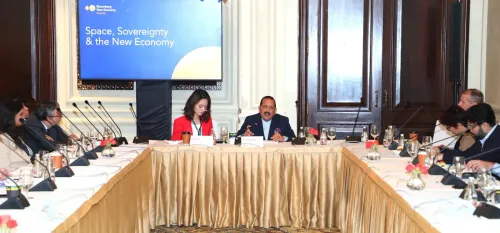
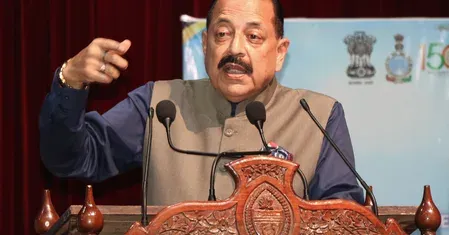
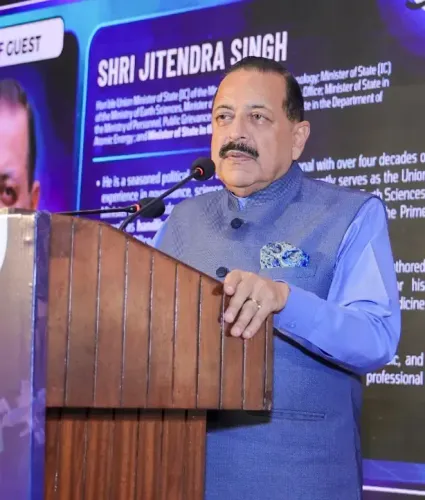
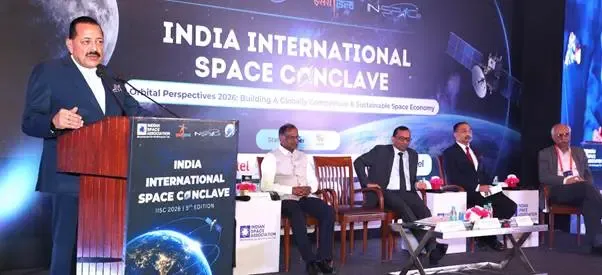
India's space economy could grow from nearly $9 billion to $40-45 billion by 2036, Union Minister of State for Science and Technology and Earth Sciences, Dr Jitendra Singh, said at a space conclave in New Delhi on 24 November. He said private enterprises were emerging as major drivers of the sector's expansion.
Addressing the fifth India International Space Conclave 2026, Singh attributed the growth of the country's space ecosystem to reforms under Prime Minister Narendra Modi that opened the sector to private participation and encouraged innovation.
Space economy projection and startup growth
Singh said the space ecosystem had expanded from a handful of startups to nearly 400-500 companies over the past few years. He presented the increase as evidence of the entrepreneurial and technological potential released by the reforms.
The projected rise to $40-45 billion by 2036 is a forecast, not a valuation already achieved. The minister put the current value at nearly $9 billion and said private companies would play a major role in the transformation.
The contrast between the current estimate and the projection indicates the scale of growth envisaged by Singh. His remarks did not provide a detailed breakdown of how the projected value would be distributed across different space activities.
Reforms and institutions behind private participation
Singh identified the establishment of New Space India Limited (NSIL), the creation of the Indian National Space Promotion and Authorization Centre (IN-SPACe) and the opening of the sector to private players as turning points in India's space journey.
He described those measures as significant policy changes that enabled private enterprises to enter a sector traditionally under government control. The shift matters for startups seeking to participate in space activities alongside established public-sector institutions.
According to Singh, the growth in company numbers followed a period in which the ecosystem had only single-digit startup representation. The figures he cited describe the expansion of the ecosystem, rather than the financial performance of individual firms.
Startup milestones cited by the minister
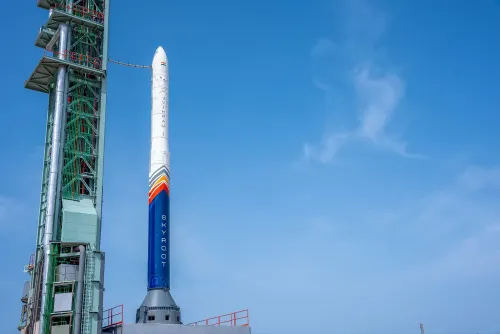
Singh pointed to Skyroot Aerospace's maiden launch vehicle flight, its multi-mission launch agreements and its attainment of unicorn status as examples of progress among Indian space startups.
He also referred to advances by firms such as Agnikul, alongside work across the sector on indigenous propulsion systems, rocket engines, earth-observation solutions and satellite imaging technologies.
These examples span both launch-related technology and applications involving observations from space. Singh cited them as evidence of the growing maturity of the country's startup ecosystem.
Conclave brings together space stakeholders
The two-day conclave was organised by the Indian Space Association (ISpA) and brought together industry leaders, startups, researchers and international stakeholders. Discussions focused on India's expanding role in the global space economy.
The event also saw the release of the report Space Economy 2036: The India Blueprint. As the sector develops, the 2036 projection provides a benchmark against which its future expansion can be assessed.
Point of View
But company formation alone is not a measure of lasting commercial success. The important test will be whether firms can turn technical milestones into sustainable business and measurable economic value. A transparent accounting of how the projected $40-45 billion is calculated would make it easier to assess progress.
NationPress
24 Nov 2026
Frequently Asked Questions
How large could India's space economy be by 2036?
India's space economy could reach $40-45 billion by 2036, according to Union minister Jitendra Singh. He estimated its current value at nearly $9 billion.
Why does the space economy projection matter?
The projection indicates the scale of growth the minister envisages for India's space sector. Singh said private enterprises would drive a major part of that expansion.
How many companies are in India's space ecosystem?
Singh said India's space ecosystem had grown to nearly 400-500 companies. He said it had previously consisted of only a handful of startups.
Which space sector reforms did Jitendra Singh highlight?
Singh highlighted the establishment of NSIL, the creation of IN-SPACe and the opening of the space sector to private players. He described these as turning points for private participation.
What was released at the India International Space Conclave 2026?
The report Space Economy 2036: The India Blueprint was released at the conclave. The Indian Space Association organised the two-day event in New Delhi.