Is the US Trade Deal a Game-Changer for India's AI Hardware Sector?

Synopsis
The recent India-US trade deal marks a pivotal moment for India's AI hardware landscape. By lowering costs and enhancing domestic capacities, this agreement could transform the technology sector. Discover how this strategic partnership is poised to reshape India's role in the global AI computing arena.
Key Takeaways
First phase of India-US trade deal boosts AI hardware.
Reduces import duties on GPU servers .
Potential 14% cost reduction for GPU data centers.
India generates 20% of global data but has limited data center capacity .
Safeguards needed to protect national interests.
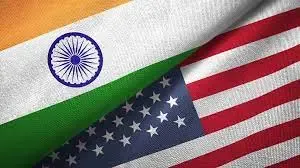
New Delhi, Feb 8 (NationPress) The completion of the initial phase of the India–US trade agreement serves as an essential boost for the AI hardware sector, especially in advanced computing components, as it is anticipated to significantly reduce costs and promote the development of domestic capabilities.
For the very first time, AI computing infrastructure has been recognized as a strategic asset within a bilateral trade framework involving two leading economies, a decision that could yield long-lasting effects on India's technological landscape, as noted in an article from the Khalsa Vox news portal.
One of the primary challenges in this field has been the prohibitive import duties on enterprise-grade GPU servers, which currently range between 20 and 28 percent. These tariffs have escalated the costs of GPU-based services in India, rendering them considerably more expensive compared to competing hubs such as Singapore or the UAE.
Industry projections indicate that adjusting these duties could decrease the expenses of establishing GPU-enabled data centers by approximately 14 percent, potentially unlocking substantial investments nationwide, the article elaborates.
The timing is also perceived as advantageous. While India generates nearly one-fifth of the global data, it possesses only a minor portion of worldwide data center capacity and an even smaller percentage of installed enterprise GPUs.
With global cloud and hyperscale firms expected to invest over $80 billion in India by the end of the decade, this trade agreement is seen as a catalyst that could help close this gap and position the nation as a prominent player in global AI computing services, the article further explains.
Furthermore, industry experts have stressed the necessity for safeguards. They believe that enhanced access to advanced hardware must align with policies that ensure data sovereignty, national security, and domestic value creation. Without such protections, there is a danger that India may end up delivering low-margin computing services while the genuine economic and strategic benefits accrue to other nations, the article concludes.
Point of View
I believe this trade agreement signifies a crucial step forward for India's technological advancement. It not only addresses existing challenges such as high import duties but also positions India to harness its data potential effectively. By ensuring that policies are in place to protect national interests, we can maximize the benefits of this strategic partnership.
NationPress
10 Oct 2026
Frequently Asked Questions
What are the expected benefits of the India-US trade deal for AI hardware?
The trade deal is anticipated to lower costs, enhance domestic capacity building, and recognize AI compute infrastructure as a strategic asset, potentially attracting significant investments.
How do import duties affect the AI hardware sector in India?
High import duties, ranging from 20% to 28%, increase the costs of GPU-based services in India, making them more expensive compared to countries like Singapore and the UAE.
What investments are expected in India's AI sector by global companies?
Global cloud and hyperscale companies are expected to invest over $80 billion in India by the end of the decade, driven by this trade agreement.